
On Assignment in Kaohsiung
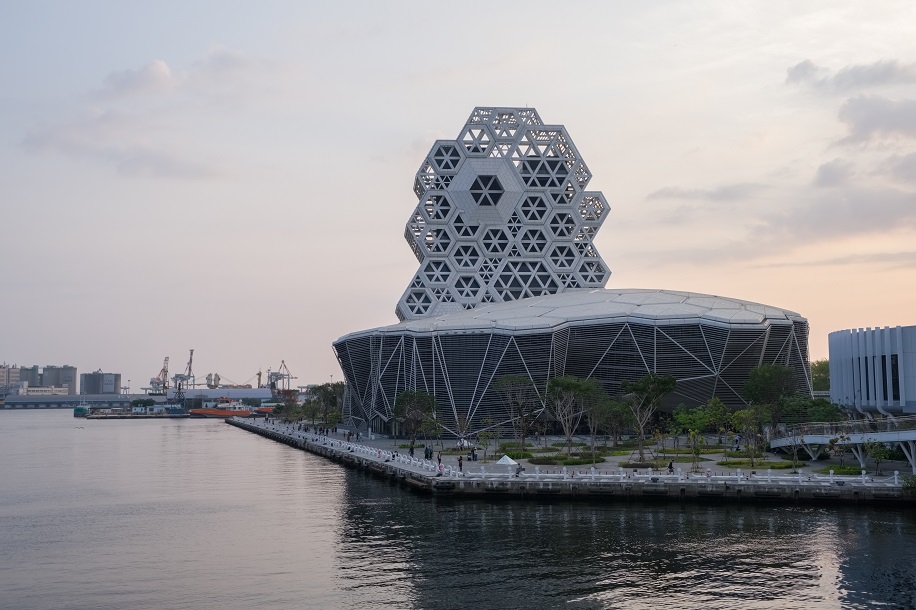
It must have been in 2017 or 2018 when I first got wind of the dramatic changes happening in Kaohsiung, Taiwan’s biggest port city. While scouring the internet to research potential story ideas one afternoon, I learned about an ambitious project to transform its once walled-off waterfront from a neglected industrial wasteland to a vibrant arts and culture precinct, with ultramodern buildings designed by big-name architects from abroad. Someday, I told myself, I would go and write a full-length feature article for work.
Fast-forward to the early months of Covid, and the magazine compiled a roundup in which each editor nominated a country we hoped to visit once the pandemic was over. An Australian colleague brought up the Cook Islands, our editor-in-chief imagined a future journey to Rwanda, and I waxed lyrical about Taiwan, an underrated island nation I last visited with Bama in the spring of 2013. Little did I know I would have both my wishes granted this March on the heels of a company event in Bangkok — one of the few cities in Southeast Asia with direct flights to Kaohsiung.
Initially, securing the right accommodation proved to be a challenge, and once that had been nailed down, there was growing concern about the incredibly tight schedule. I would arrive late on a Wednesday afternoon and depart from Kaohsiung that Saturday night. Which left me just two full weekdays to really dig into the place, conduct interviews, and so on. Our editor-in-chief was anxious to know if there would actually be a viable story at the end. Much to his relief, I had plenty of local help. (Sometime after returning to Jakarta, I was calmly and politely told, “don’t do that again.”)
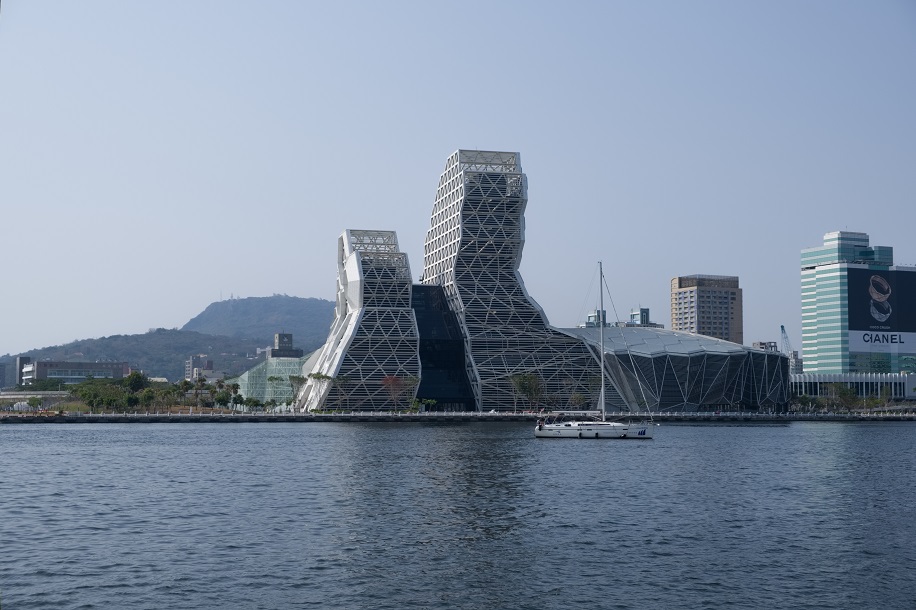
The waterfront Kaohsiung Music Center by Spanish architect Manuel A. Monteserín Lahoz
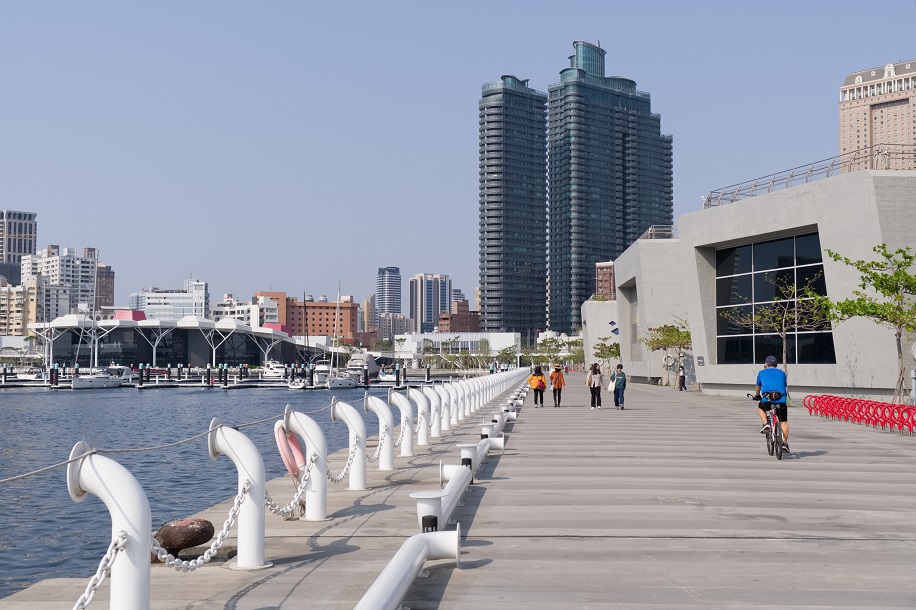
Local residents on the Whale Promenade, part of the Kaohsiung Music Center
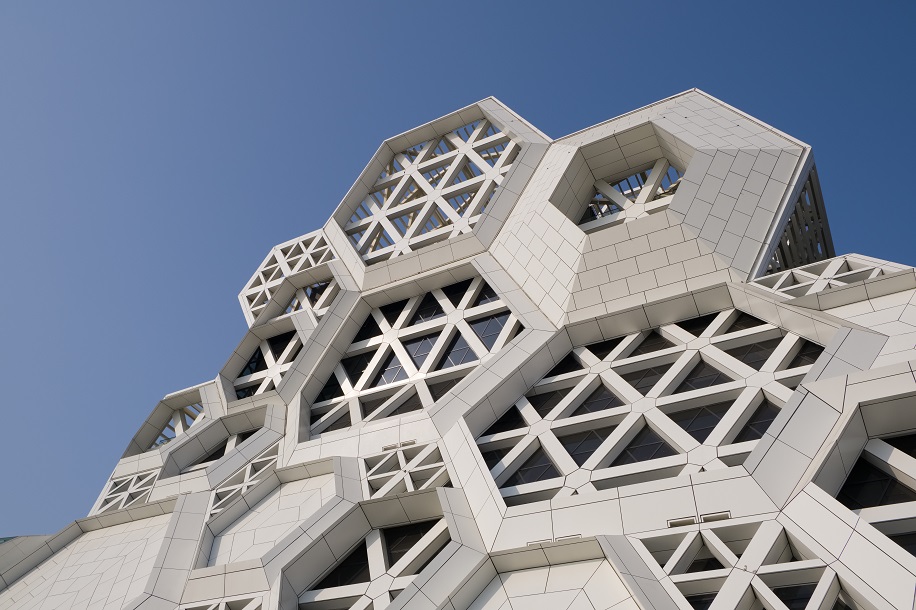
These hexagonal shapes were inspired by natural forms in the marine world
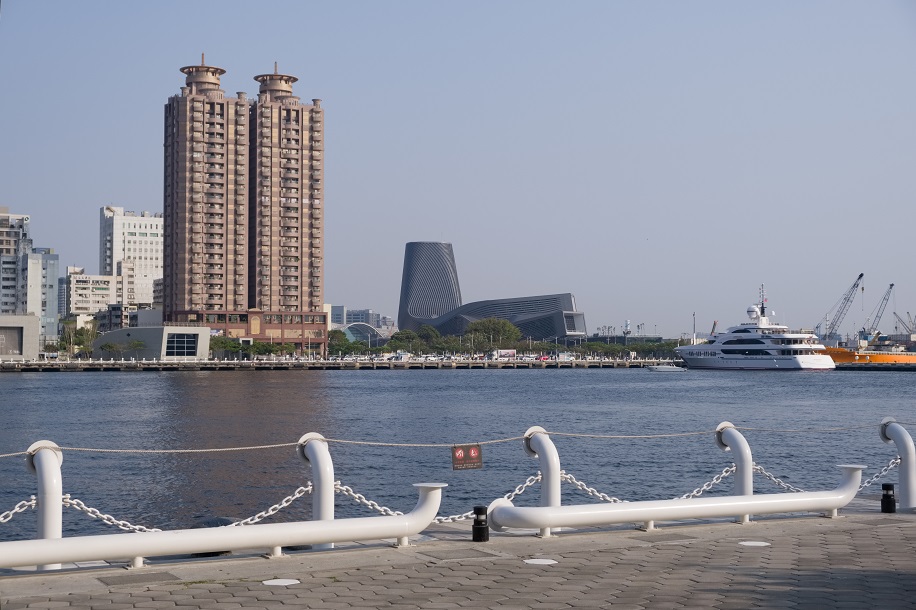
A view of Kaohsiung’s brand-new cruise terminal, which opened days before my visit
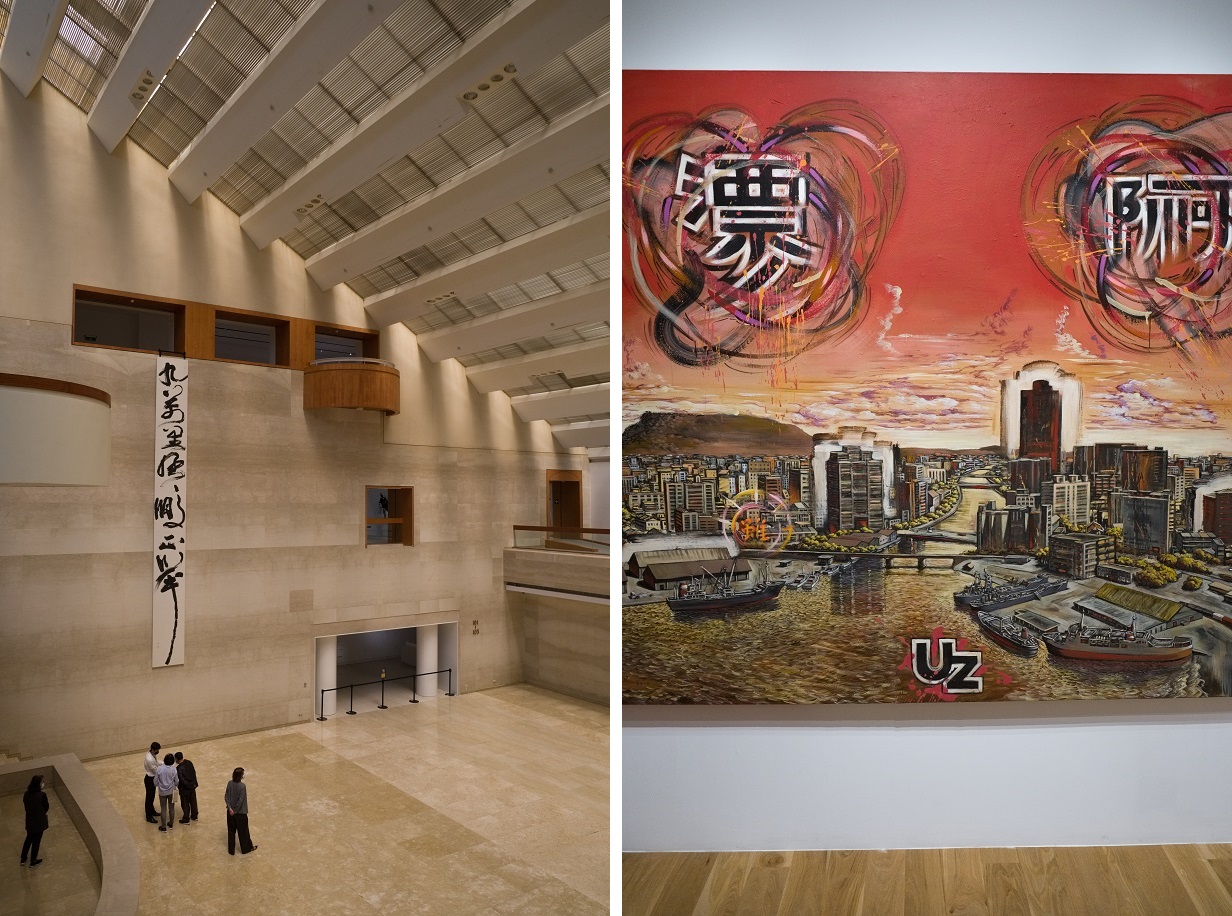
Inside the Kaohsiung Museum of Fine Arts; a painting by local artist Lee Jiun-Shyan
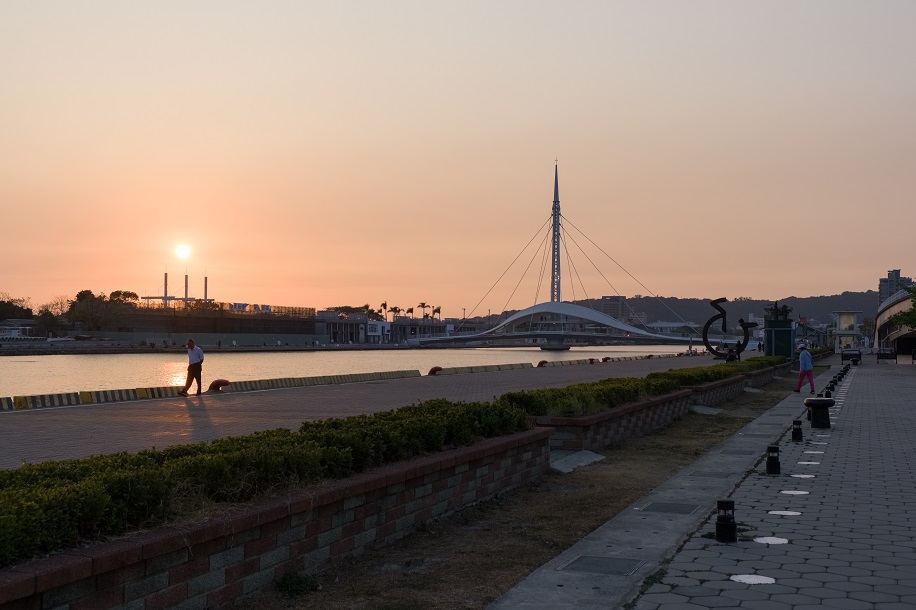
The city’s rotating Great Harbor Bridge at sunset
The main reason it all worked out was the involvement of architects Hou Ching-Mou and Lin Wan-Jen. Responding to my email requesting an interview at their studio, the husband-and-wife team took it upon themselves to show me around town over those two jam-packed days. Wan-Jen went out of her way to arrange appointments and interviews with influential figures I either had difficulty getting in touch with or hadn’t thought of approaching. To top it all off, she also invited me to a Friday night get-together with her college friends at one of the city’s two Michelin-starred restaurants.
Not only were Ching-Mou and Wan-Jen paragons of Taiwanese hospitality. With their mix of local insider knowledge and an international background, they turned out to be the perfect guides for the trip. Both trained at Harvard after graduating from architecture school in Taiwan, and were subsequently recruited by avant-garde Dutch studio Mecanoo. That meant being based in the Netherlands for a couple of years before returning to their home country to oversee several major projects, most notably Mecanoo’s competition-winning designs for the National Kaohsiung Center for the Arts (a.k.a. Weiwuying) and the redevelopment of the city’s central train station. The duo eventually parted ways with the firm and set up Studio Hou x Lin, whose creations range from the interiors of an e-sports stadium (yes, there is such a thing) to an impressive carillon on the revitalized waterfront.
Ching-Mou and Wan-Jen are both completely fluent in English, but they switched to Mandarin upon realizing I could understand and speak the language — however rusty it might have been after years of minimal use beyond the classroom. My story was enriched because they explained things in the tongue they were most comfortable in. Through these two very talented architects, I learned so much about Kaohsiung’s history, culture, and unique character. They shed light on the influential role the Japanese, who colonized Taiwan for 50 years, played in shaping the modern city: building entire neighborhoods on new land wrested from the sea, laying down railway lines, and developing much of the current street pattern. Wan-Jen told me the local shipbuilding industry actually grew out of the rubble left by Allied bombing raids in World War II (It is a little-known fact that the US Air Force rained devastation on Taiwanese cities and killed thousands of civilians in the process).
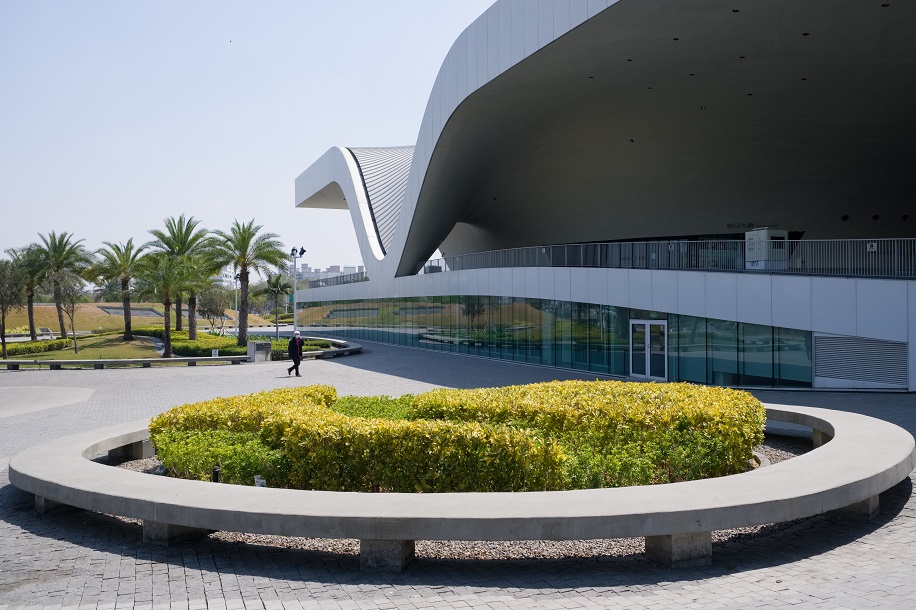
National Kaohsiung Center for the Arts — East Asia’s biggest performing arts center
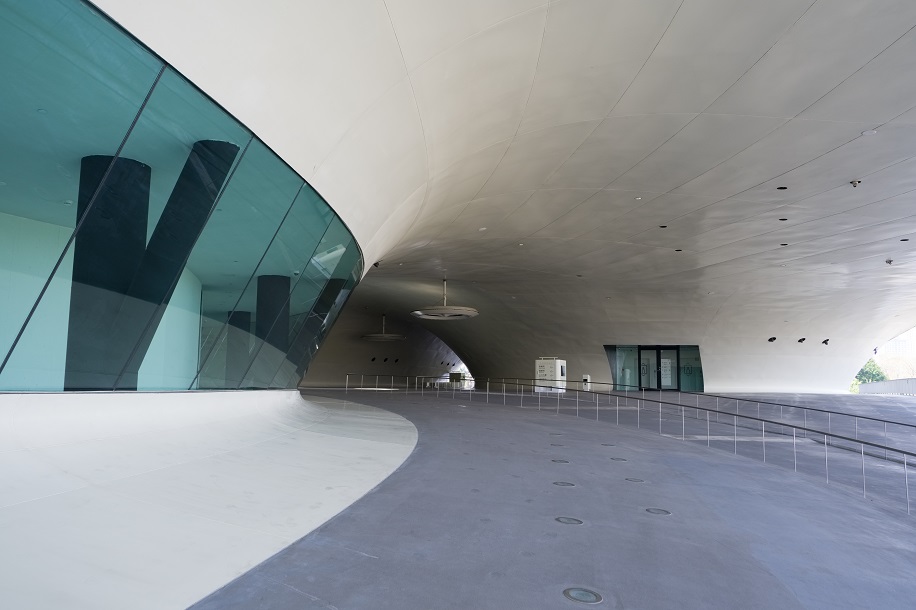
Local shipbuilders were recruited to make the sweeping curves of the design a reality
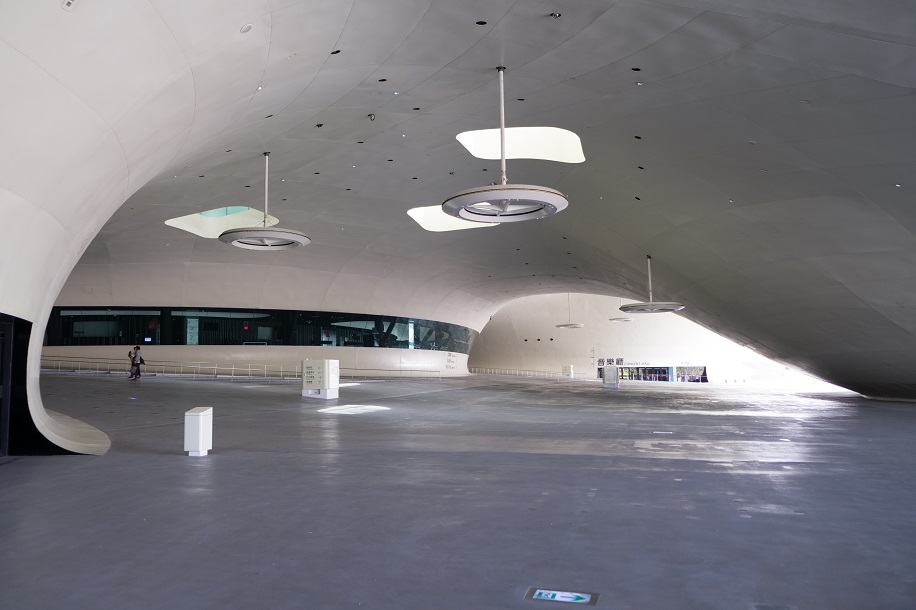
Banyan Plaza, an inviting public space that weaves between the performance venues
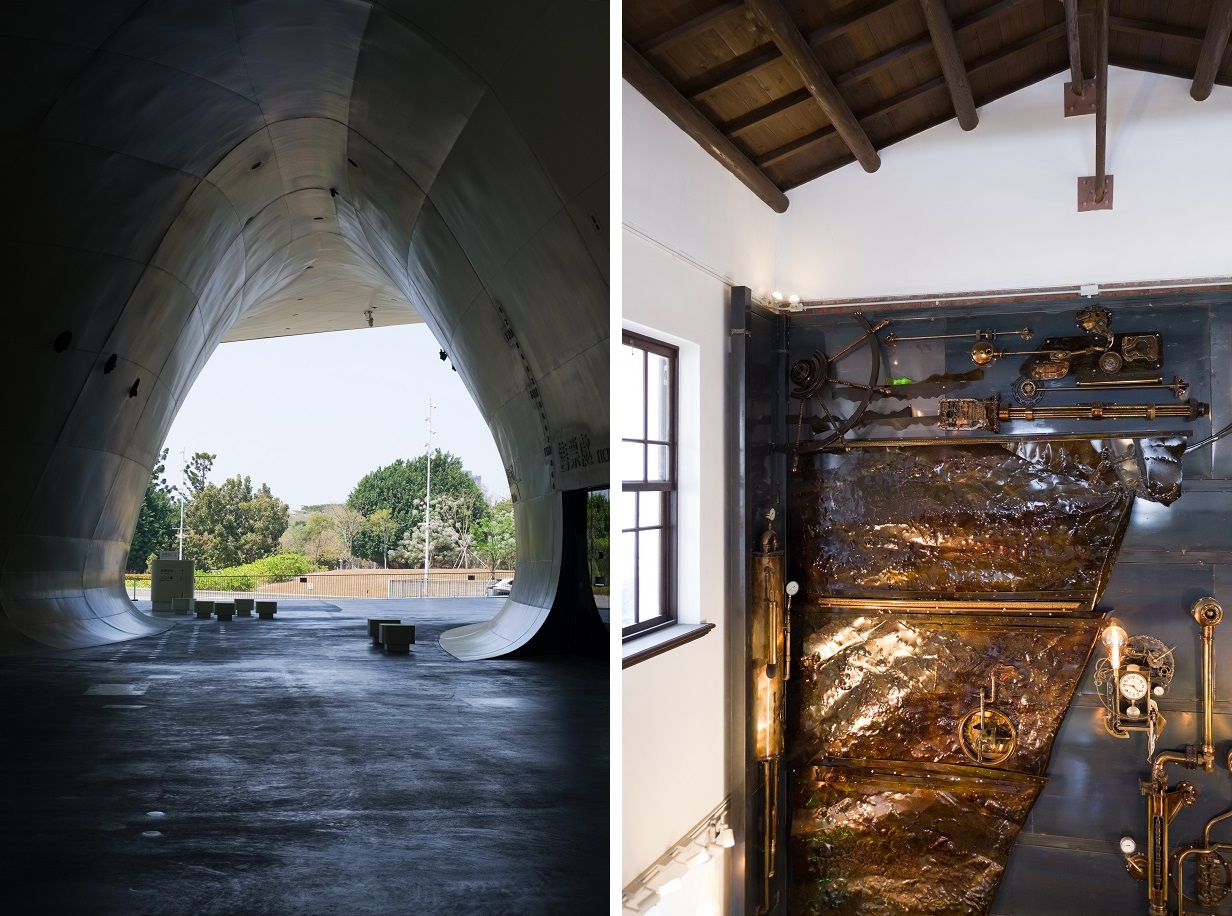
Looking out into Weiwuying Metropolitan Park; Steampunk decor at Old Sanwa Bank
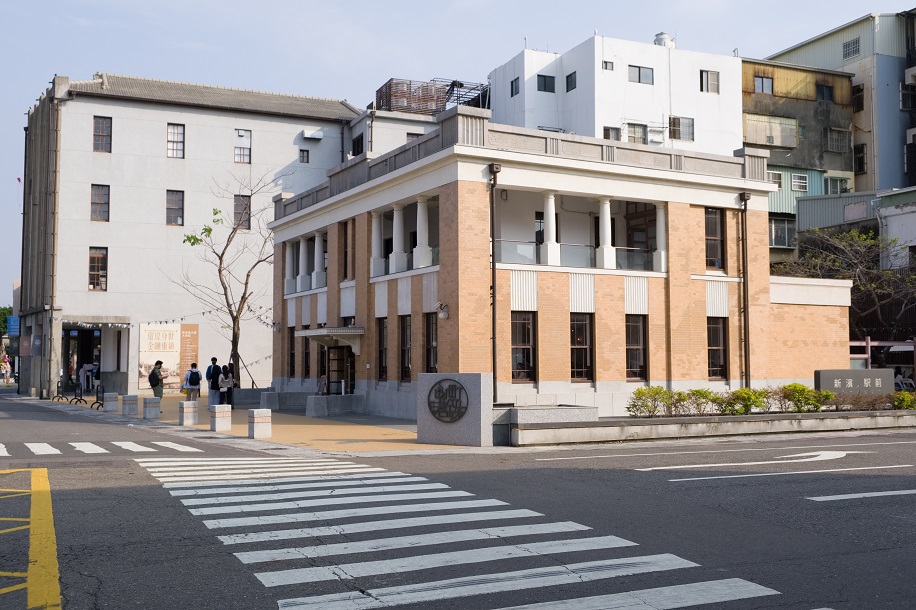
Old Sanwa Bank is a newish café in the historic Hamasen neighborhood
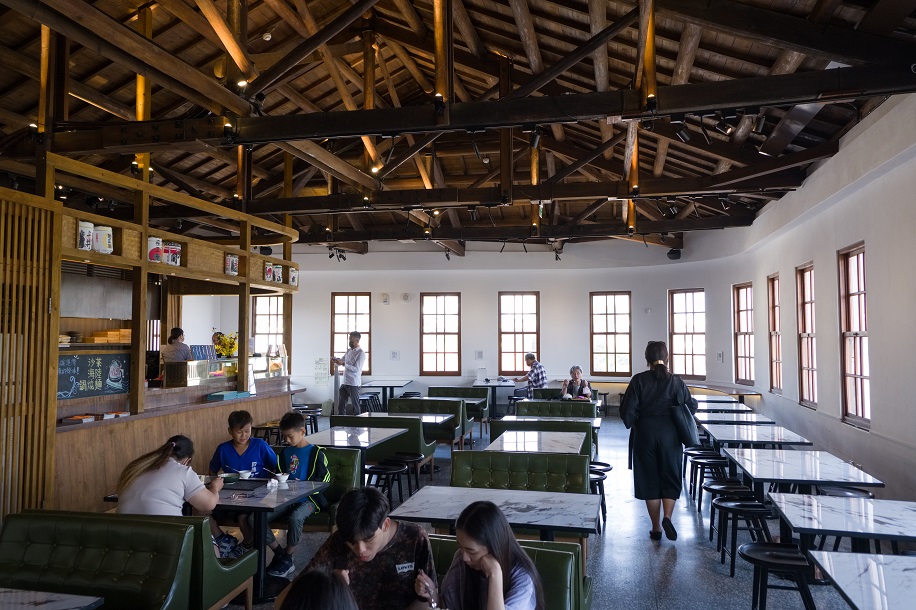
Inside the top-floor dessert parlor at the Hamasen Trader Building next door
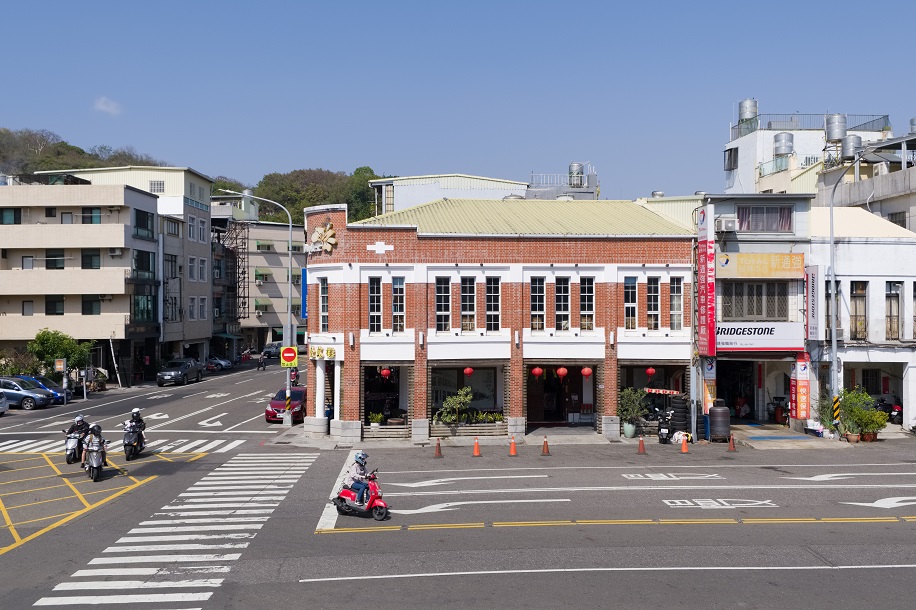
The view from the upstairs veranda at Old Sanwa Bank
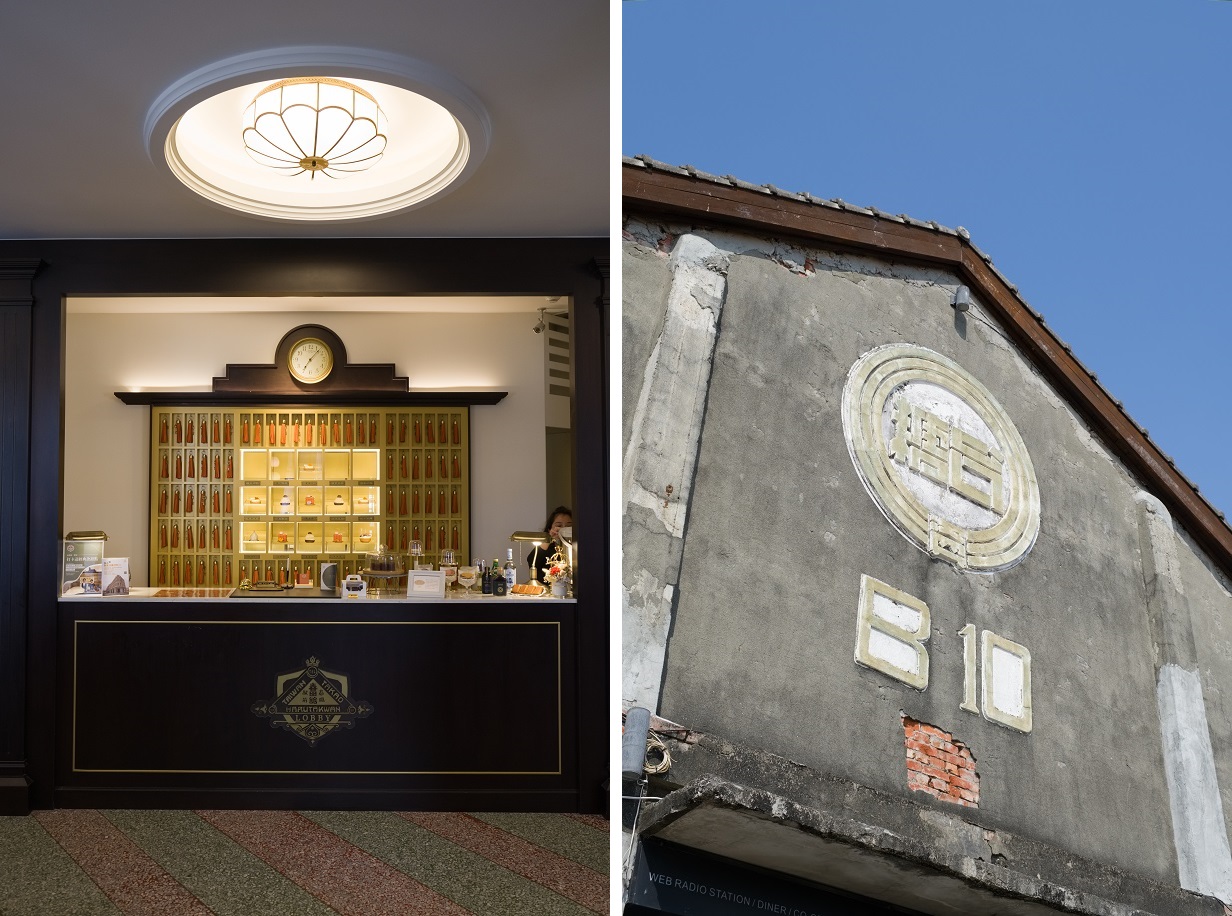
The street-level cake shop at Hamasen Trader Building; a former sugar warehouse
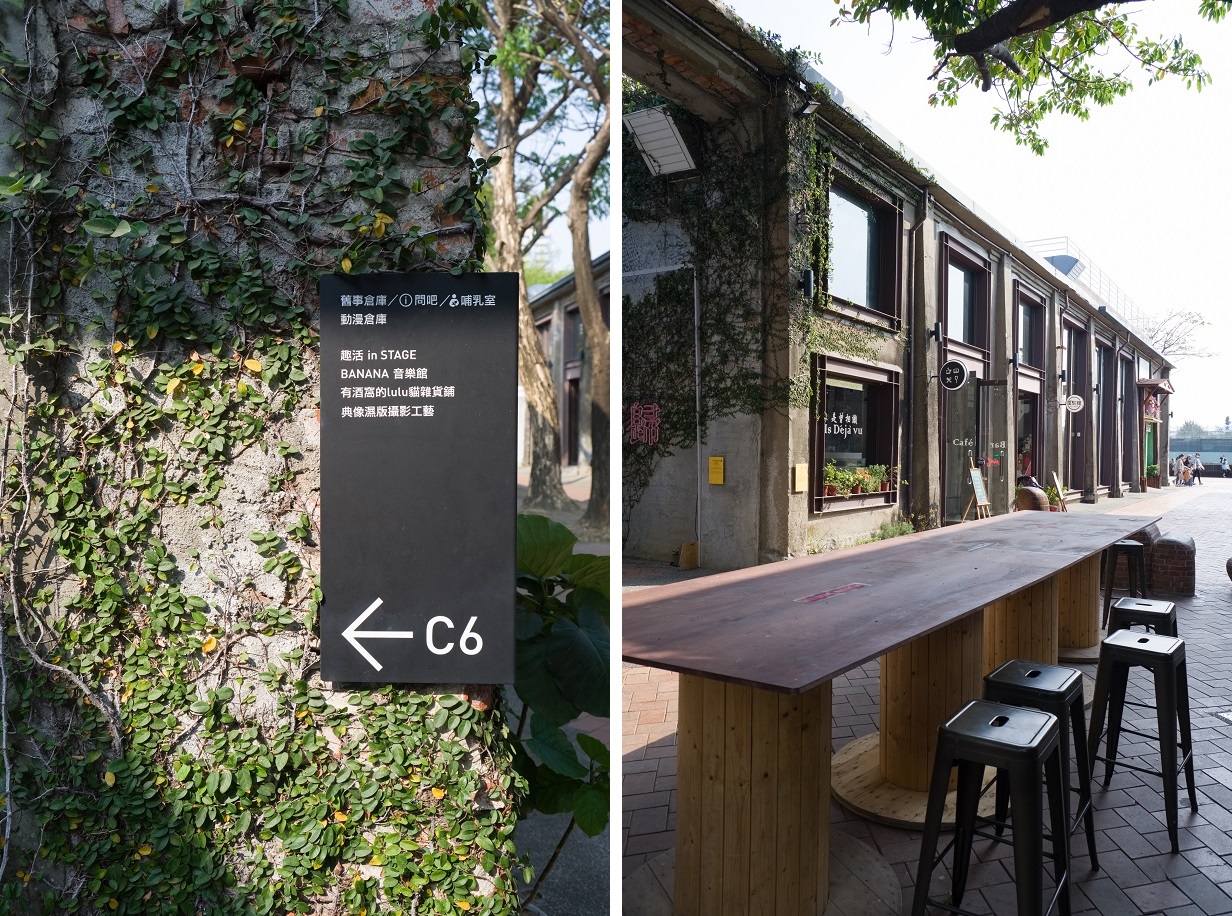
Signage at the waterfront Pier-2 Art Center; seating on a laneway running to the harbor
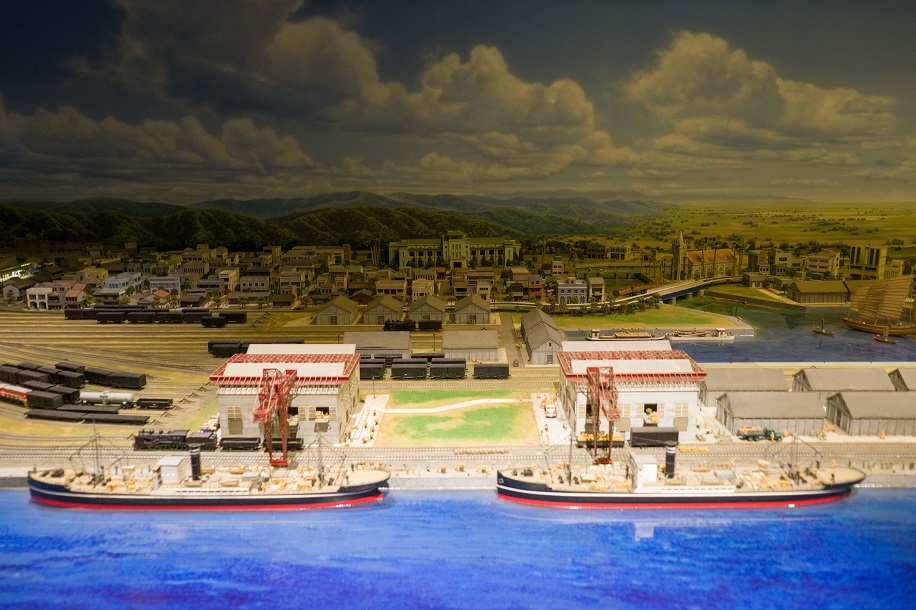
Japanese-era Kaohsiung as shown in a model at the Hamasen Museum of Taiwan Railway
My interview subjects did not gloss over the difficult relationship southern Taiwan has long had with the wealthier and more powerful north. Kaohsiung was once derided as a cultural desert by Taipei residents, and this perception has only begun to change in the past few years. A chief driver in this is the central government’s goal to narrow the gap between north and south, partly through financing a slew of cultural venues and new public transit, while municipal authorities are enticing microchip manufacturers and high-tech companies to set up shop in Kaohsiung. Compared to Greater Taipei, which is hemmed in by mountains, the southern metropolis has the advantage of space and the capability to host large-scale entertainment events: it was the only stop in Taiwan for K-Pop supergroup Blackpink during their recent Asia tour, a distinction that will be repeated when Coldplay comes to town this November.
Given my overambitious scheduling, there wasn’t enough time to see the fanciful twin pagodas built over a scenic lake named “Lotus Pond”. That was the image of Kaohsiung I had grown up seeing in Hong Kong. Nor did I get to visit the former British consulate on a hill guarding the northern entrance to the harbor — its combination of a tiled roof, red-brick walls, and an arcaded veranda mirroring some of the colonial-era buildings that still stand in my hometown.
What I did manage to do though was spend half a day with fellow blogger Jeff Bell and his wife Kristi before catching the high-speed train north to Taoyuan (the location of Taiwan’s main international airport). The Bells previously lived in Bangkok and upped sticks during the pandemic, swapping squiggly Thai script for even-harder-to-read traditional Chinese characters. They survived hotel quarantine to settle into new jobs and a new life in Kaohsiung with their cats.
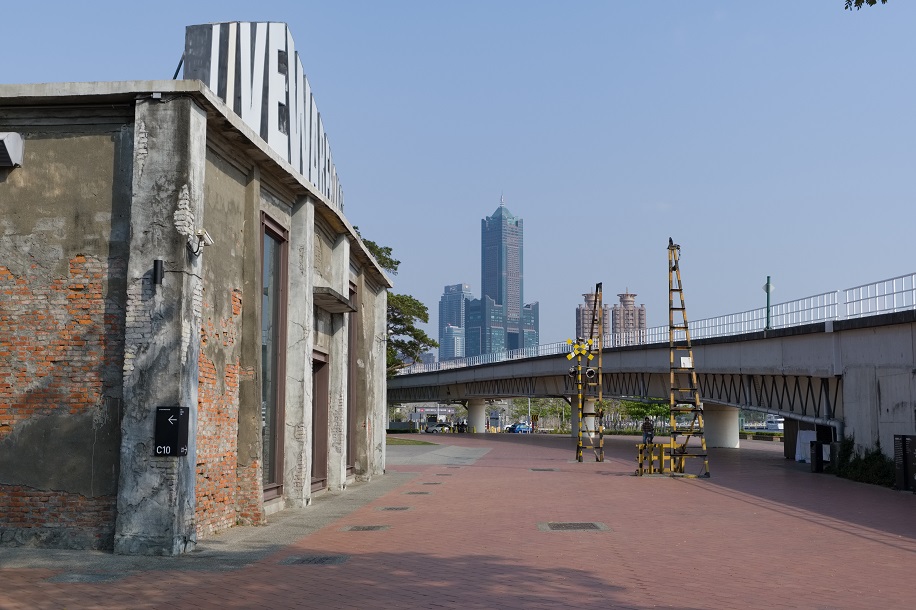
A live music venue and the light rail line skirting the renovated waterfront
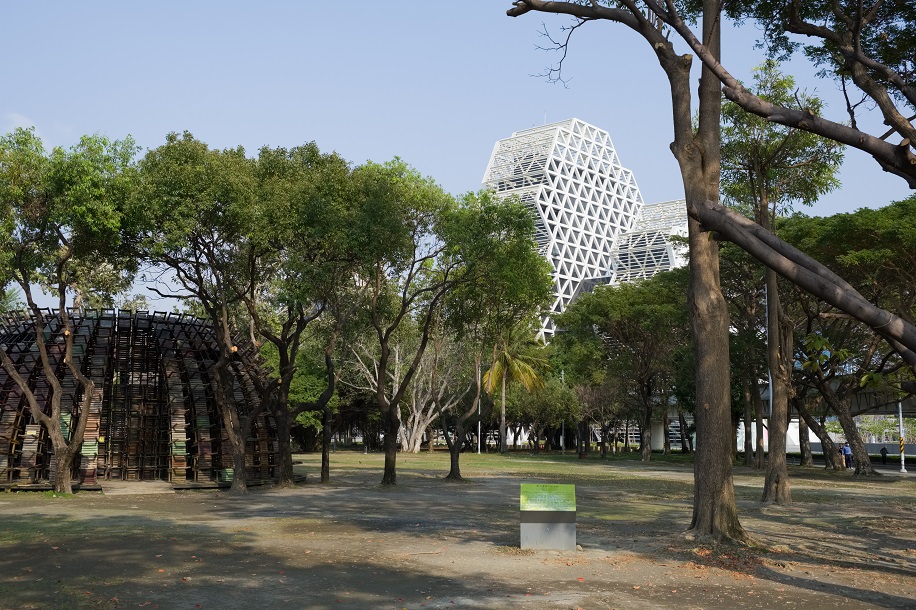
On the grounds of Dayi Park, right across the street from the Kaohsiung Music Center
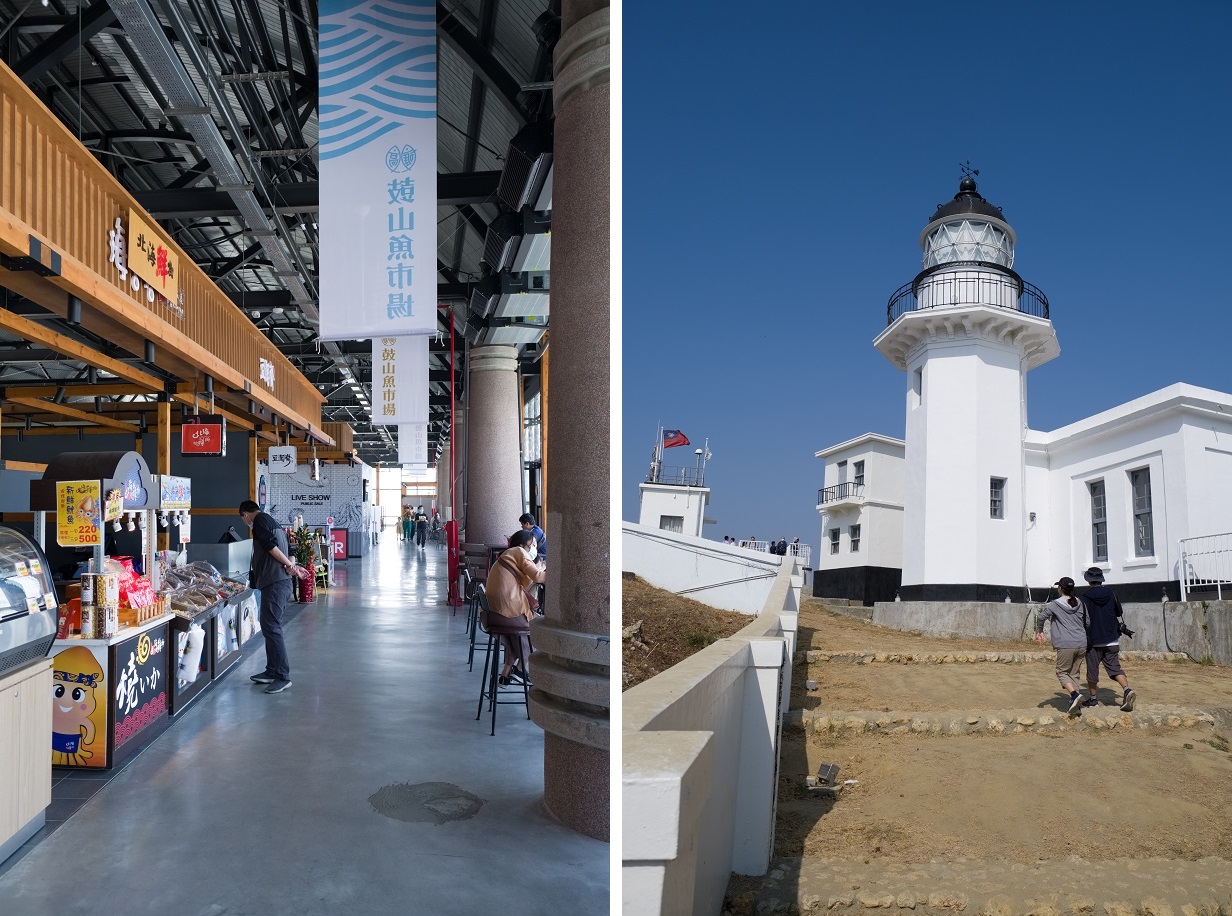
Food stalls at Gushan Fish Market; Kaohsiung Lighthouse crowns a hill on Cijin Island
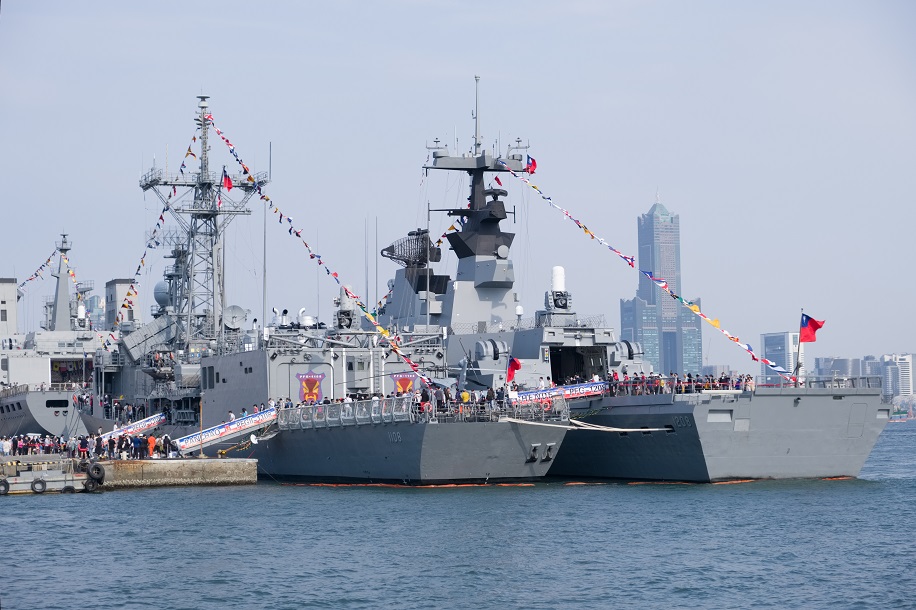
An open day for Taiwanese navy ships moored in the harbor
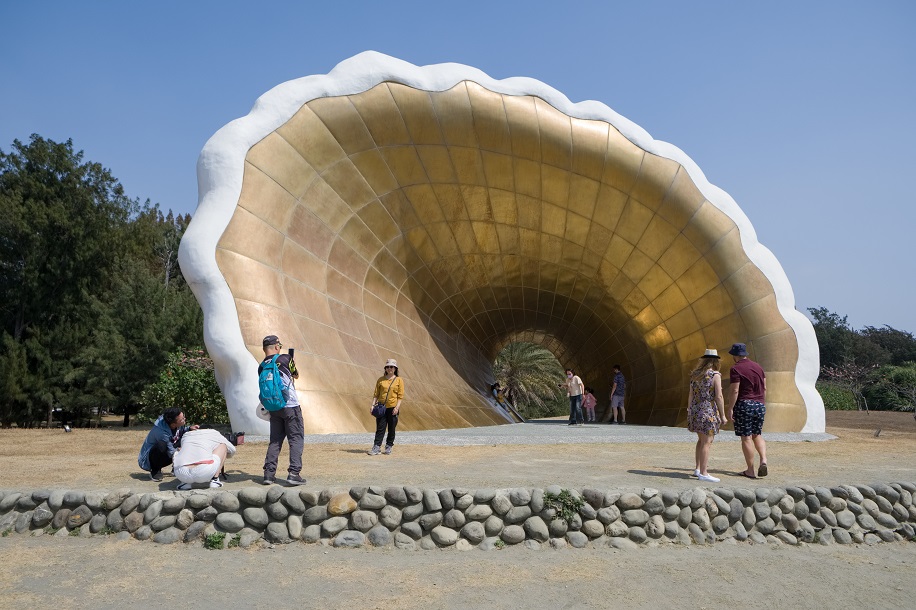
The Shell House, a sculpture on Cijin Island that resembles a giant golden clam shell
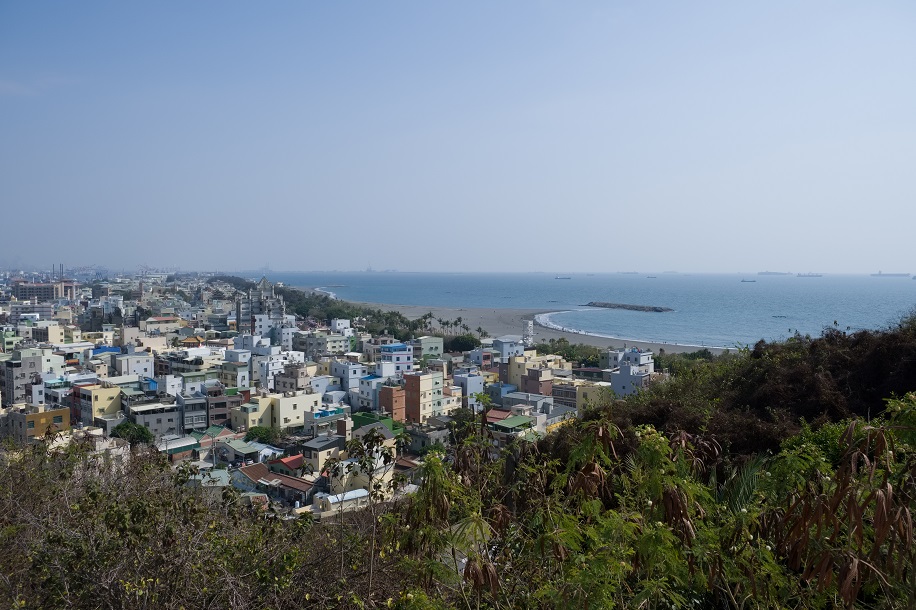
Overlooking Cijin Island’s beach and the Taiwan Strait from Cihou Mountain
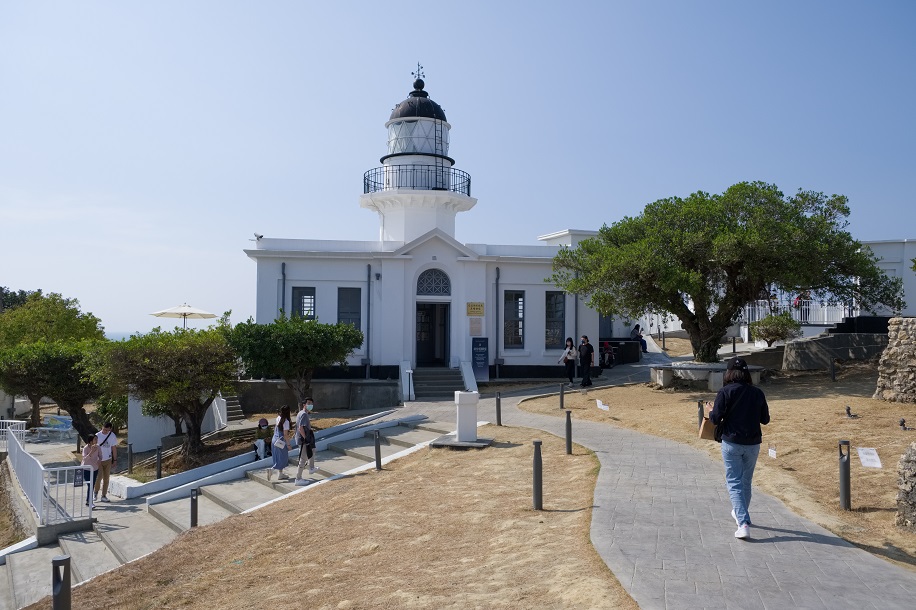
Kaohsiung Lighthouse has stood watch over the port since 1883
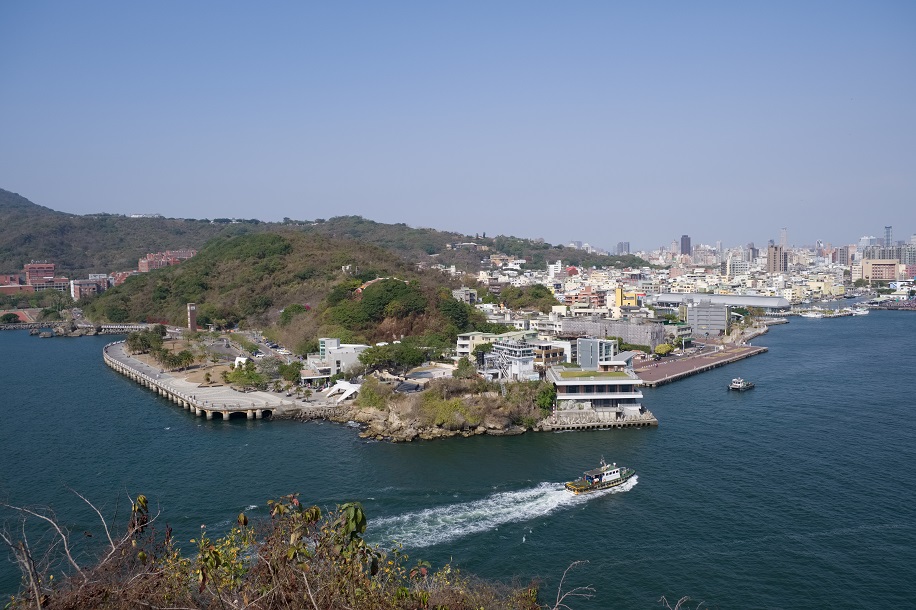
A boat sails through the narrow northern entrance to Kaohsiung harbor
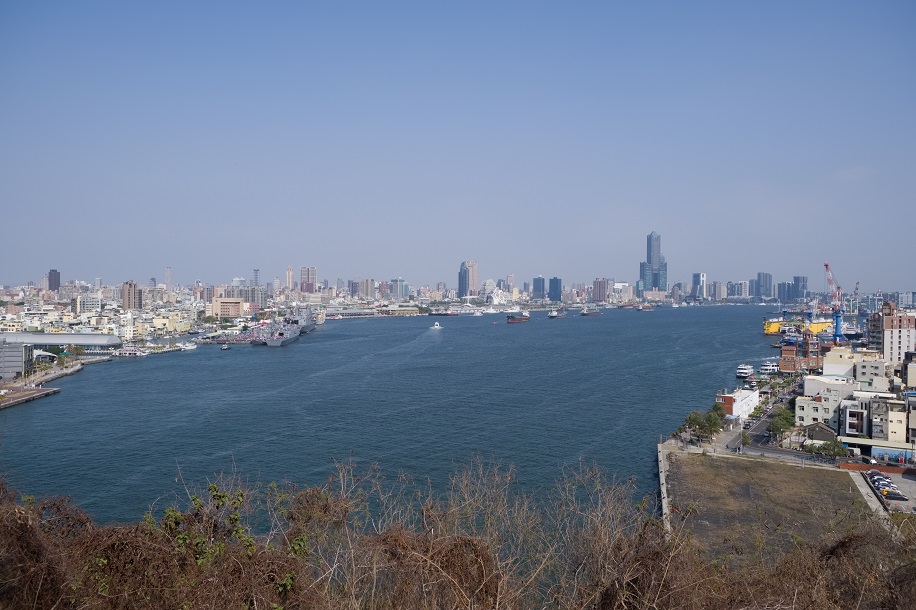
The modern city was developed around a sheltered deep-water lagoon
Jeff, Kristi, and I caught up over hearty bowls of local soup noodles in the converted Gushan Fish Market, then took the ferry across the water to Cijin Island: a popular weekend day-trip destination for its long grey-sand beach, seafood restaurants, and tented stalls selling local snacks. We happily did touristy things like eating ice cream and renting a four-seater electric trishaw, which Jeff pedaled to navigate the coastal promenade and grassy mounds above the shoreline. The three of us stopped to admire quirky large-scale sculptures along the way, like one that resembled a giant seashell, before marching up the hill to an 1880s lighthouse facing a newly expanded viewpoint overlooking the busy harbor. Back on the mainland, we strolled through the historic Hamasen quarter and enjoyed Taiwanese craft beer in a converted pier-side warehouse. Then it was time for me to bid the Bells adieu and pick up my bags at the hotel before setting out for the high-speed train station.
I loved Kaohsiung so much that I have resolved to return later this year for a holiday. Bama has wanted to visit for ages on account of the unusual design of its tallest building, 85 Sky Tower. Being a fan of Monocle, he is also excited to witness an ongoing urban transformation that demonstrates what is possible when citizens’ demands for a more livable environment are matched by political will. I look forward to introducing Bama to Kaohsiung at a more relaxed pace, exploring the many attractions I did not get to see in March, and hanging out with Jeff and Kristi again on their days off. ◊
* * *
Postscript: The online version of my latest feature story in DestinAsian magazine can be viewed here: A New Chapter for Kaohsiung.
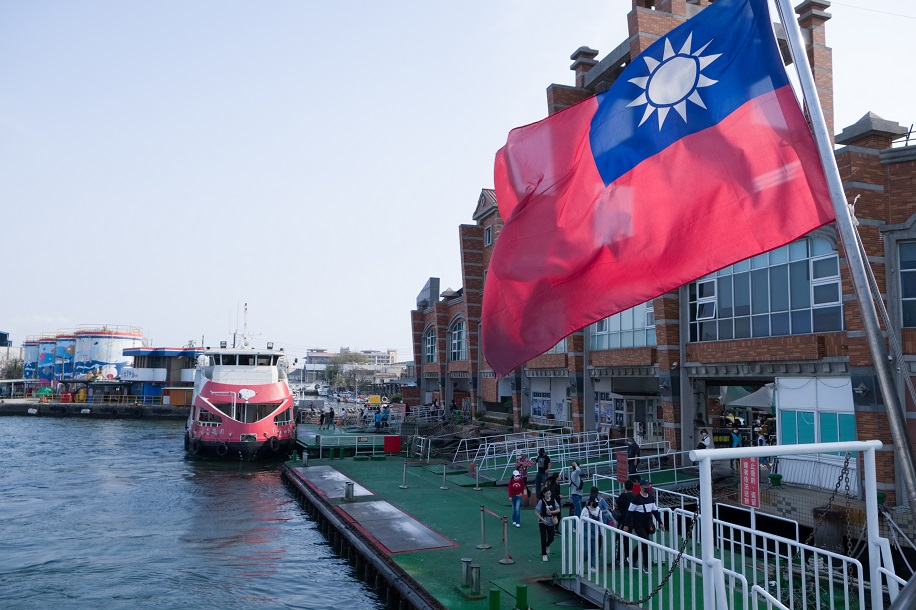
The view from a ferry preparing to leave Cijin Island
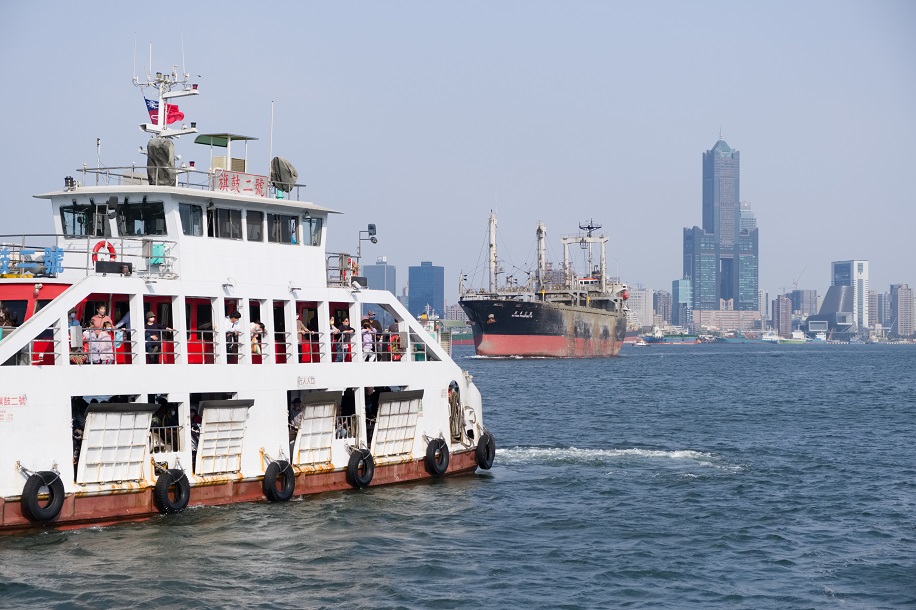
Harbor traffic with a backdrop of 85 Sky Tower, Kaohsiung’s tallest building
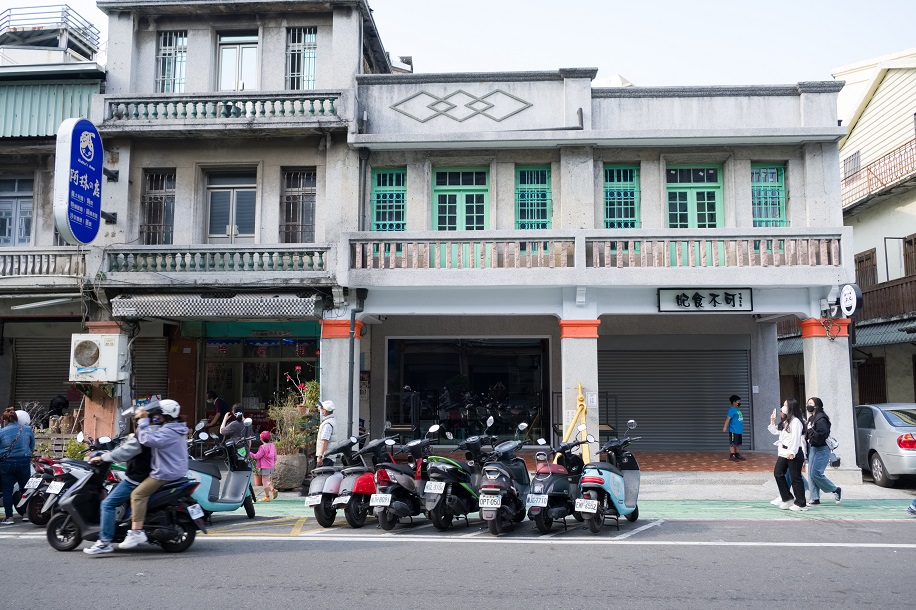
A row of historic shophouses in Hamasen
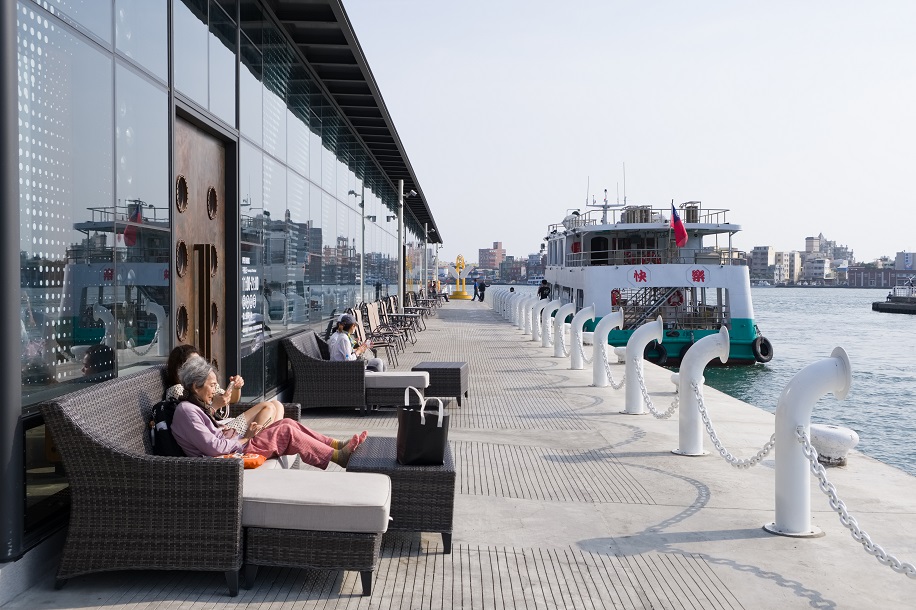
Soaking up the views from the pier at Gushan Fish Market
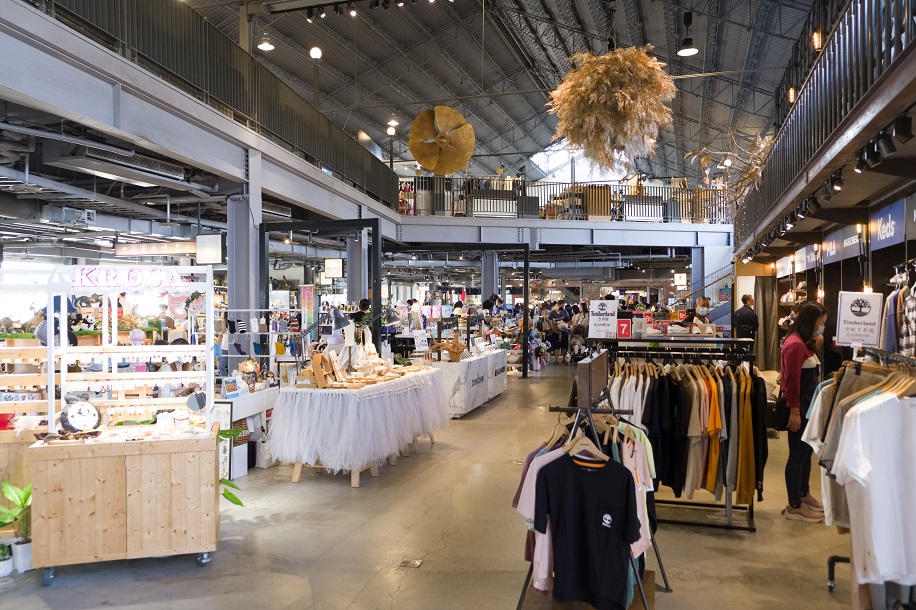
Stalls and retail outlets inside Kaohsiung Port Warehouse No. 2
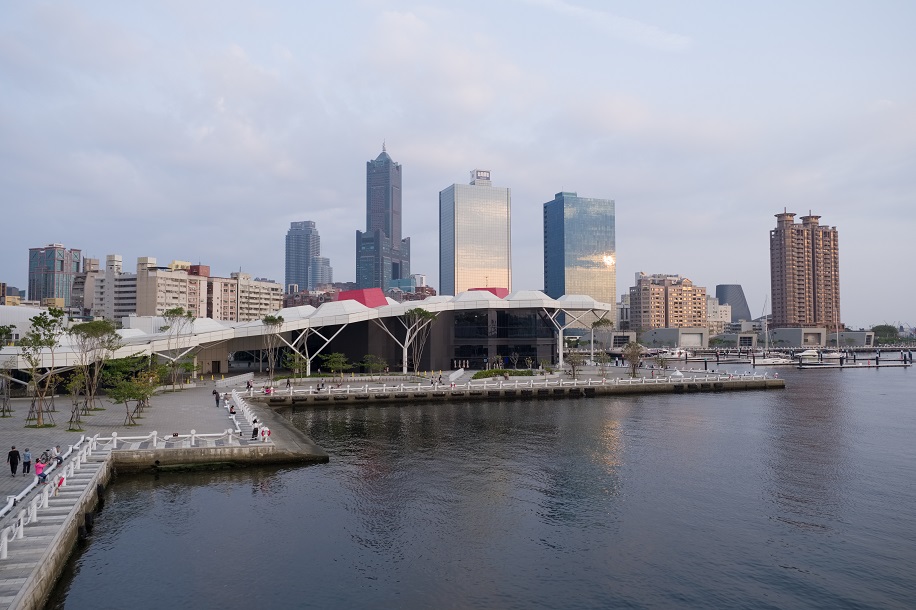
The roof of the multipurpose hall at Glory Pier is meant to recall a coral reef
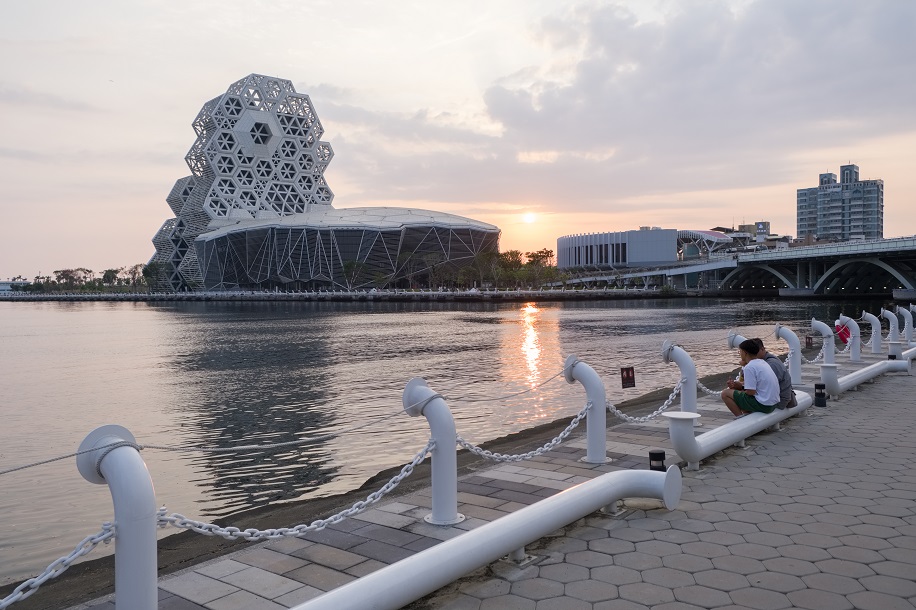
Admiring the sunset from the promenade on Glory Pier
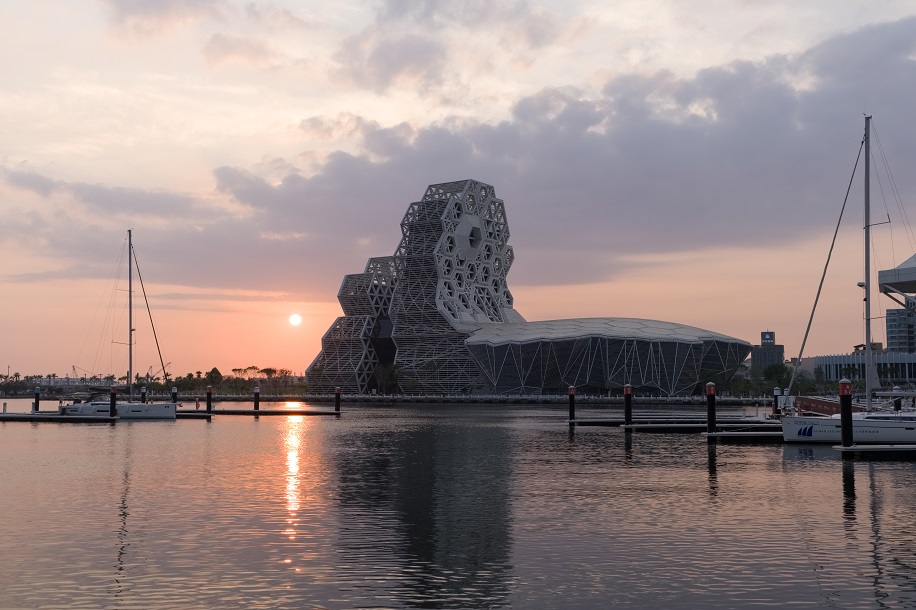
A parting shot of the main hall at Kaohsiung Music Center




 Plus Ultra
Thanks for this informative and enjoyable article and photos! I don’t know much about this part of the world, and was glad to read such a positive story. I look forward to reading about your next trip!
I’m happy you enjoyed it, Marilyn! Thanks in turn for reading and commenting; there will be a lot more to come from Kaohsiung towards the end of the year. Fingers crossed I’ll be posting a bit more regularly then!
Such an interesting article James! To be honest, I never think of Taiwan when it comes to must see Asian destinations but I should change this. The more I see of Taiwan the more intrigued I become. Thanks for sharing!
Taiwan is fantastic, Anna – the people there are incredibly friendly and hospitable, and the country packs in so much in a relatively small area. There are gorgeous tropical beaches in the south, old forests and high alpine mountains in the center (that sometimes get a light dusting of snow), hot springs and historic mining towns in the north. And of course the cities have bustling night markets full of street food. Hope you make it there in the not-too-distant future!
I can’t wait to see this city with my own eyes, after all those years of being curious about it! I have a soft spot for a place that keeps evolving to be a better version of itself, one that puts the happiness of its people first, that uses soft power to influence others. From your story, Kaohsiung sounds like it is moving exactly in that direction.
Bama, I’m certain you will love Kaohsiung as much as I did back in March. Two full days was far too short even if it was for work… my personal to-see list of places in the city just keeps getting longer!
Unfortunately, I only glimpsed Kaohsiung from its railway station when I arrived from Tainan to the airport not long before Covid. Thanks for sharing.
There’s so much to see and do – I felt like I barely scratched the surface of Kaohsiung in the brief time I spent there.
Taiwan has been on my list for a while; I really want to do a whole-island road trip, and now you’ve given me a new play to see. One thing that jumped out at me in your photos was that there were few people around. Is this new area just getting going, or were people at work on the days you were there? So fun that you got to see Jeff and Kristi; I met them for drinks and dinner in Bangkok in 2019, I think! Lastly, how lucky you were to connect with the two architects. They seem so informative on their own and also gave you so much quick access to others in your limited time. I think your boss should be thrilled with what you got done in a few days!
What an interesting observation, Lex – that never occurred to me when I was choosing and uploading photos. Nearly all the shots in the first half of this post were taken on weekdays (during working hours) when I was out with the architects. I didn’t manage to shoot the ground floor of the café at Old Sanwa Bank, because it was lunch hour at the time and absolutely packed. I was told the waterfront tends to get busier on weekends, especially late in the afternoon and at night. When we had lunch, Jeff and Kristi did in fact talk about meeting you in Bangkok!
Oh nice entry and I’ll read your article too. I wasn’t aware of the Japanese influence here although I know they controlled Taiwan for some time. I didn’t know about the Americans bombing Kaohsiung either. I’ve haven’t been to their waterfront. I’ll have to make sure I visit all of these places next time I return there.
I’m not sure why your editor told you not to do it again. You used your resourcefulness to get the job done in such a short timeline.
My editor did say that he usually budgets at least five days, ideally a week, for trips like these when he’s expected to produce a longform feature story. In hindsight it was quite the miracle I pulled it off!
I think the Japanese influence on Taiwan is pretty discernible in the culture of politeness, the beautiful and thoughtful way gifts/food are packaged, the prevalence of cute mascots), and the urban street pattern of Taiwanese cities. After leaving Kaohsiung, I spent a night in a suburban area outside Taipei near the airport and the overall vibe of the place just reminded me so much of Japan. And it’s also the sense of safety or absence of petty crime. On multiple occasions local residents (including the Bells) showed me how you could leave your bag unattended in a public place and no one would try to steal it. I was totally flabbergasted!
Like Lexie, Taiwan has been on my list for a long time. Kaohsiung is truly amazing, and imagine there’s much more to see than what you’ve been able to show us here. The music Centre building is extraordinary as is the rotating bridge.
Lucky you getting to connect with the Bells. I miss Jeff’s blog.
Alison
Perhaps Jeff will do another one of his hilarious MS Paint-illustrated posts after Bama and I visit Kaohsiung – or not! The funny thing about the bridge is that I saw it rotating from afar and walked past several times, but never got the chance to actually cross it on foot (on account of the crazy schedule). Nor did I see the Kaohsiung Music Center all lit up at night.
Fingers crossed you’ll get the chance to visit sometime. I know for a fact that two airlines run nonstop flights between Taipei and Vancouver, as my editor usually books either one of them on his summer trips back home (he’s from Victoria).
Great read as always James. And a most evocative photo gallery. I bet your bosses know by now that if there’s anyone who can pull off a brilliant story in such a tight deadline, it is you. Would love to read the published article.
Taiwan entered my wish-list after reading your earlier accounts, Syaman’s Exchange in particular. This post adds another urban dimension that is as intriguing. Your photos evoke memories of Northern Spain for some strange reason! You are so fortunate to have got an insider’s perspective through the architect couple. And it’s great that you also managed to fit in some fun moments with Jeff and Kristy.
We very nearly made it to Taiwan in 2020. Our closest friend’s son, based in Hong Kong, married a Taiwanese girl in 2020. The wedding was to be hosted by her parents living in Taiwan and I was excited beyond words when we were invited and began planning an extended visit. Then the pandemic reduced their dreams and ours to a Zoom wedding with just their friends in attendance. Hope to get there someday.
Madhu, you are far too kind… I’m 100% sure that if it hadn’t been for the architect couple, I would have come away with a much weaker story in the magazine! The link to the full online version of the article can be found here: https://destinasian.com/editorial/a-new-chapter-for-kaohsiung
It is so interesting to read that my photos from Kaohsiung remind you of Northern Spain – no doubt it is the green hills that come right up to the city and harbor, the area’s industrial heritage, and its ongoing transformation that mirrors the success story of Bilbao.
Such a shame that Covid wreaked havoc on the big wedding plans for your closest friend’s son and what would surely have been an unforgettable trip for you and Ravi! Fingers crossed, a “replacement” vacation in Taiwan will happen much sooner than you think.
Just dropping by to let you know I enjoyed your brilliant feature story James. Hope your editor was suitably impressed.
A belated big thank you, Madhu! He never asked me to rewrite any parts of the initial draft, nor did he do very much editing, which is always a good sign.