
Uzbekistan Eats: Somsas and So Much More

Suitcases propped against a counter in the vaulted departure hall at Tashkent train station, Bama and I wolfed down our own triangular somsas in a paper bag, biting through layers of thin, flaky pastry to get to the fragrant beef and onion filling. This humble breakfast on the go would herald the start of a culinary adventure through Uzbekistan — 14 days spent hopping between the ancient Silk Road cities of Bukhara, Khiva, and Samarkand, along with Tashkent, the country’s modern capital. After years of dreaming about such a trip, we were ecstatic to finally be in Central Asia.
Over the next two weeks, we saw how the food of Uzbekistan reflects its geographical location at the crossroads between Europe, Persia, China, and India. Not once did we get bored of the local fare, be it bread baked in a vertical clay oven called a tandyr (or tandoor); manti, steamed dumplings brought across the steppes by nomadic Mongol- and Turkic-speaking peoples; succulent shashlik (kebabs); or lagman, derived from the Uighur rendition of ancient Chinese pulled noodles. Most dishes are enriched by spices and herbs traded along the Silk Road — dried barberries and saffron from Persia, turmeric and cumin, asafetida that grows wild in the desert. Russian colonization and Soviet rule brought new ingredients like potatoes, and popularized the mayo-drenched Olivier salad.
Before continuing, I must disclose for the benefit of any vegan and vegetarian readers that Uzbekistani food is undeniably meat-centric. But non-carnivorous travelers will find more options in the more tourist-oriented restaurants. Dumplings and somsas have various fillings, some of them plant-based. A classic accompaniment to any main course is achichuk, a simple tomato-and-cucumber salad with white onion that we enjoyed practically every day, chiefly because Central Asian tomatoes pack in a lot more flavor than the watery, bland ones we tend to get in Jakarta. Then there’s the luscious local fruit: peaches, apricots, pomegranates, and more. Botanists believe Central Asia is where apples first originated. Naturally, we had to try golden apples two ways: in their original form and freshly squeezed into a frothy, full-bodied juice. Bama’s prior research suggested the melons of this region were historically prized, so he was over the moon when we tasted watermelon and two kinds of white melon at a Samarkand restaurant. All three were noticeably sweeter than their Indonesian-grown counterparts.
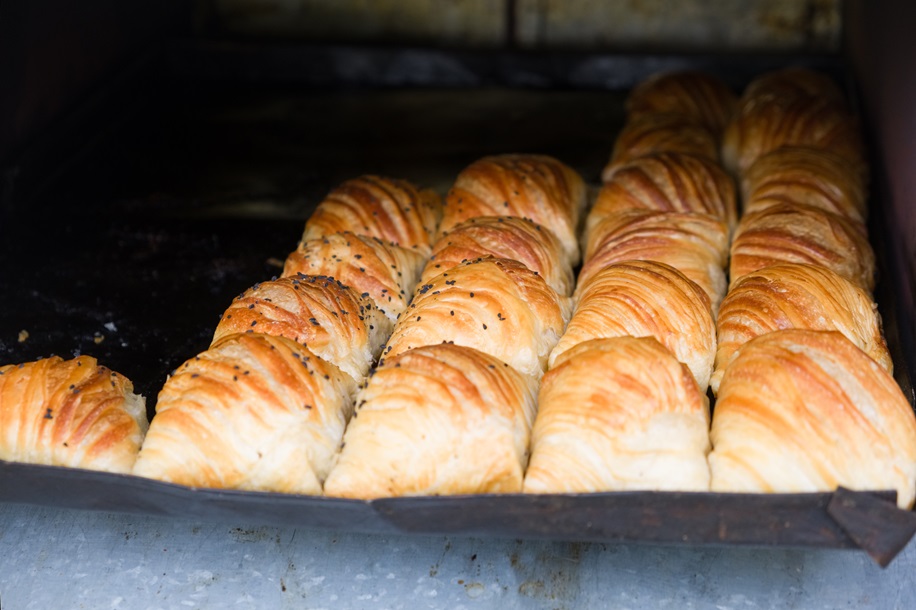
Freshly baked somsas in a street-side oven in Samarkand
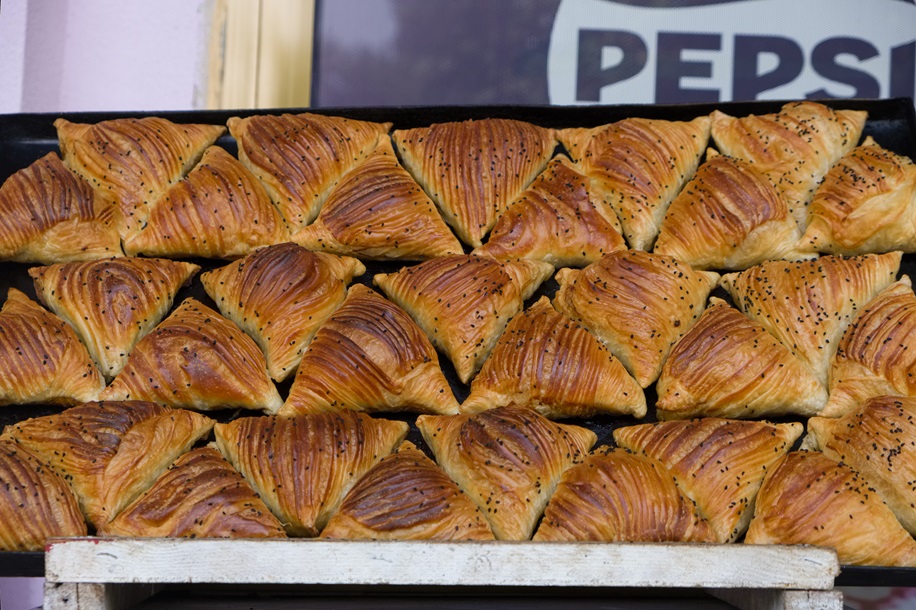
We sometimes bought these flaky pastries for breakfast

Samarkand’s traditional non bread; a bowl of lagman at Shokhrukh Nur

Our favorite kind of plov (Samarkand style) with a glass of homemade peach juice
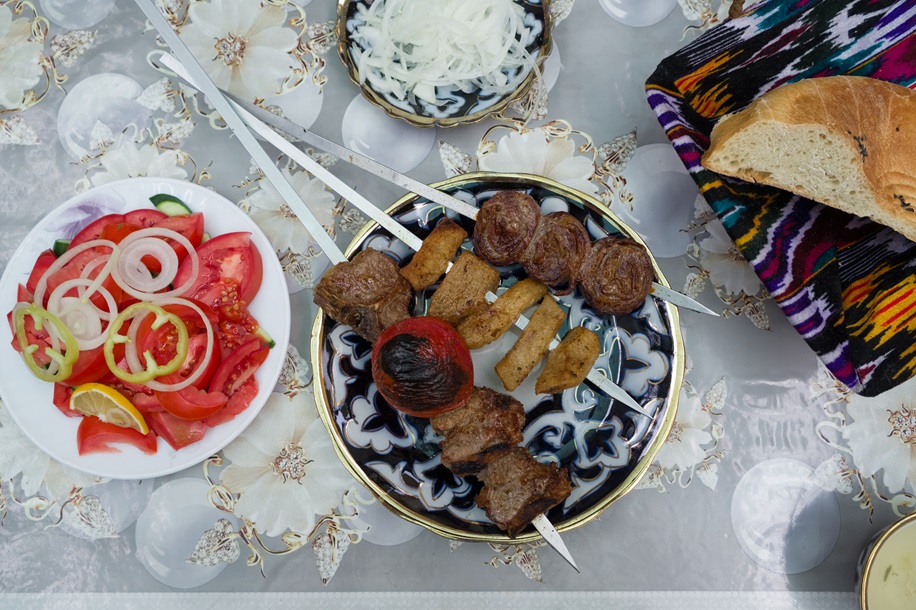
Shashlik of lamb loin, lamb tail fat, and beef rolls at Shokhrukh Nur
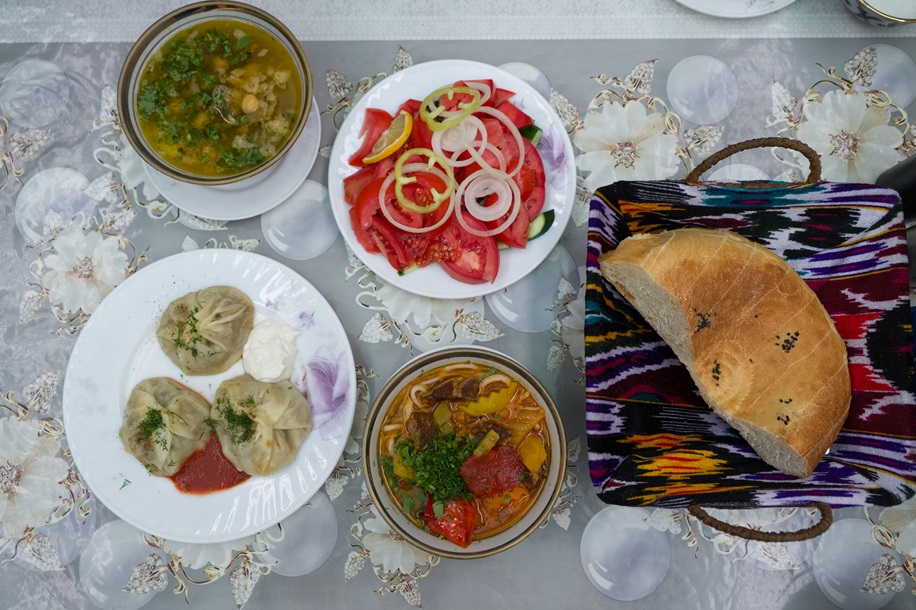
A spread of shurpa, manti, achichuk, and lagman at the same restaurant
Uzbekistan’s penchant for both rice and bread makes perfect sense given the region’s harsh winters. The national dish, plov (also known locally as osh) is a delicious rice pilaf that usually incorporates mutton or beef, as well as carrots, raisins or sultanas, and sometimes chickpeas. Each city and region of the country has its own variation; Bama and I agree that our favorite was the layered Samarkand-style plov at the small eatery attached to the family-run hotel where we stayed for three nights. (This particular plov is the one in the opening shot).
Samarkand as a whole proved to be a mouthwatering introduction to Uzbekistani cuisine. We sought out the city’s legendary non bread (more on that in a future post), and had our fill of local staples at Shokhrukh Nur, just a few doors down from the hotel. There was excellent lagman in an aromatic, herb-rich broth featuring red and yellow bell pepper; you could tell the noodles were hand-pulled from their suppleness and smooth yet springy texture. Served with sour cream and a piquant red dressing, the plump, meaty manti were wrapped in a thin and delightfully chewy skin of dough. I loved Shokhrukh Nur’s version of Uzbek shurpa — a slow-cooked meat and vegetable soup. Beneath floating pearls of fat lay tender beef pieces, chunky red carrot and potato, and chickpeas. Sprinkled with dill and coriander, it struck me as a comforting bowl of goodness, like a warm hug on a cold winter’s day. None of the subsequent shurpas I had in Uzbekistan could match its flavor.
Of course, the real reason so many residents and tourists flock to Shokhrukh Nur is to indulge in superb shashlik barbecued on a mangal grill. We chose lamb loin with a whole tomato, beef rolls, and lamb tail fat, which was candidly described on the menu as “lamb buttock.” A full-day food tour of Beirut in the spring of 2019 had acquainted us with its rich taste, so we were keen to savor this guilty pleasure once more. The twentysomething waiter double-checked our order with a touch of concern. “It’s all fat. Are you sure?” Our reply was a clear and unequivocal “yes.” Bama and I ended up returning the same evening for Samarkand-style minced beef kebabs, shaped into patties resembling an American football, alongside separate skewers of lamb tenderloin and grilled vegetables (eggplant, bell peppers, juicy tomato).
After that first somsa in Tashkent, the ubiquitous pastry became our go-to morning snack on most days. At a small barebones eatery on the busy avenue running past the Registan — Samarkand’s most famous historic site — we couldn’t resist buying several from the young baker manning the street-side oven. The buttery, crispy crust with paper-thin layers concealed spiced beef, potato, or pumpkin. Our preferred somsa was the pumpkin one for its symphony of sweet and savory flavors that tickled the palate.
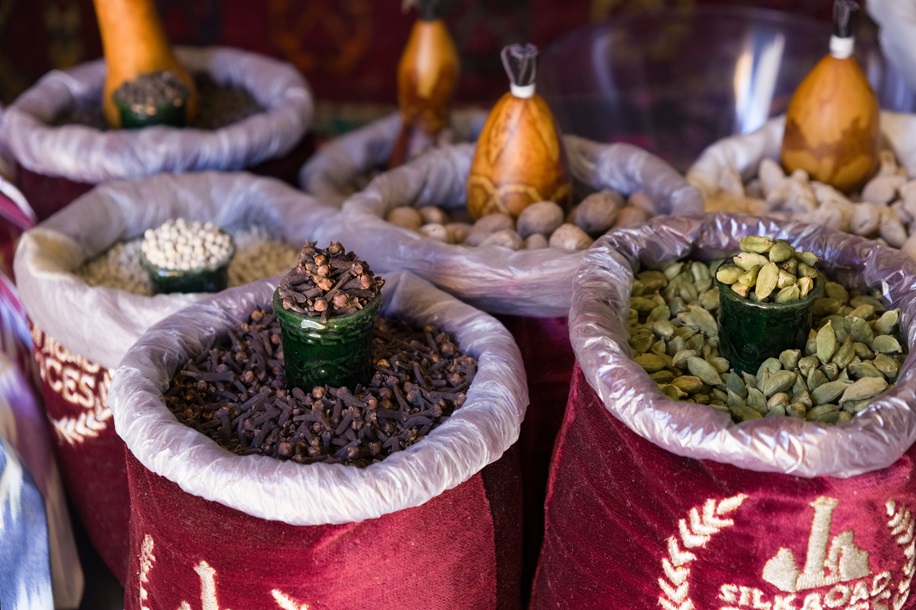
Clove, cardamom, and other spices on display at Bukhara’s Silk Road Tea House

Teatime in Bukhara; the shaded courtyard at Joy Chaikhana & Lounge
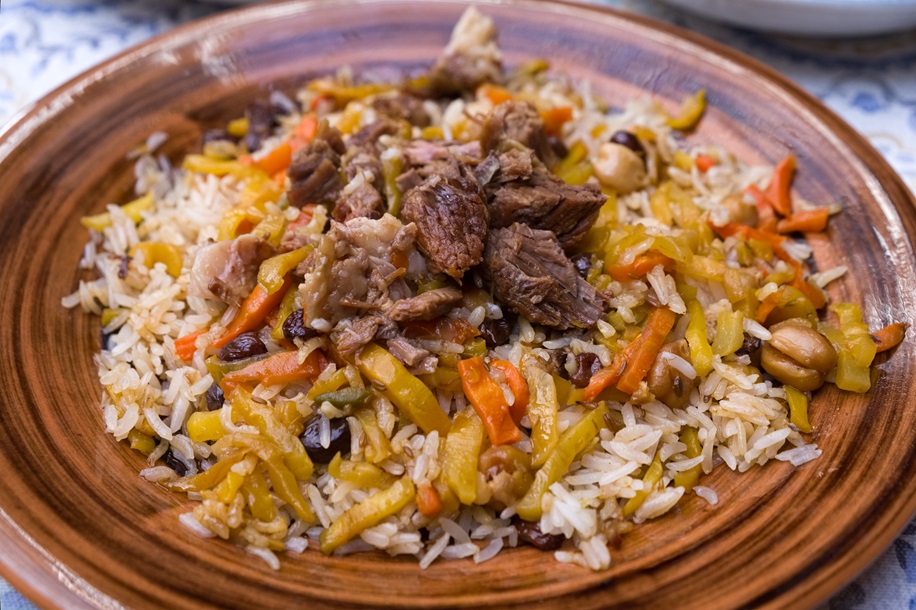
The plov at Joy must be prebooked at least two hours in advance

Pumpkin-stuffed kadu barak and a plate of chakka (traditional yogurt)
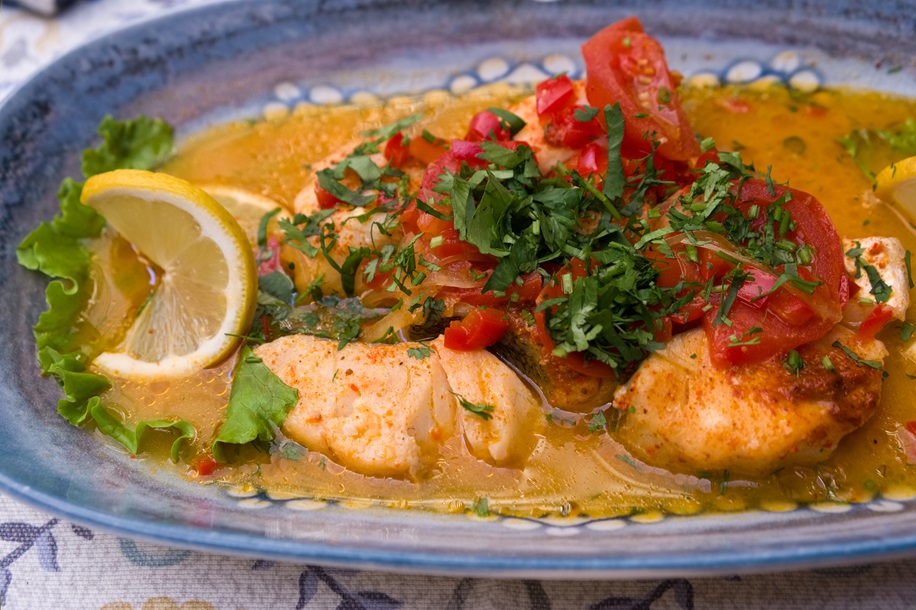
A dimlama stew of pike perch fillet with tomato and onion, also at Joy

Samsushka’s delicious homemade chuchvara
But it was in Bukhara where we enjoyed the tastiest, flakiest somsas of our trip, baked in a tandyr right outside a humble standalone diner across the street from the Central Bazaar. Run by a sweet older couple, Samsushka catered to a largely local clientele, though enough foreign visitors had passed through to rack up more than 100 reviews (plus an impressive 5.0 rating) on Google Maps. We dined here three nights in a row, and managed to sample three of their four somsa varieties: beef and chicken and pumpkin. Potato, alas, had always sold out by the time we got there.
Aside from an addictive tomato chili sauce paired with the somsas, the small kitchen at Samsushka plated up classics like plov and lagman; the latter featured minced beef, a fried egg, and soft chicken sausage. (Samsushka’s take on achichuk had an unexpected kick, being laced with potent red chili.) One night, Bama and I shared a large plate of homemade chuchvara — meat-stuffed dumplings akin to tortellini that are boiled in broth — and an even bigger bowl of shurpa with lamb ribs. Our drink of choice each time was hot green tea infused with lemon, more fragrant and delicate than any lemon tea we’d ever come across.
Uzbekistan has a strong tea-drinking culture, which explains the proliferation of chaikhana or choyxona (literally “tea room”) across the country. These traditional hangouts served as places for exchanging news and gossip, and they also offered welcome refreshment for traveling merchants. Just off a pedestrianized shopping street in Bukhara’s Old City, Silk Road Tea House was our chosen spot for nibbling on sweets, raisins, and walnuts while sipping on two kinds of tea: saffron with cardamom and then a nourishing blend of herbs and spices. The latter had an uncanny resemblance to the herbal brews offered after a treatment at five-star hotel spas in Southeast Asia.
Our next destination was a short walk from the teahouse. Bama had learned of Joy Chaikhana & Lounge through a Euronews documentary posted on YouTube not long before the trip, but we soon discovered the restaurant was booked solid at lunchtime. Luckily, our schedule was flexible and they could still fit us in at 1 p.m. the next day. (We also made sure to pre-order two portions of plov.) The receptionist spoke into her phone and got the message across via Google Translate. “Your table has been reserved for tomorrow. Please, no delays.”
One of the perks of traveling with Bama is his punctuality. We showed up five minutes early and were promptly shown to the flagstone-paved courtyard, where we were seated at a traditional wooden divan called a tapchan with a raised table at the center. Three floors above our heads, the rays of the midday sun filtered through a thin canopy. Joy’s plov was not quite as tasty or complex in flavor as the one we ate in Samarkand, but other dishes left a deeper impression. Chakka, explained on the menu as “Bukhara fermented milk product”, turned out to be thick yogurt garnished with peas. The unexpected highlights were kadu barak, ravioli-like dumplings filled with shredded pumpkin that still retained a bit of a crunch; and the lightly-spiced dimlama stew of pike perch fillet, tomato, and onion.
The food began to look a bit different out west in the Khorezm region. About three hours after leaving Bukhara, our driver pulled over at a rest stop along the highway running straight through the Kyzyl Kum desert for a tea break. Its half-empty restaurant was where we had our first taste of Khorezm cuisine: supersized boiled egg dumplings called tukhum barak served with yogurt sauce. In Itchan Kala, Khiva’s walled old town, Bama and I sought out the local specialty shivit oshi featuring noodles made of dill-infused dough. The one served in a quiet, sky-lit eatery beneath the courtyard of a madrasa was decent enough, but we came across a much tastier version at Terrassa Café & Restaurant, which quickly became our go-to spot for lunch and dinner. One night, we chuckled when a local guide recast the dish as “spaghetti verde” to the group of boisterous older Italians under her care. It would be more accurate to say the flatter, slightly thicker noodles are somewhere on the spectrum between linguine and fettucine.
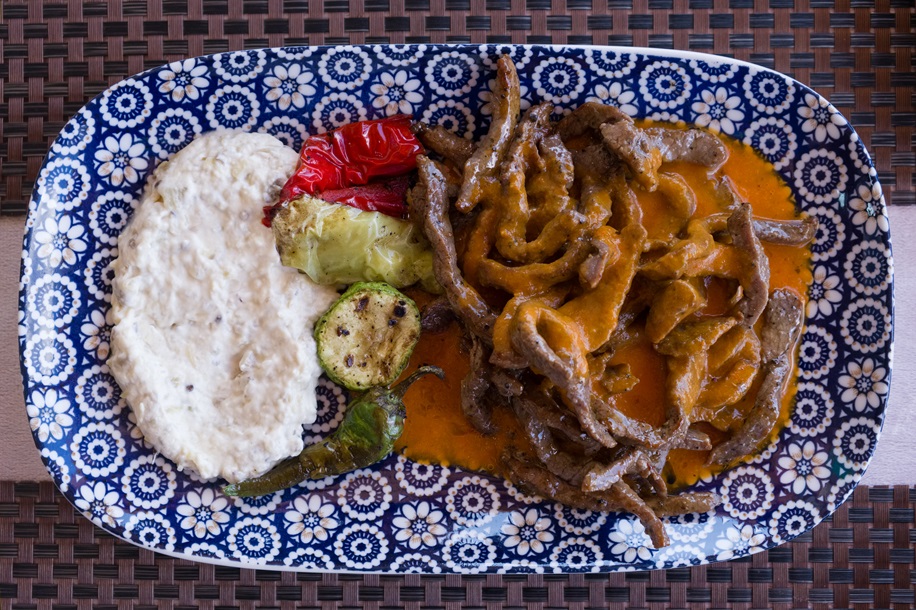
Ali Nazik (eggplant and yogurt purée with meat) at Khiva’s Terrassa Café & Restaurant

Beetroot salad with walnut and diced carrot, potato, cucumber, and apples

A platter of mixed Khorezm-style boiled dumplings with yogurt sauce
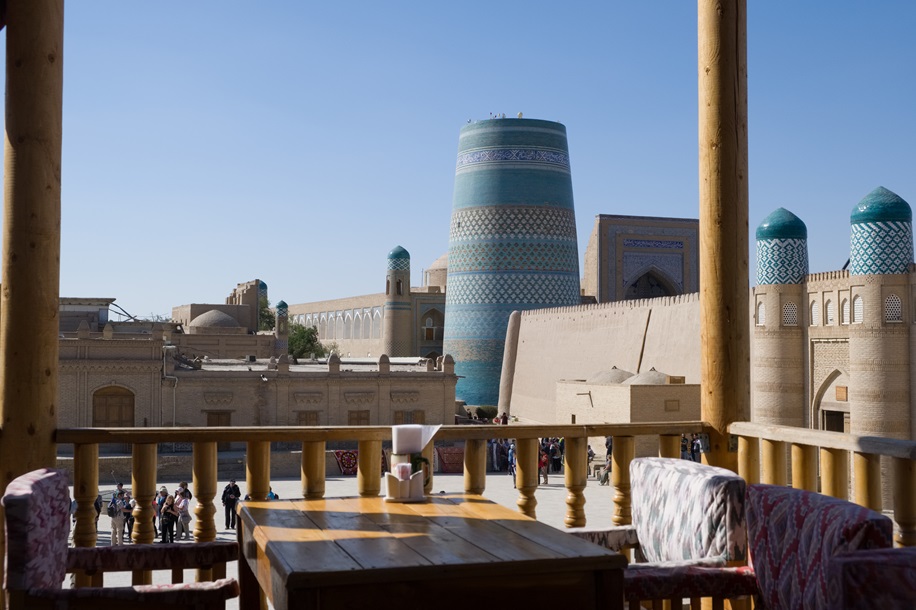
Some tables at Terrassa look out at the unfinished Kalta Minor Minaret
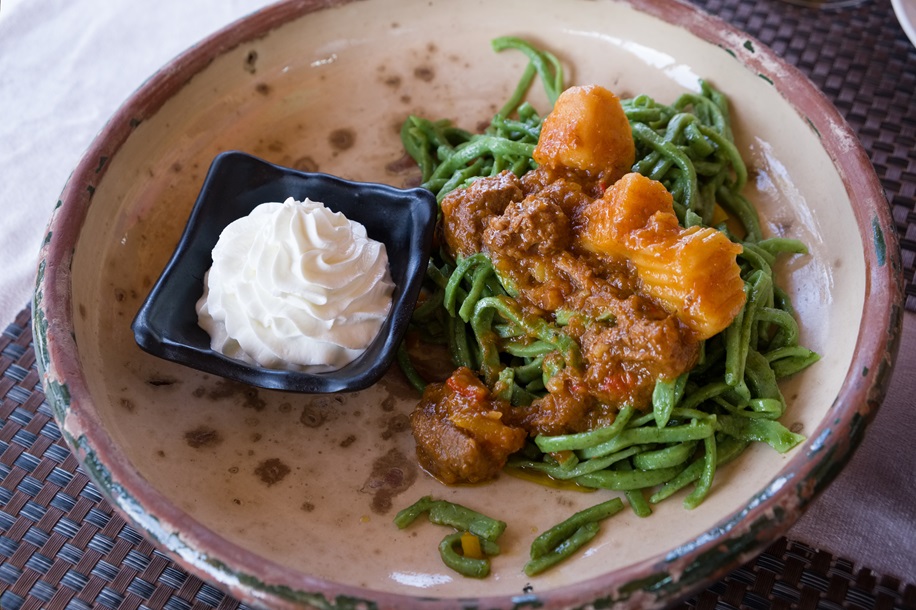
Shivit oshi, a Khiva specialty, features noodles infused with fresh dill

Bama and I loved Terrassa’s gumma (fried half-moon stuffed pastries)

Khiva-style plov with dried apricot — our second-favorite version of the dish

Chalpak (thin tortilla-like flatbread) stuffed with meat
The way shivit oshi is served at Terrassa is a something of a spectacle. First, the constituent parts of the dish arrive at the table on a sizeable wooden platter. The waiter swaddles the vivid green noodles in baking paper, before adding a small bowl of oil with finely chopped parsley, pinching the edges of the wrapping closed, and shaking it well. Then the herb oil–coated dill noodles are carefully deposited on the serving plate with sour cream on the side. As a final touch, thick tomato stew with beef and potato is poured over the top from a clay bowl. The combination of noodles, sour cream, and stewed meat tastes as heavenly as it sounds.
Terrassa also wowed us with its knockout Khiva-style plov, second only to the one we’d enjoyed so much in Samarkand. What made this version unique was the addition of dried apricot in the fluffy rice. “It reminds me a little of Central Javanese food,” Bama remarked after a few spoonfuls. I could see why its sweet-savory flavor profile brought to mind the cuisine of his home province. Another dish that piqued our interest was Ali Nazik, a grilled eggplant and yogurt purée with pieces of beef kebab in an orange-hued sauce. (Strangely, all the online sources I looked at identified it not with Uzbekistan, but Turkey’s southeastern Gaziantep Province.) The only letdown was the Khorezm boiled dumplings with a variety of fillings — spinach, two kinds of cheese, egg, and pumpkin. They tasted bland in comparison to everything else, even when slathered in yogurt sauce.
But the minced beef-and-onion gumma, or fried half-moon pastries akin to empanadas, were superb. We took turns drizzling a tangy tomato, pepper, and dill sauce over the piping-hot stuffing of these prodigious crispy-skinned turnovers. Heartiest of all was Terrassa’s rendition of chalpak, described on the menu as “fried tortillas”. That isn’t too far off: imagine thin flatbread stuffed with pumpkin or beef and onion, piled atop one another and cut into wedges. Balancing out all the meat and carb was a small bowl of pickled carrots and ramekins containing runny tomato sauce and finely diced bell pepper and cucumber tossed with herbs.
Without resorting to domestic flights, getting from Khiva to Tashkent takes a certain degree of commitment. Our own overland journey began with an 11-hour drive to Bukhara — including a long detour to visit several ancient desert fortresses — followed by a seven-hour train ride that started before dawn the next morning. In a serendipitous move, we’d unknowingly booked a hotel just three minutes’ walk from the best Khorezm restaurant in the capital. At “Qamish” Xorazm Taomlari, the Uzbek- and Russian-speaking waitstaff handed us an iPad menu. We were immensely fortunate that there was an English-language setting and pictures illustrating each item. Bama and I relished our first proper meal in two days, devouring plates of shivit oshi, pumpkin-stuffed gumma, and Khiva ijjan, a mystery cold appetizer that turned out to be local steak tartare with plenty of grated onions. The latter was especially delicious spread over thick Khorezm flatbread.
At the start of our trip, we were skeptical of eating the local fish given Uzbekistan’s status as one of only two doubly landlocked countries in the world (the other is Liechtenstein). How silly we were to even think that. Though barbecued fish from the mighty Amu Darya — the Oxus River of antiquity — is a specialty of the region around Khiva, it wasn’t until our lunch at Qamish that we encountered sazan na uglyakh: Russian for “carp over charcoal”. Rubbed with salt, paprika, and lemon juice, the fatty, juicy slabs of grilled fish with deliciously charred skin blew us away. Never mind the number of small bones — I don’t recall ever having a carp dish this sublime.
Another thing that leapt out on Qamish’s iPad menu was sea buckthorn tea, brewed with the pulp of the bush’s astringent, bright orange berries. Its sour-sweet and almost citrusy taste was completely new for both of us. That afternoon, we tucked into our late and leisurely Sunday lunch to a not-so-exotic playlist featuring Dua Lipa, J. Lo, and Whitney Houston. Uzbekistanis seem to be fans of Latin pop; it was the third time we heard the Enrique Iglesias hit Bailando after earlier brushes with the song at local eateries in Samarkand and then Bukhara.
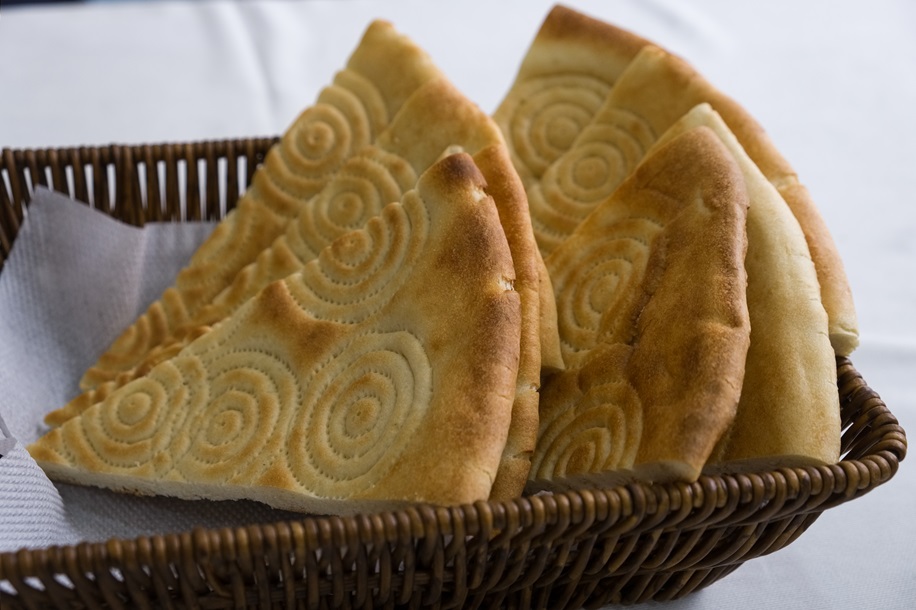
Khorezm flatbread at “Qamish” Xorazm Taomlari in Tashkent
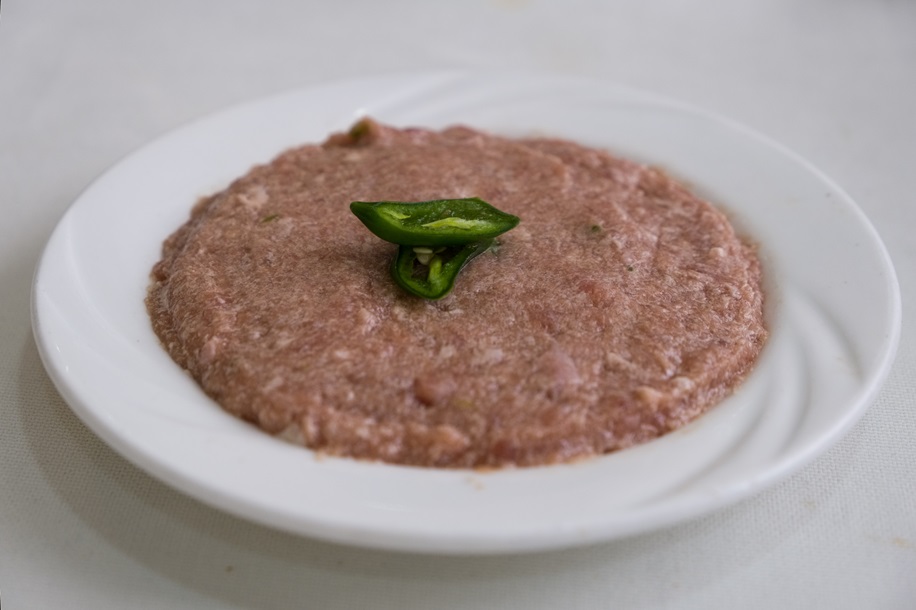
Khiva ijjan is a delicious onion-forward steak tartare
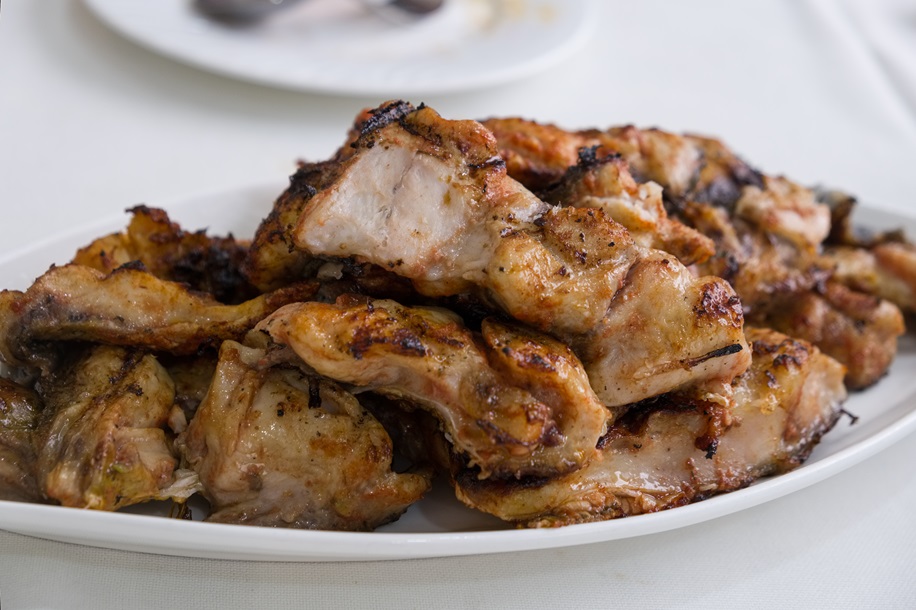
One of the most memorable dishes we had was Khorezm carp barbecued over charcoal
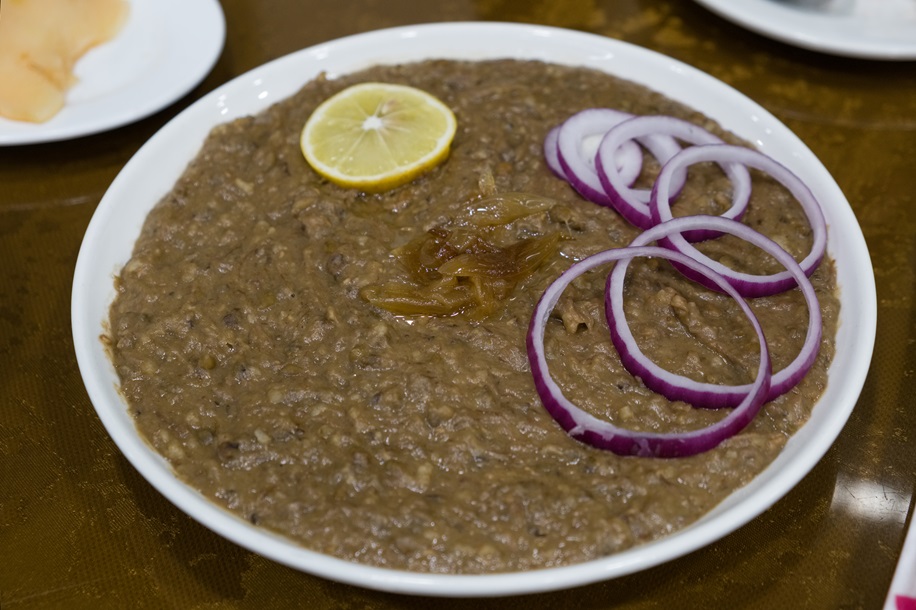
Like a meatier counterpart to risotto, moshkichiri tastes far better than it looks
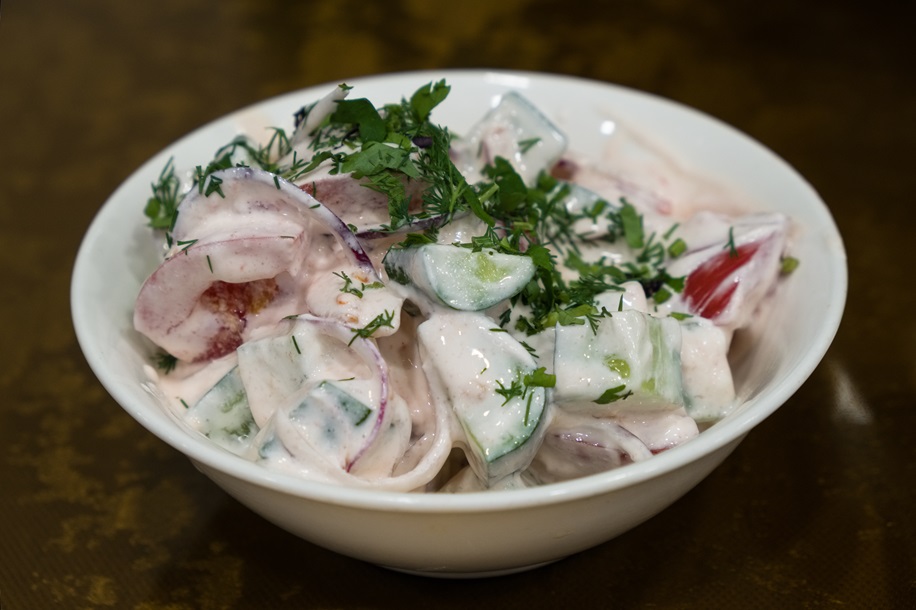
A bowl of yogurt-dressed Chiroqchi salad
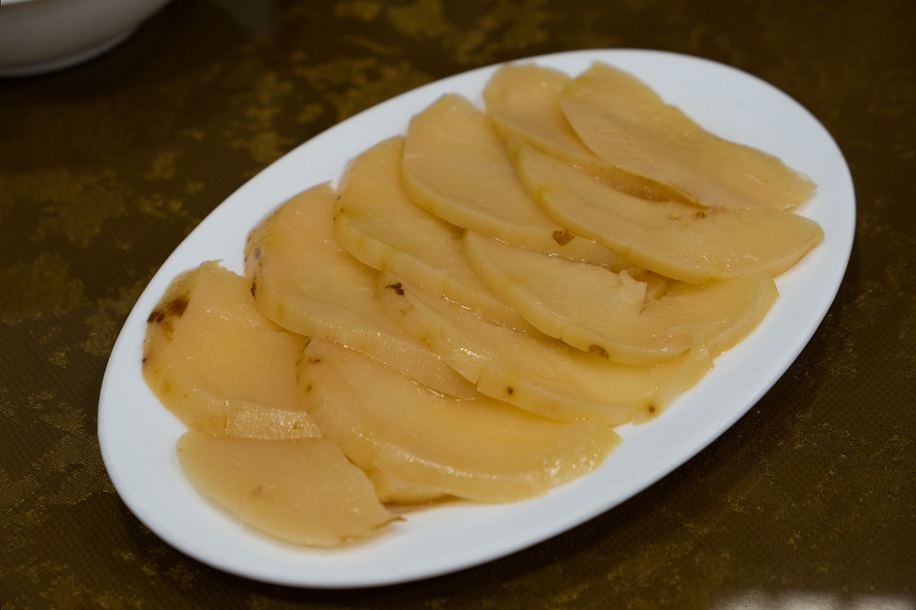
Slices of boiled quince — something we never see in Indonesia
The next day, lunch beckoned at the Former Plov Center, a no-frills affair about 20 minutes on foot from Bodomzor metro station. I was most interested in trying the soupy rice dish mastava, which has been described as “liquid plov”. Indeed, it uses many of the same ingredients and spices, but is served in a clear reddish broth topped with dill, coriander, and usually a dollop of sour cream. Warm and rich in flavor, mastava was just what we needed on this cold, rainy day. Bama and I also shared some naryn — smooth slivers of fresh dough combined with equally thin pieces of horsemeat and a thick and salty slice of qazi (local horsemeat sausage).
Some internet sleuthing that same afternoon gave us the name of another local specialty worth tracking down. We braved the Tashkent metro at rush hour to reach the Drujba branch of Komolon Osh Markazi, where I was 100% certain it was on the menu. Moshkichiri may not win any points for presentation, but the risotto-esque dish is pure comfort food: think mung bean and rice cooked down into a thick paste with onions and spices and shredded meat, presumably beef. (Given its name and other strong similarities, perhaps there is a historic connection with the vegetarian South Asian khichdi.) We also ordered quince slices and Chiroqchi salad, comprising tomato, cucumber, and fresh red onion slathered in a salt-speckled yogurt sauce.
The night we left Uzbekistan, our hotel arranged an airport taxi through the Yandex app, and the friendly middle-aged driver attempted to strike up a conversation despite the clear language barrier. He understood that we’d come to Tashkent after traveling to Samarkand, Bukhara, and Khiva. While at a stoplight, the driver began listing the names of local dishes, osh (plov) and manti among them, to see which ones we had eaten. I continued his train of thought: “Naryn, mastava, moshkichiri.” His wide-eyed response could not have been more enthusiastic. “Moshkichiri!” Then he brought up a meat-heavy Central Asian dish with nomadic roots. “Beshbarmak?” We’d briefly considered ordering that the previous night, but knew it would be far too much with the mochkichiri. “Yo’q,” Bama volunteered, saying the Uzbek word for “no”. Upon hearing this, the driver threw both hands in the air and jokingly let out a sigh, feigning disappointment.
The cramped main terminal at Tashkent International Airport didn’t have much in the way of dining options. One was a snack stall named Pie Republic that stood near the gate for our red-eye flight back to Jakarta. Ironically, there were no pies, but a selection of grossly overpriced sandwiches. I thought back to the seven-hour train ride from Bukhara to Tashkent, when an attendant walked through the carriages early that morning, holding a tray piled with still-steaming somsas. “Imagine if there were somsas on the plane,” I said wishfully to Bama.
Uzbekistan Airways offers an impressive amount of food in economy class — more than any other airline I’ve flown with — and it was no different for our unexpected post-midnight meal. Bama turned to me with a grin after inspecting the contents of his large plastic clamshell container. “Your wish came true.” Sure enough, hidden under sauce packets and a small bag of salted peanuts lay a surprise somsa. The pointed-top pastry was cold but still wonderfully flaky, and I relished its layered crust and delicious meat filling. It felt like a farewell gift as we soared high above the snowcapped peaks of the Hindu Kush. ◊

Freshly squeezed apple juice in Khiva; mastava at Tashkent’s Former Plov Center
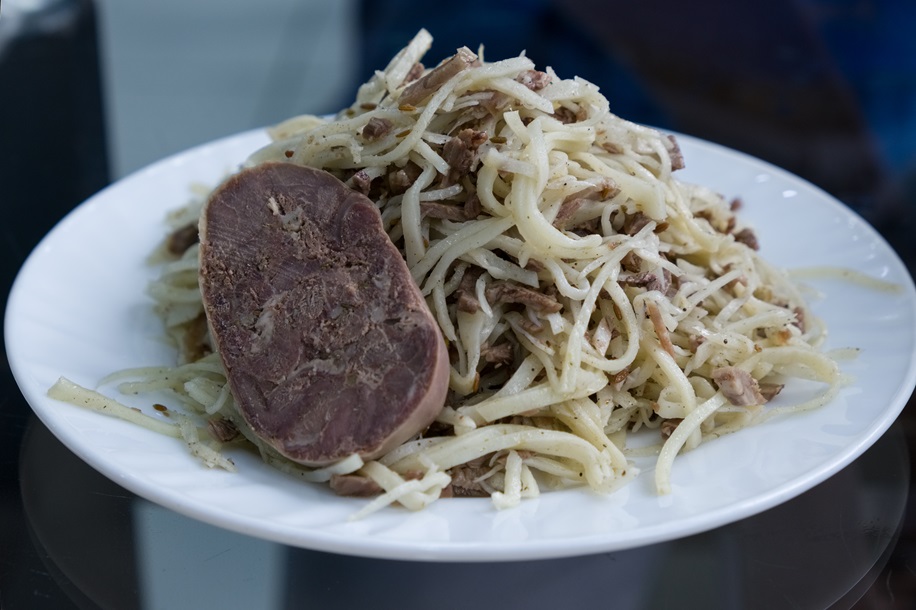
Naryn typically comes with a thick slice of horsemeat sausage (qazi)

A delicious plov with quail’s egg and qazi at Tashkent’s Former Plov Center
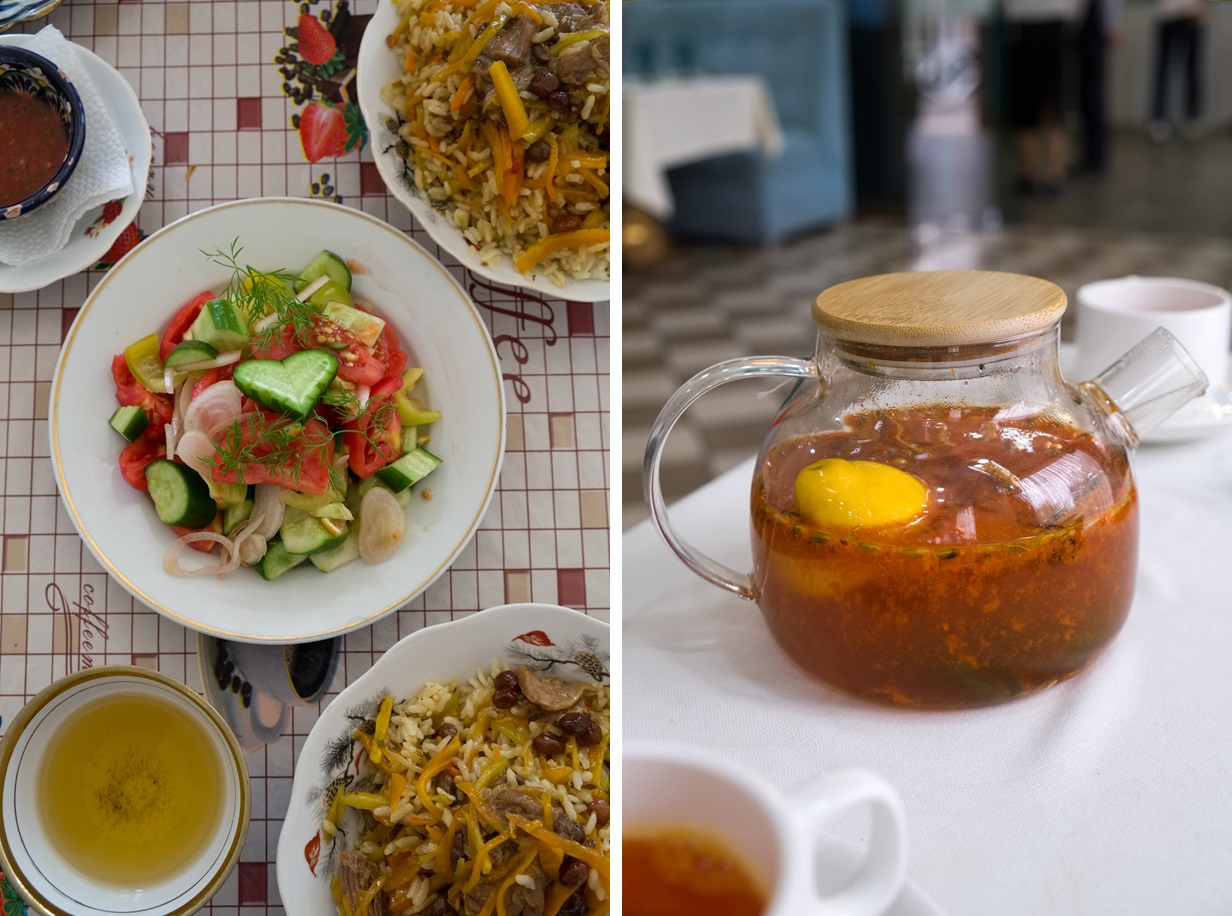
Achichuk at Samsushka in Bukhara; “Qamish” Xorazm Taomlari’s sea buckthorn tea
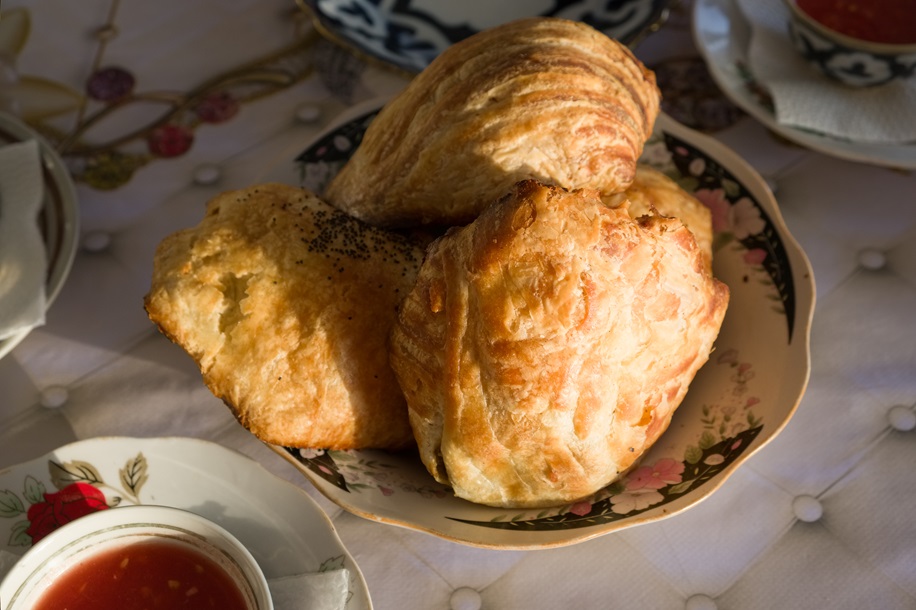
Samsushka served the tastiest and flakiest somsas of our trip




 Plus Ultra
I got hungry just looking at your food porn photos 😀
I tried similar lamb kebabs in Xinjiang and western Mongolia. Uzbekistan and Kazakhstan are on my list of future destinations.
Wow, Mongolia! The food there must have been completely different from what you eat on a day-to-day basis in Singapore. Uzbekistan is definitely getting popular, so my advice would be to go there soon!
It was an overdose of mutton 😀
I am definitely not a food-focused traveler, but even I have to admit that almost everything in your post looks delicious! I can’t believe you and Bama went to Uzbekistan! I am extremely envious. You are the second blogging friends to post about Uzbekistan in recent weeks/months, so I might have to take it as my hint to get going on a trip there. When I do start looking into it, I will have to learn more about what you did there!
Lexi can you believe we only realised after that we may have crossed paths? They were coming in as I was leaving!
No, I cannot believe it! Such an exotic destination, but I guess among our group of travelers, it is not that hard to imagine. It would have been so much fun for you all to see each other so far from all of your homes!
Don’t worry I already jokingly told Bama he needs to report to me when he travels in case we go same place! I am sure I will cross paths with Bama and James one day since we are neighbours!
I will definitely ask you for some info when I go!
Thanks Lex! To be honest I was a bit worried all that meat in the pictures and text would be a turn-off for vegetarian-leaning readers like yourself, so I’m glad that wasn’t the case! Our recent trip to Uzbekistan was really a dream come true. Bama and I had been thinking of going even before our six-month Spice Odyssey in 2015, but it wasn’t until we saw Jeff Bell’s gorgeous photos from his own pre-Covid holiday with Kristi that a plan began to take shape.
I’m not much of a food person, probably because of my severe nut allergy, but I thoroughly enjoyed your post. The pictures and descriptions are just wonderful. That part of the world was actually an easier area for me to try foods that I couldn’t see inside! I must say though, I had enough plov to last me a lifetime.
Steve
Steve, thank you so much for the kind words! I’m glad to hear that eating in Uzbekistan was not an issue when it came to avoiding nuts – that must be a big challenge here in Southeast Asia. I think growing up eating rice practically every day for dinner was a big reason I never got tired of plov. We liked the Samarkand version so much we ended up buying a small jar of plov seasoning/spices from a bazaar.
You guys should win a prize for trying the greatest variety of food in a 14 day period! We could almost taste the delicious dishes shared in your photos and descriptions – a definite eating extravaganza!
That’s a lovely thought, Marilyn – reading your comment brought a big smile to my face! There were a couple of dishes that we missed, but I think we did a pretty good job trying as many local specialties as we could. On our last day we actually had lunch at a Georgian restaurant because we wanted khachapuri and khinkali – which simply don’t exist in Jakarta!
I’m not a foodie in the slightest but even I was impressed with Uzbek food! The only problem was I sometimes found it a bit too heavy and needed days of just fruit and veg for dinner! But I too visited Terrassa and loved it! I tried to get to Joy but yep, fully booked out for days! I’ll have to be more organised next time! Loved your food write up!!!
Thanks Anna! I know what you mean about Uzbek food being heavy – we tried to balance things out with plates of achichuk and the local fruit juice. Terrassa was hands down our favorite restaurant in Khiva! Joy was not bad but I wouldn’t rank it anywhere as highly as Shokhrukh Nur in Samarkand or Terrassa.
Oh good to know. I was a bit sad to miss Joy but was secretly hoping it was just more hyped than what it really is! Lol
I must admit, I was a little skeptical about the food in Uzbekistan at first. I remember reading someone’s blog post many years ago that gave me the impression that the food in this country was just plov and a few other things. What are the chances that our first proper meal during the two-week trip turned out to be one of the best we tried? It was also a nice surprise that the chili that came with that Samarkand-style plov was actually hot! I still remember how flaky and delicious the somsas we had at Samsushka were — too bad we didn’t get to try the one with potato filling. And the barbecued carp we had at that Khorezm restaurant in Tashkent was so good I wish I had a bigger stomach! I feel like this trip was like Bhutan: we didn’t know what to expect when it came to the local dishes, but we ended up loving them.
Bama, you’re right about the experience being similar to Bhutan in that way. I think we were very, very lucky that nearly all the hotels we booked were so close to such fabulous places to eat. Had Shokhrukh Nur not been closed the first two days we spent in Samarkand, I’m sure we would have dined there a couple more times!
An eye-opening and mouth-watering post, James! I used to think that Central Asia food was generally bland, with bread as the main staple food. But I couldn’t be more wrong. I forgot that these countries were on the Silk Road, so it’s no surprise that their cuisine is influenced by different cultures. All those plov, dumplings, and noodles look tempting 🙂 And the carp looks just like grilled chicken.
Happy New Year, Len! I had no idea you’d commented on my post until Bama alerted me the other day – sorry it took me nearly a month to reply! We’d read about the food of Uzbekistan from other bloggers before the trip, but nothing really prepared us for its diversity and how delicious most dishes were. That’s an interesting observation about the carp; I would say it tasted even better than grilled chicken. 😀
No worry. Wishing you a great 2025, James! I think your post about Uzbek cuisine is really comprehensive. It can be published as a food guide 😛
What an intensive write-up of all the delicious Uzbek eats in the country! Uzbekistan (and Central Asia, in general) has been on my radar for a while now, and I hope to make the long trip out there some day to see that unique part of the world. An Uzbek restaurant recently opened up near me in Los Angeles (quite rare to get Uzbek food, even here in a diverse city like mine), so I just might have to try the signature dishes like samsa, plov, manti, etc. Thanks for taking us on your journey through Uzbekistan (ps I found your post through Bama)!
Hi Rebecca – thank you in turn for reading and sharing your thoughts! I’m glad to hear there’s a new Uzbek restaurant in L.A. not far from where you live. The food scene in Jakarta is nowhere near as diverse, so I don’t know if or when that will ever happen over here. Bama and I bought a small jar of plov spice mix in Samarkand that will hopefully last us a couple more months. Wishing you a happy and healthy 2025!
So fantastic you got to travel through Uzbekistan, James. After reading this post, I think I know the dish plov very well now 😄 It looked like you and Bama had one delicious gastronomic delight after another, except for a handful of things that seemed bland. Samosa sound like a staple over there, and spoilt for choice. The standalone diner run by the older couple sounded like they made some of the best samosas – and it seemed quite funny that the potato one had run out each time you went there! It must be very popular and one of the best selling items.
Each dish sounded full of flavour and spice – and guessing no dish tasted the same. And each tea had their distinct taste. So lovely that you got a samosa on the flight home. A lovely parting gift indeed 😊
Uzbekistan is a long way from Australia, but I do know of at least one Aussie blogger who went recently, so it’s definitely not out of reach! The food is one of the things I miss the most about Uzbekistan – we don’t have somsas or plov in Jakarta so I don’t know when I will get to eat them again.
Luckily for you, Melbourne is so multicultural there might even be an Uzbek eatery lurking in one of the inner suburbs. Speaking of Melbourne, Bama and I watched videos last night of the impressive NYE fireworks along the Yarra. Mabel, I hope you’ve had a lovely holiday season and that 2025 brings you good health, much happiness, and plenty of new opportunities! 😊
I hope you at least find something similar to somsas or plov in Jakarta to tide you over, until you can have some authentic ones again 🙂
Wow you and Bama watched the Melbourne NYE fireworks on video. You two always have a great time together from the sounds of it. Wishing you and Bama well for the year ahead 🙂
Thank you for the new year wishes, Mabel! I suppose we’ll just have to try and make our own plov at one point. 🙂