
Below the Pyramids of Palenque

As we stood on the edge of a grassy square facing Palenque’s Temple of the Cross, Bama and I suddenly heard an eerie growl from the nearby jungle: a long and guttural roar, disturbing enough to make anyone stop in their tracks.
“What was that?” Bama wondered aloud. A nearby guide overheard the question and offered an explanation. “It’s a howler monkey,” he said. Then, another blood-curdling howl rang through the dense forest canopy. It sounded like a dinosaur poised to attack in one of the Jurassic Park movies.
The previous day at Villahermosa Airport, we encountered a peculiar Californian who told us he’d lived in Palenque the past six years and had been visiting regularly since he was a child. While loading our luggage into the back of the 16-seater ADO bus, he spoke with wide-eyed excitement of local trance parties and the “energy” emanating from the Maya pyramids. Then he mimicked the monkeys, letting out a few roars of his own with bulging eyes and a gaping mouth. His impression was lost on us until we showed up at the ruins—the reason we’d come to Mexico’s southeastern state of Chiapas.
These days, the world-famous site shares its name with the otherwise unremarkable town on its doorstep. The city was originally known as Lakamha, or “Place of the Big Waters,” thanks to an abundance of mountain streams flowing through the area. That feature gave Palenque a major advantage over more drought-prone locales in the Yucatán. Archaeologists have counted a total of 26 natural springs within the site boundaries and uncovered a sophisticated water management system built by the ancient Maya, who diverted the Otulum River into a stone-walled channel and then an underground aqueduct below one of the city’s main plazas.
It must be said that the ruins of Palenque aren’t the grandest nor most extensive in the Maya world. But the people who once lived here produced some of the civilization’s most finely carved glyphs and exquisite bas-reliefs on locally quarried limestone, an enduring record of their artistic prowess. Scholars estimate that less than 10 percent of the entire city has been excavated so far; the rest still lies buried beneath the rainforest. (This detailed map illustrates just how many structures, colored grey, remain unexplored.)
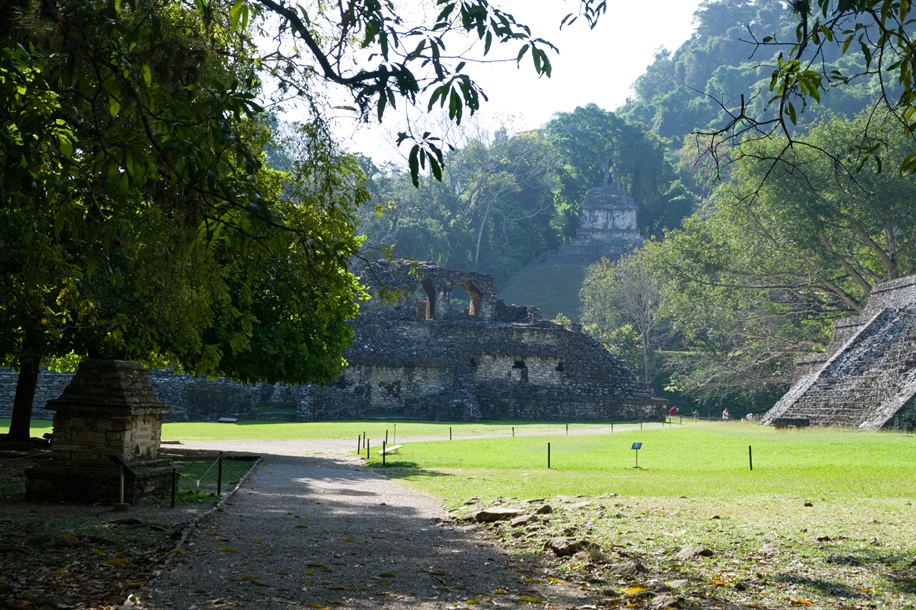
A quiet morning at the Archaeological Zone of Palenque
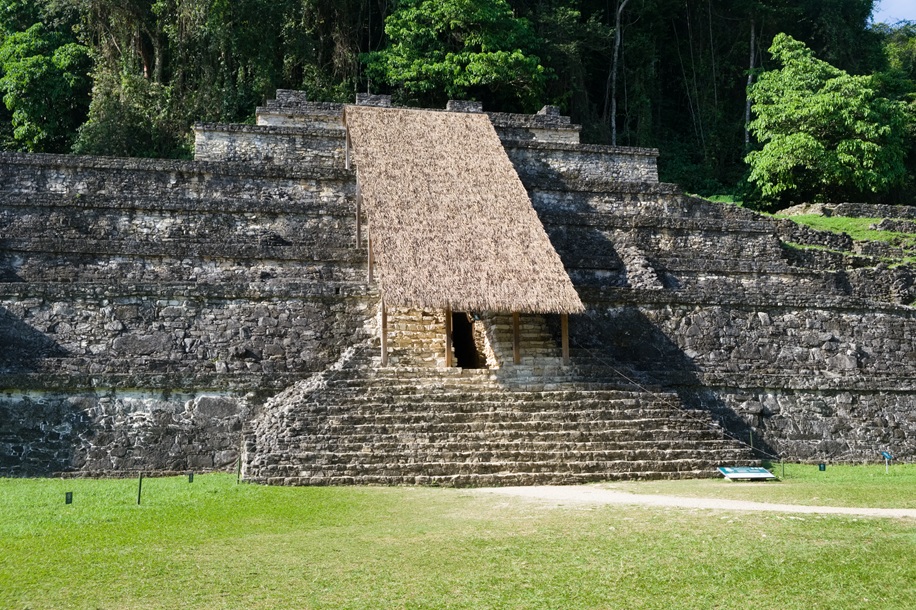
Temple XIII, where visitors can see the Tomb of the Red Queen
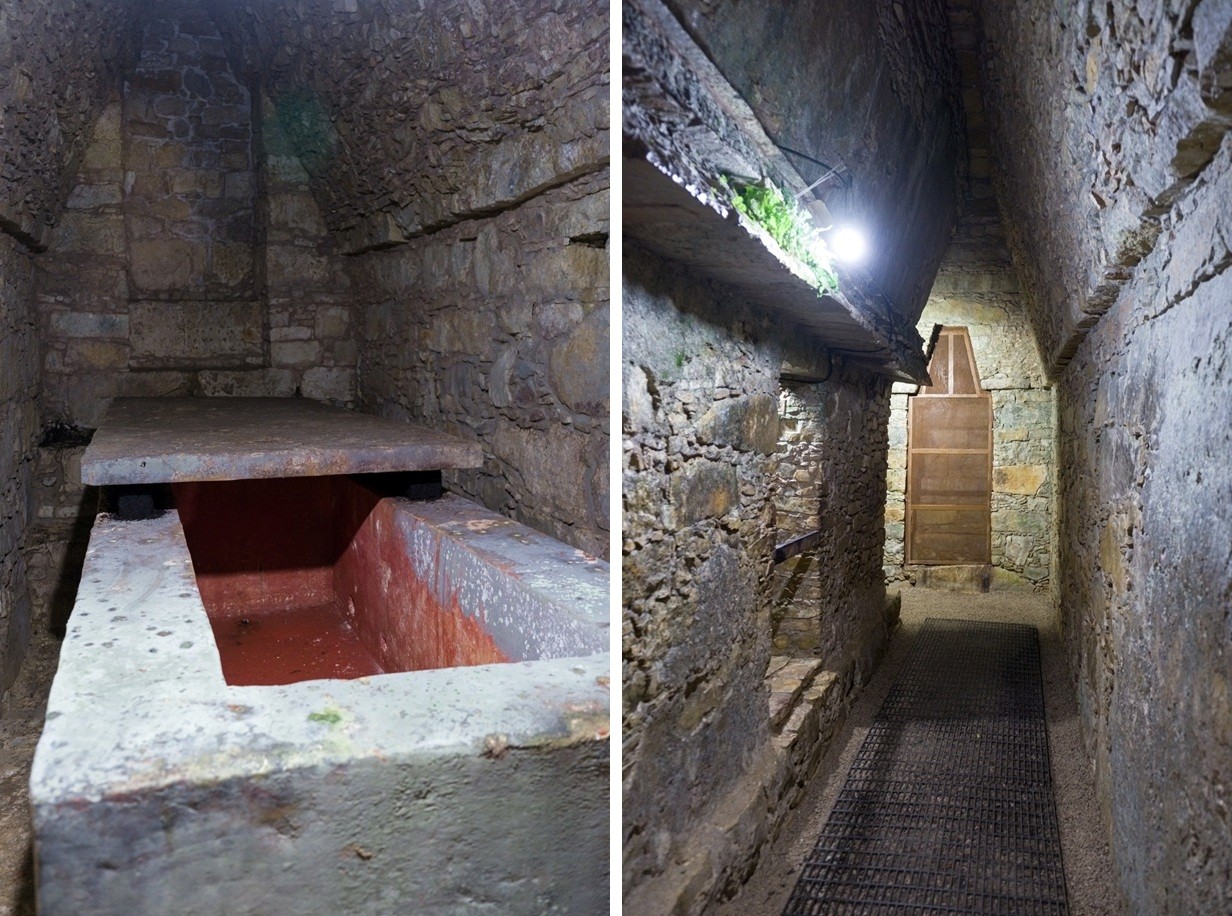
The burial chamber and passageways were only discovered in 1992
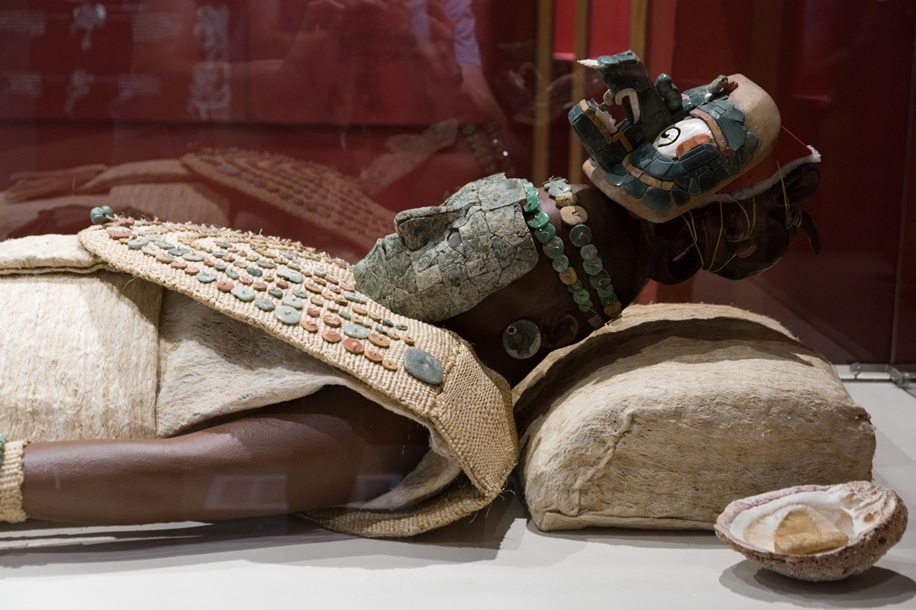
The queen’s funerary wardrobe on display at the Site Museum of Palenque
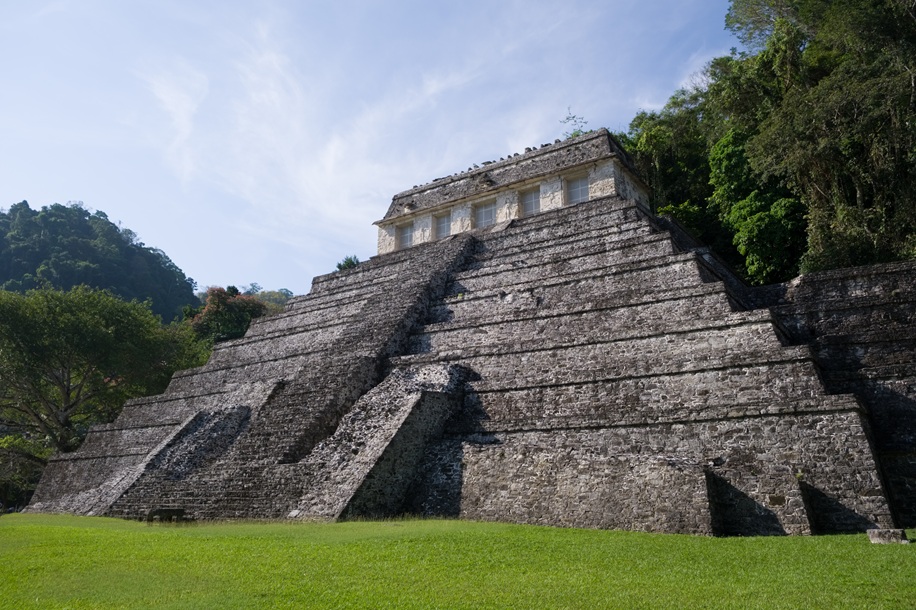
Palenque’s famed Temple of the Inscriptions, dedicated to Pakal the Great
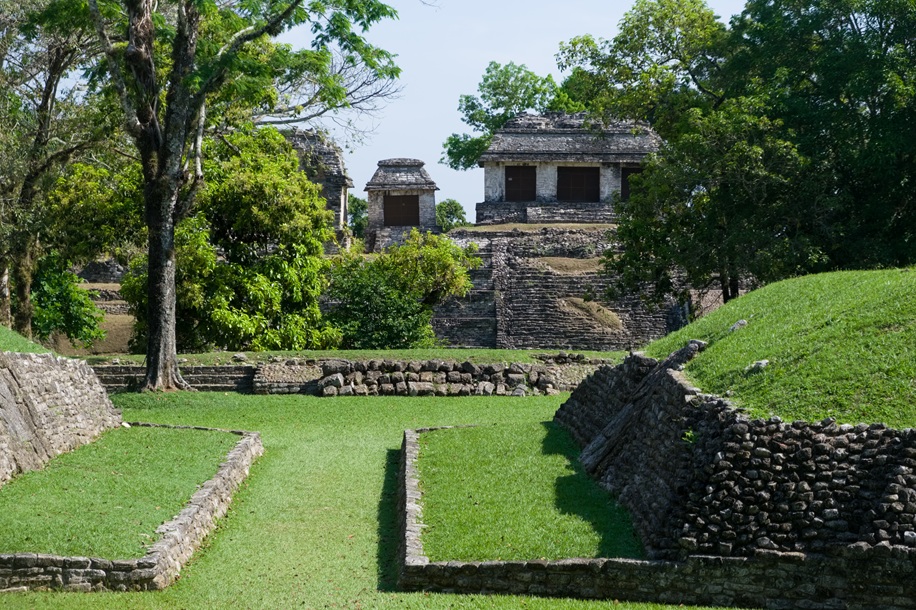
Looking down the ancient ball court toward the North Group of temples
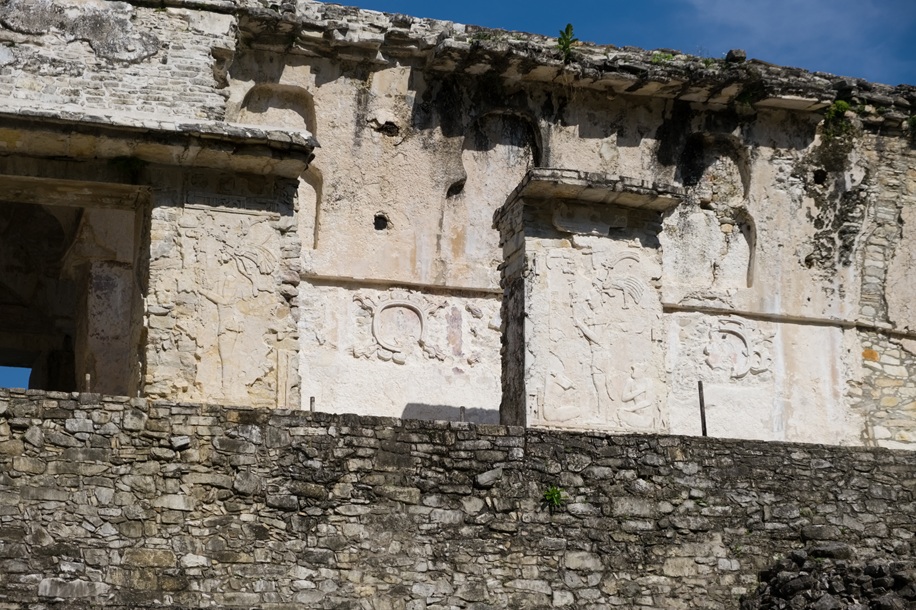
Reliefs in stucco on the pillars of the Palace complex
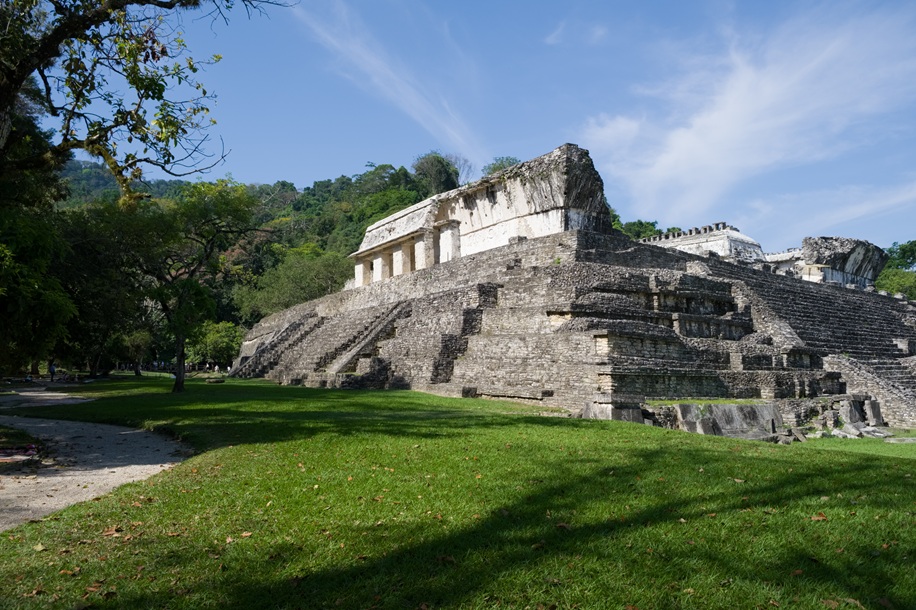
The Palace was once the political and ceremonial heart of the Maya city-state
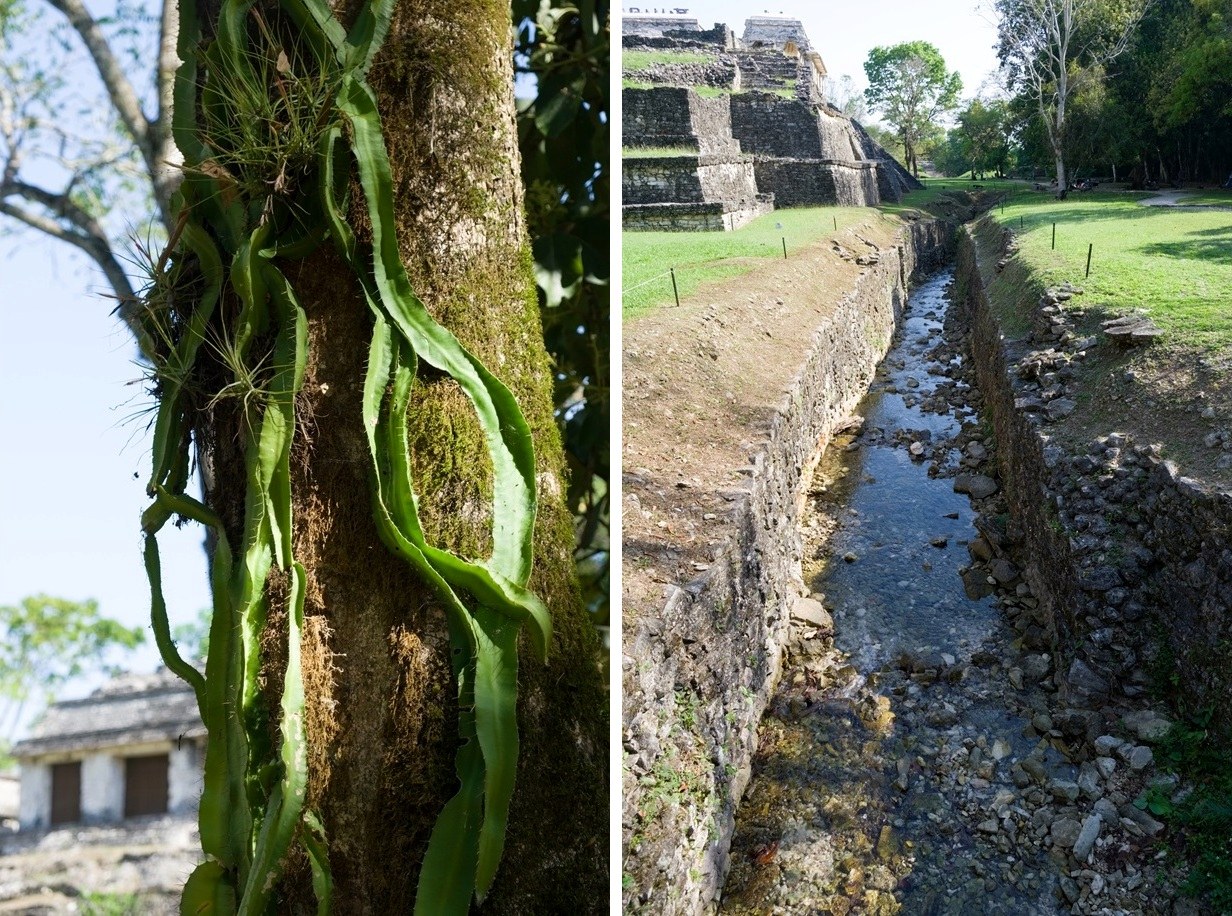
A kind of climbing cactus; the channelized Otulum River flowing through the site
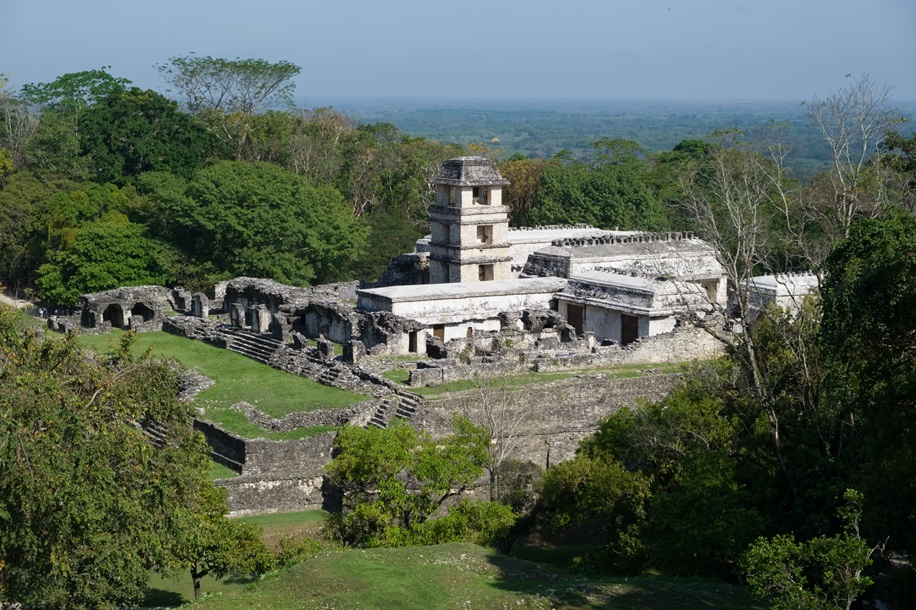
The Palace and its observation tower as seen from the Temple of the Cross
Not wanting to jostle with the late morning crowds, Bama and I set out early to be among the first visitors inside the archaeological zone once it opened at 8 a.m. We took our time strolling the quiet grounds as souvenir vendors set up their wares on mats spread directly on the grass. Both of us stood wide-eyed at the Temple of the Inscriptions and the Palace, a royal residence and Palenque’s seat of political power—the backdrop for important ceremonies and rituals. Raised on a monumental plinth, the Palace is unique among ancient Maya structures for its four-story observation tower.
Experts studying Palenque’s inscriptions have learned a great deal about Maya beliefs and uncovered a dynastic line with 19 generations of kings and queens. The most prominent of these monarchs was Kʼinich Janaab Pakal I. More commonly known as Pakal the Great, he ruled Palenque in its heyday during the 7th century, a time when England was home to a patchwork of Anglo-Saxon kingdoms, a weakened Byzantine Empire saw the Arab conquest of its eastern provinces and North Africa, and the emergent Tang Dynasty ushered in a golden age for China. Pakal the Great led the powerful city-state through something of a building boom; a number of monuments that still stand today were constructed or upgraded during his 68-year reign. He expanded the Palace (an endeavor continued by his sons), and the Temple of the Inscriptions was constructed as the ruler’s funerary monument, its inner walls chiseled with records of major events that took place in his lifetime. Pakal the Great eventually passed away at the ripe old age of 80—no mean feat for anyone, even a king, in the late 7th century.
Palenque’s more recent history is closely tied to Alberto Ruz Lhuillier, a Mexican archaeologist of Cuban-French parentage who once led excavations here for the country’s National Institute of Anthropology and History. While investigating the Temple of the Inscriptions, he noticed a floor slab with mysterious holes. Lifting it revealed a secret staircase filled in with rubble. Workers took four years to laboriously clear the passageway of debris, and in 1952 stumbled across one of the 20th century’s most significant archaeological finds. This was none other than the tomb of Pakal the Great, whose massive sarcophagus had lain undisturbed for more than a millennium. He’d been buried in a vaulted crypt with an accumulation of calcium deposits on the walls that made the chamber look as though it had been carved out of ice.
Ruz Lhuillier later said of the discovery, “At the moment of crossing the threshold I had the strange sensation of penetrating time, into a time that had been stopped a thousand years before. What my eyes were the first to see was what the last Mayan priest had seen.”
The sarcophagus lid, a solid tombstone weighing seven tons, bore an exceptionally carved bas-relief imagining the great king’s journey to the afterlife. Pakal was laid to rest with a funerary mask and an assortment of necklaces and bracelets, all in precious green jade. These are now shown at Mexico City’s National Museum of Anthropology in a subterranean gallery featuring a reconstruction of the burial chamber, complete with a corbel-arch ceiling and stucco reliefs on the walls.
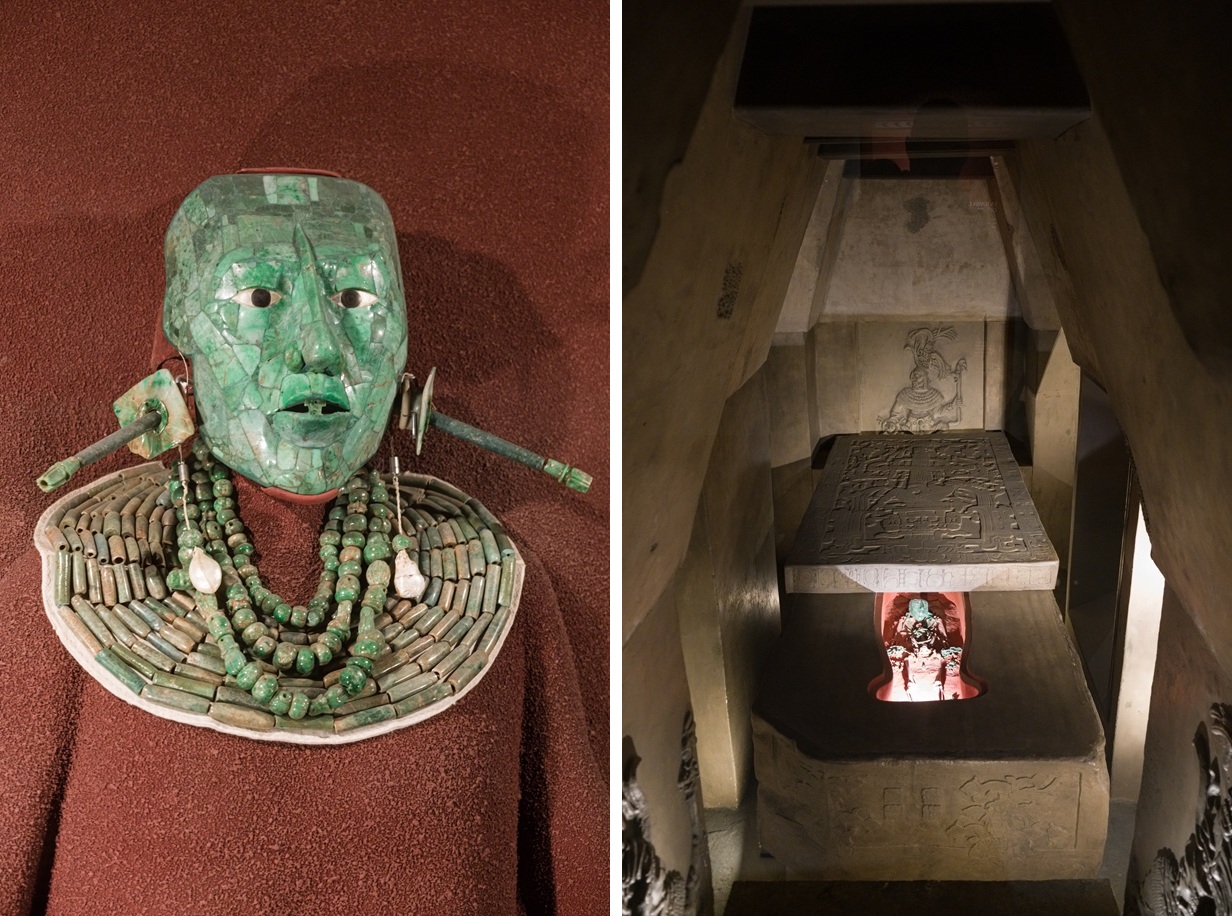
Pakal the Great’s death mask and a replica of his burial chamber, both in Mexico City
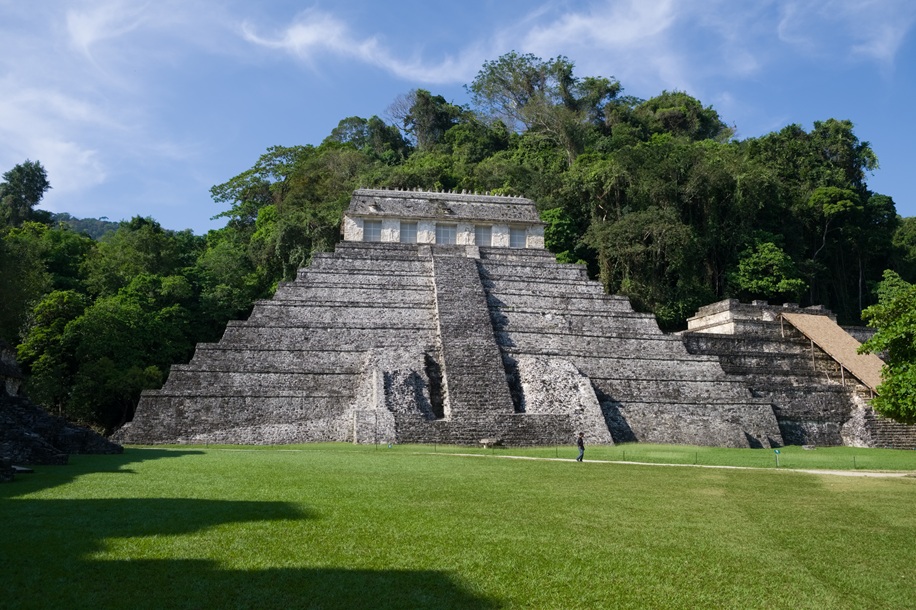
Another look at the restored Temple of the Inscriptions

Inside the Temple of the Sun; a smaller structure off-limits to visitors
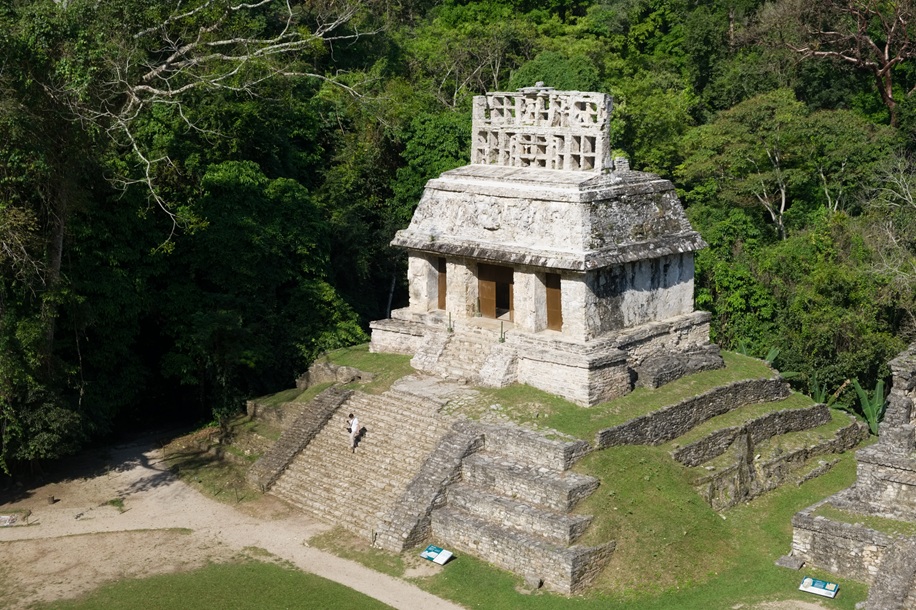
The Temple of the Sun’s roof comb remains largely intact
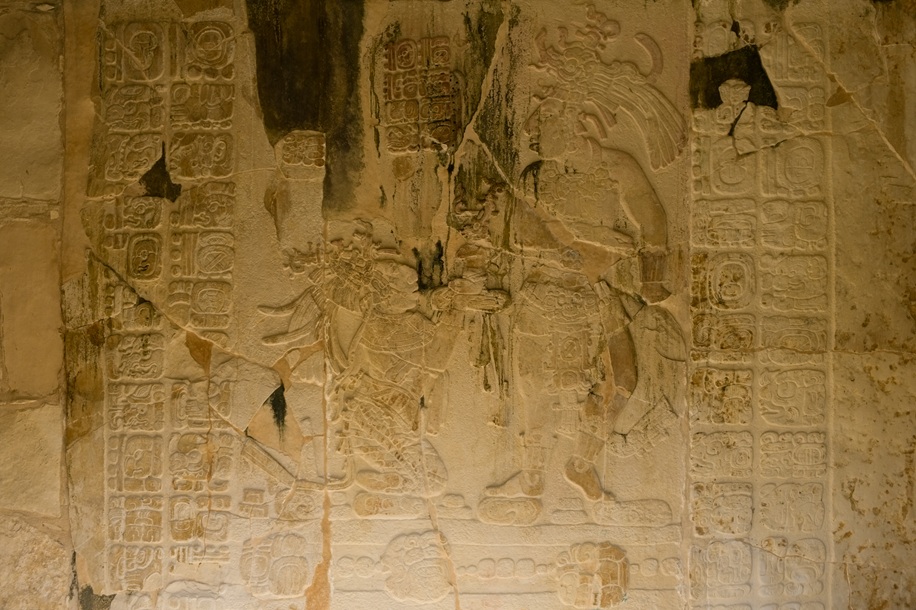
A carved tablet inside Temple XIV showing Kʼinich Kan Bahlam II and his mother
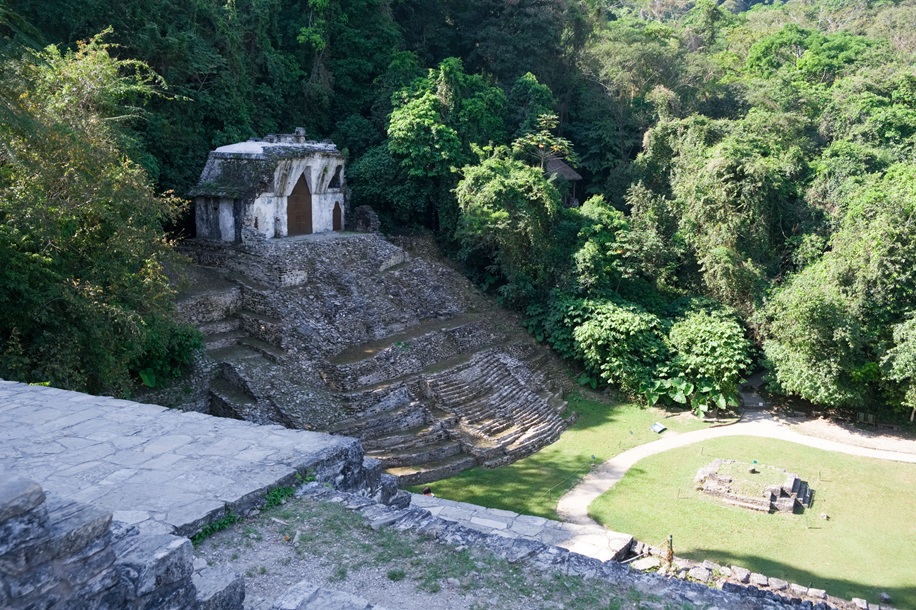
The ruined Temple of the Foliated Cross
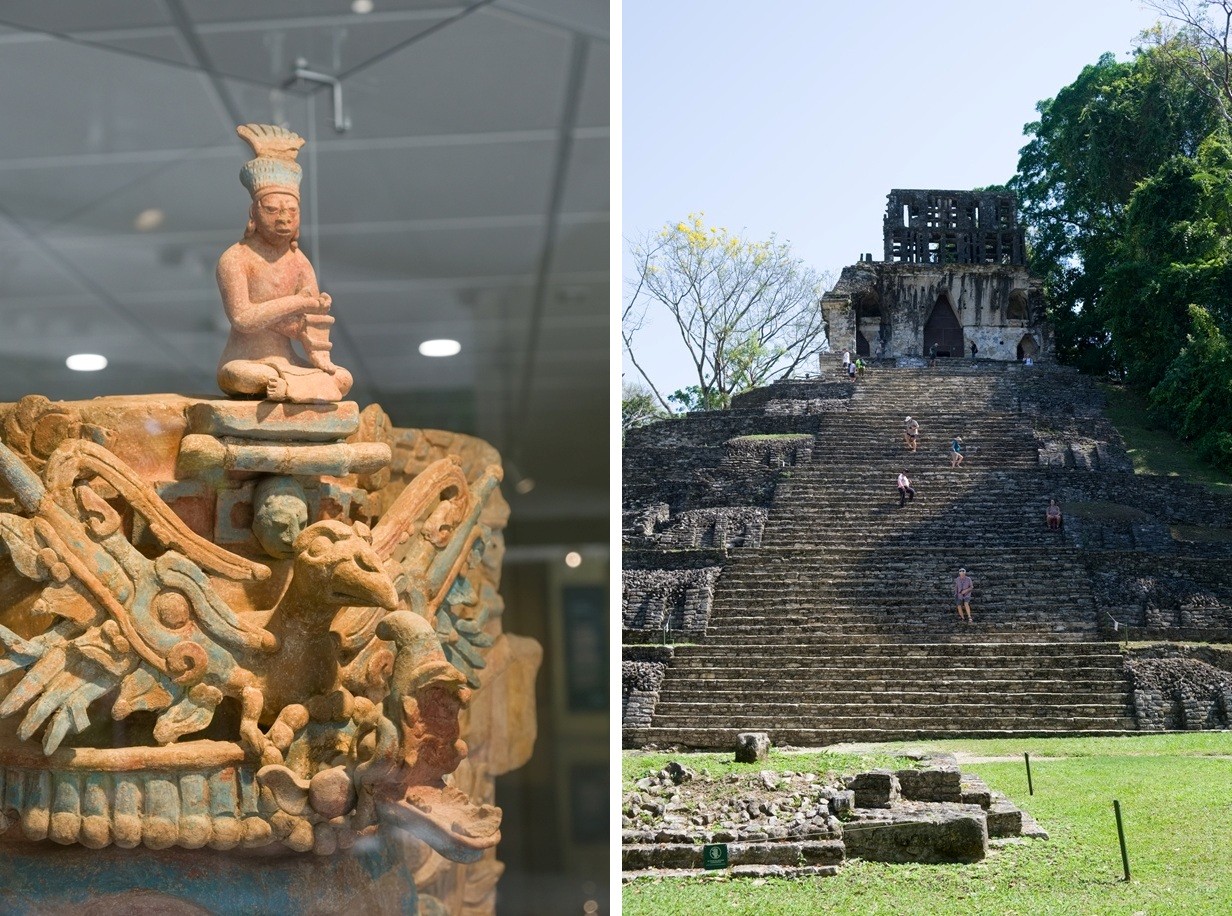
Details on a well-preserved censer at the Site Museum; the Temple of the Cross
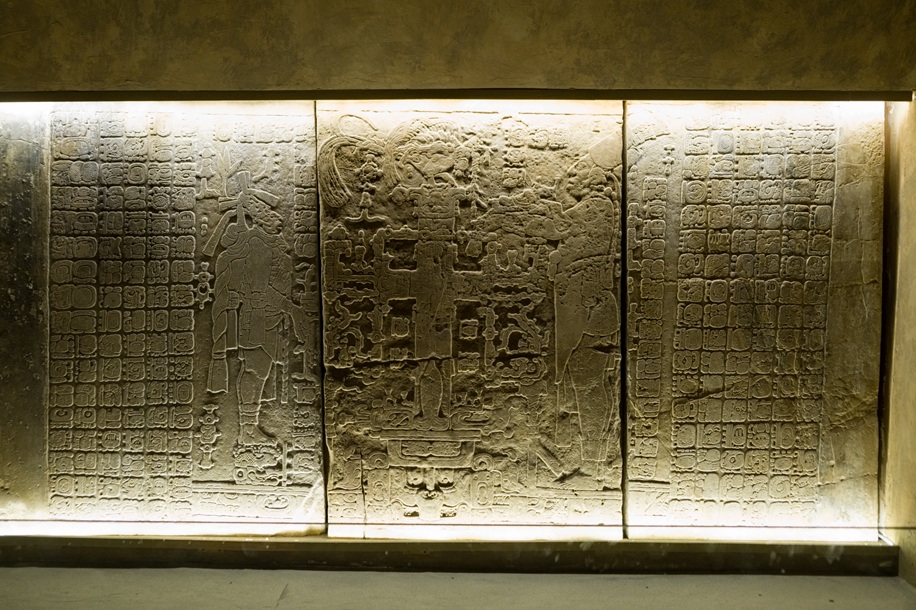
The panels from the Temple of the Cross are kept at the National Museum of Anthropology
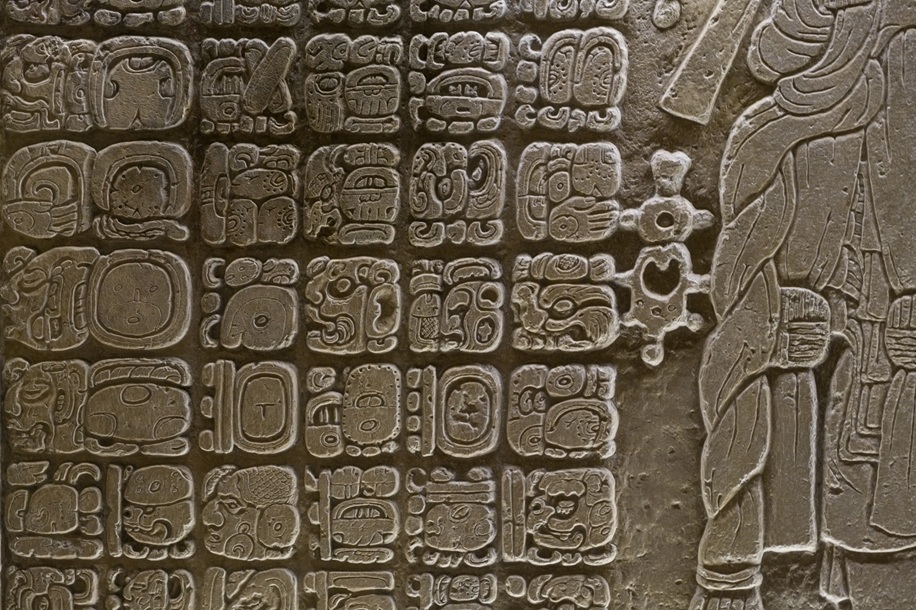
A detail of the intricately carved Maya glyphs from the panels
Another priceless find from Palenque displayed in the same museum is dramatically lit in a corner of the Maya galleries. This comprises three relief-carved tablets from the Temple of the Cross, a pyramid commissioned by Pakal’s son Kʼinich Kan Bahlam II (a.k.a. Chan Bahlum II) and the tallest structure at Palenque that visitors can climb. At the tablets’ center is the sacred ceiba tree, stylized in the shape of a cross, with a mythical serpent-bird resting on top. The ancient Maya revered the majestic ceiba as a symbol of the universe; it was believed to link the underworld of Xibalba with the terrestrial human realm and the heavens and serve as a route of communication.
Any longtime reader of our blogs will know that Bama and I both enjoy visiting history museums. So, we were immensely lucky that the Site Museum of Palenque, located just outside the archaeological zone, had recently reopened after renovations. Inside, eagle-eyed Bama spotted a small sign on the wall saying entrada off the main circuit. It seemed to point down a dark, narrow hallway that, by the looks of it, could have led to a storeroom or other spaces off-limits to the public. But turning a corner revealed a life-size replica of Pakal the Great’s sarcophagus. By our own observations, a good 90 percent of visitors at the museum missed it.
A more clearly signposted room is dedicated to the Tomb of the Red Queen, so named because archaeologists found a skeleton coated in a layer of bright red cinnabar upon its 1994 discovery deep inside Temple XIII, the pyramid next to the Temple of the Inscriptions. DNA analysis supports the hypothesis that the interred noblewoman was in fact Lady Tz’a’akab Ajaw, wife of Pakal the Great, rather than his mother as first thought. Artifacts adorning her mortal remains include a funerary mask made from 116 pieces of malachite, obsidian, and jade; a diadem and necklace; and a fine headdress (also in green jade) depicting the rain god Chaac.
Little did I know one of the best moments in Palenque had nothing to do with ancient history at all, but its colectivos, the 12-seater white vans shuttling locals and tourists between the town and the pyramids. As we boarded a colectivo opposite the Site Museum, I was immediately reminded of music’s power to trigger memories. The pop song playing over the radio—Colgando en tus manos—took me back 15 years to my time in Spain as a language student. Performed by Venezuelan singer-songwriter Carlos Baute and Spanish superstar Marta Sánchez, it has a catchy melody and lyrics I know by heart. It’s a song I associate with the carefree days of my youth, the excitement of being immersed in a culture so different from my own, and a bright spot between my college struggles and the everyday stresses of working life. And now, should I hear it again, I will also recall a laid-back Mexican town and the remarkable Maya ruins on its doorstep. ◊
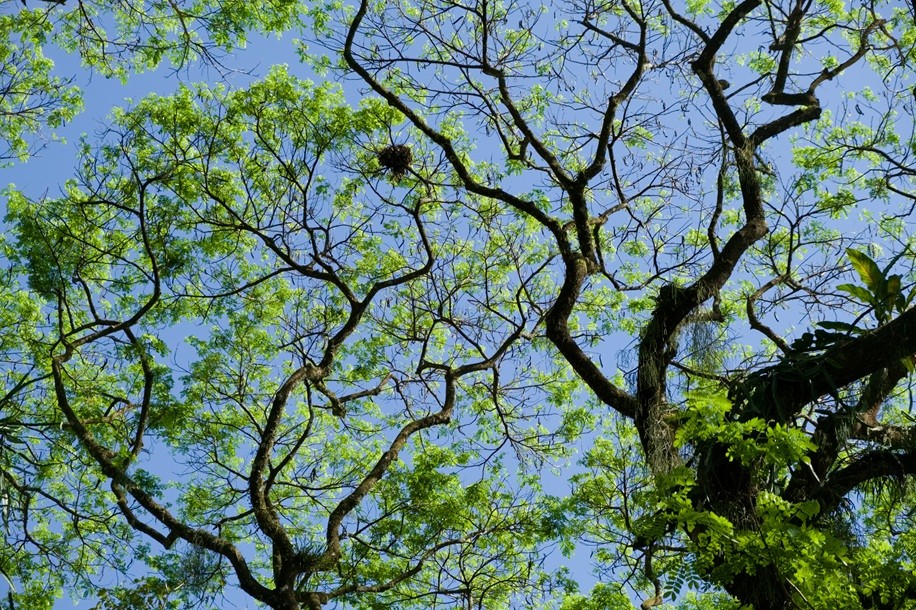
The crowns of majestic trees outside the Site Museum
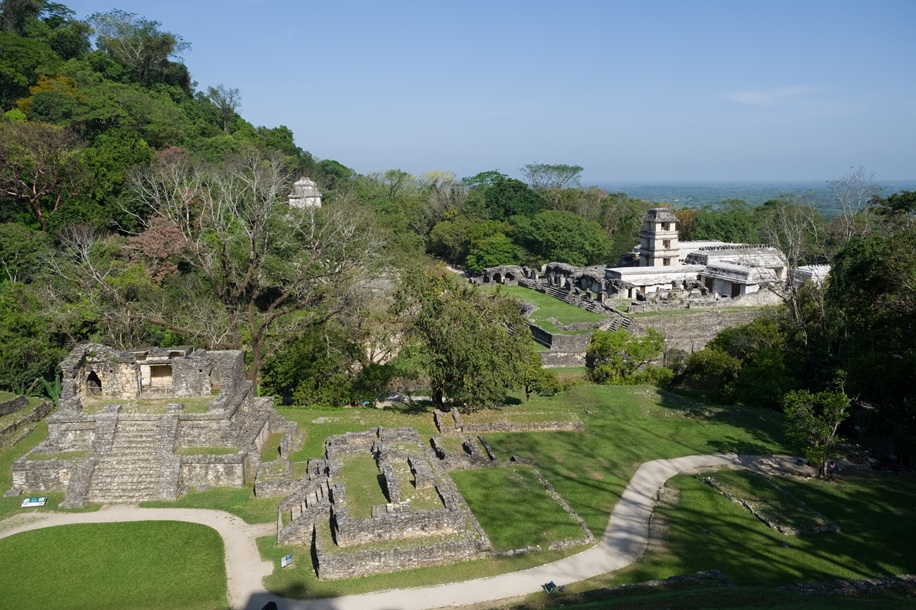
Looking out over Palenqueʼs ruins from the Temple of the Cross
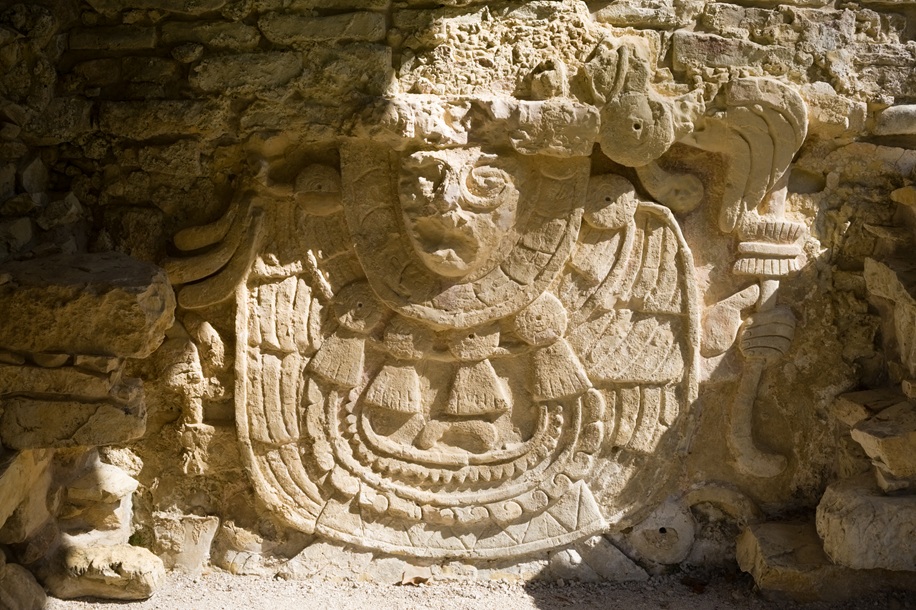
An exposed stucco relief at the North Group of temples
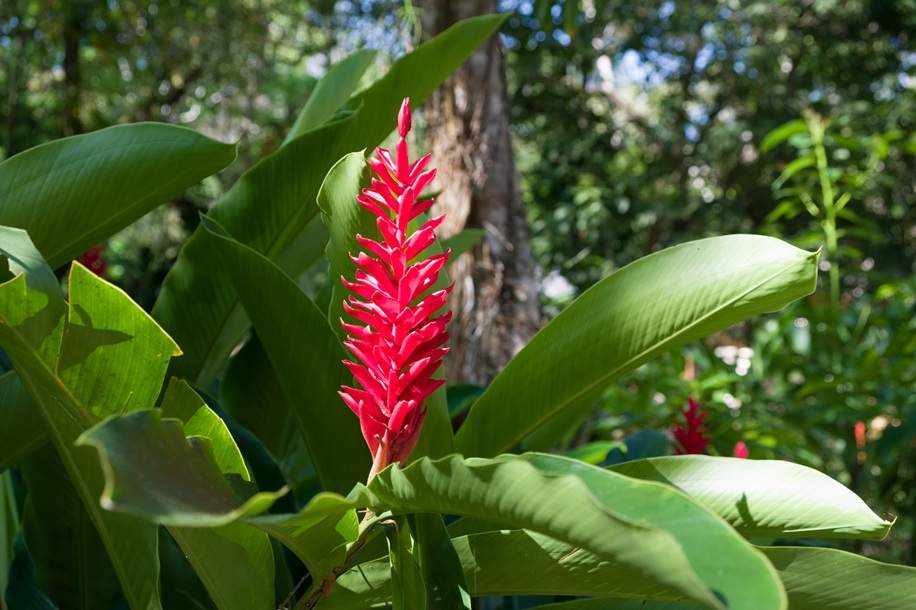
The striking bloom of a red ginger (Alpinia purpurata) outside the Site Museum
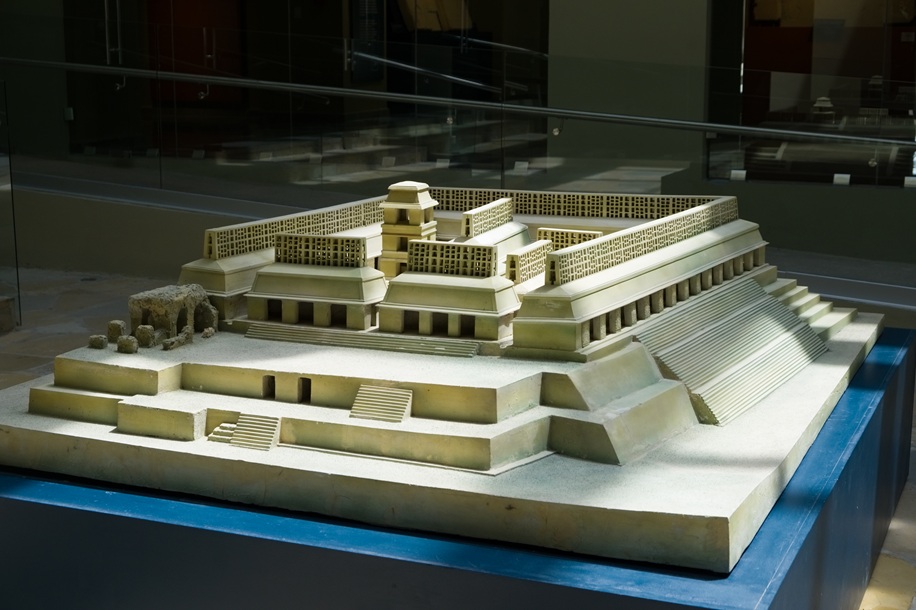
A scale model of how the Palace may have looked in its heyday
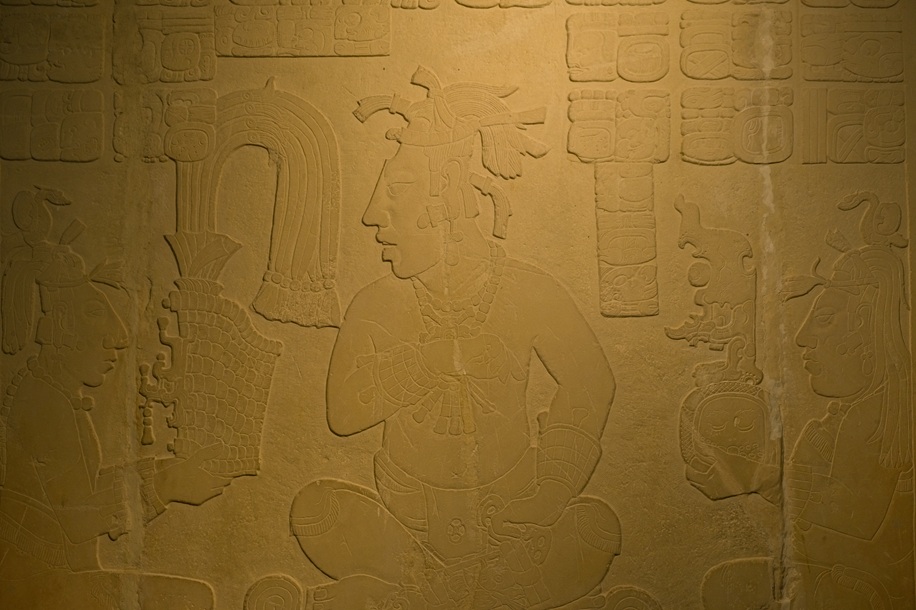
A tablet depicting the coronation of Kʼinich Ahkal Moʼ Nahb III in 722 CE
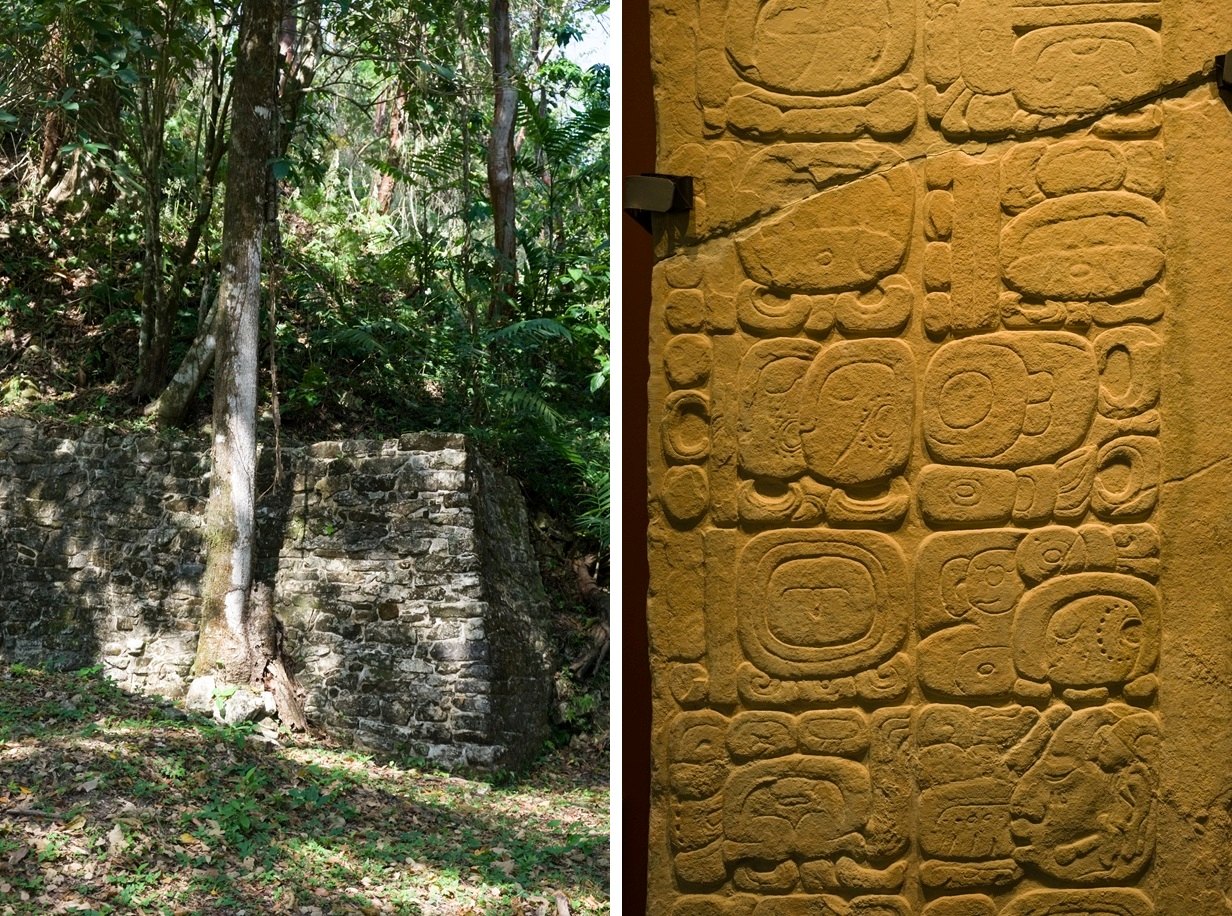
A corner of the unexcavated Temple XI; glyphs at the museum
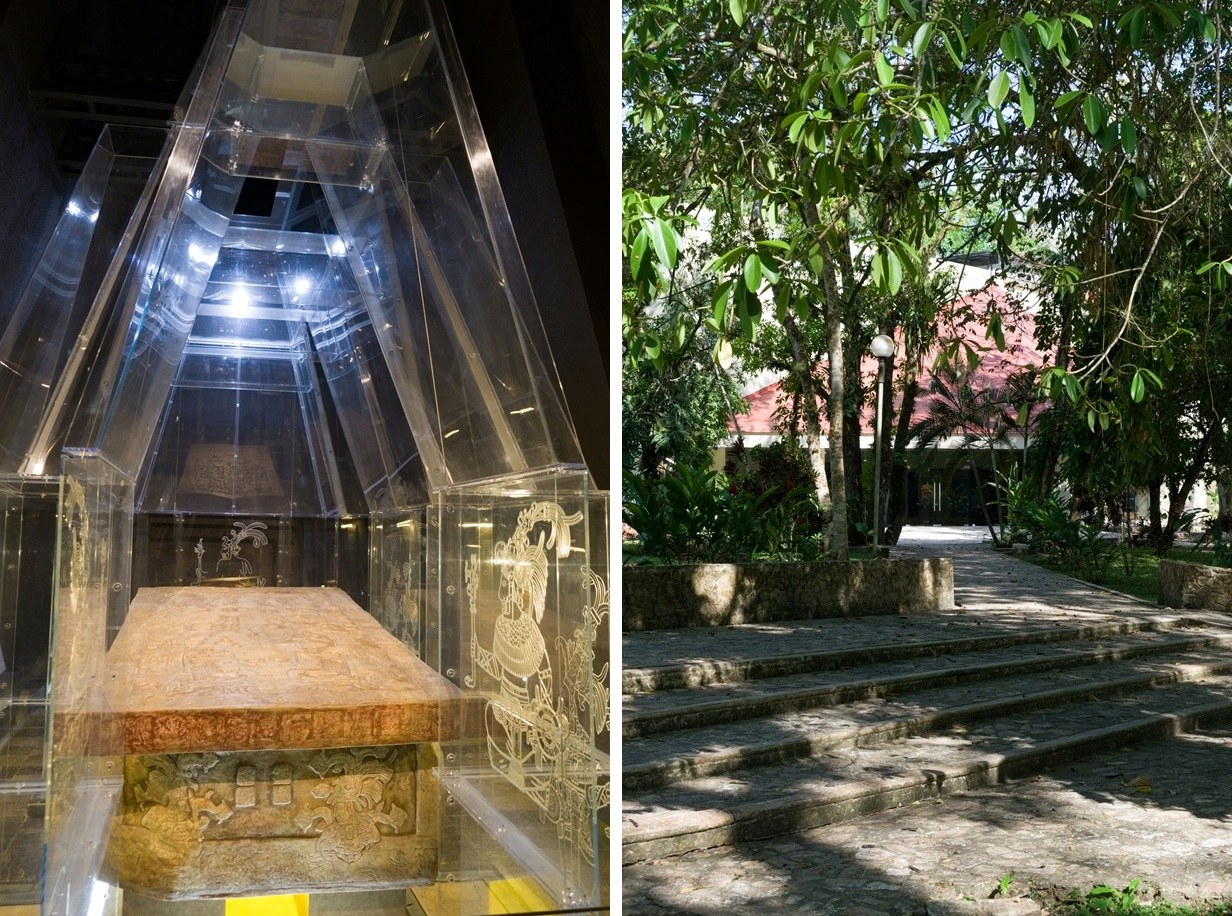
The Site Museumʼs replica of Pakal the Greatʼs sarcophagus; the museum entrance
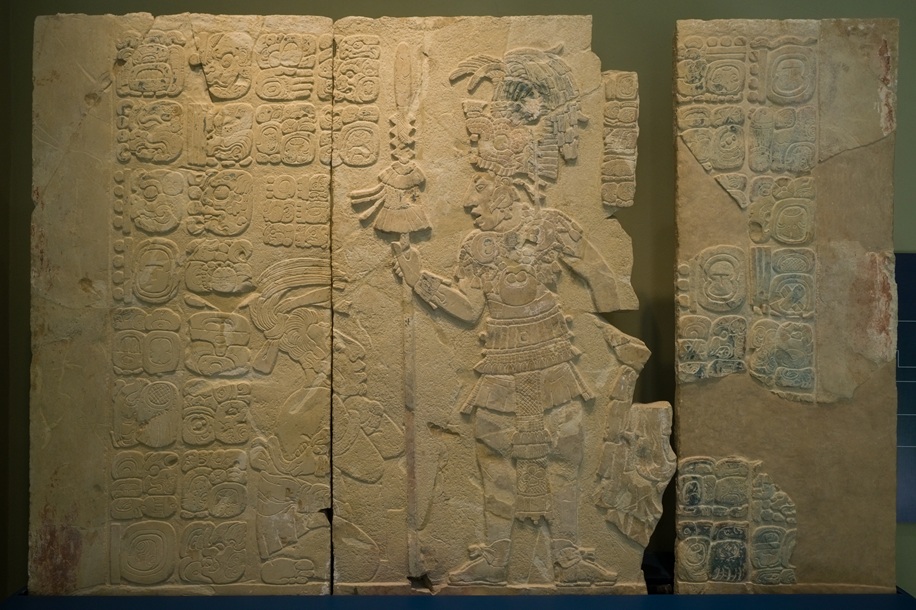
Intricate relief panels showing the early fifth-century ruler Kʼinich Ahkal Moʼ Nahb I
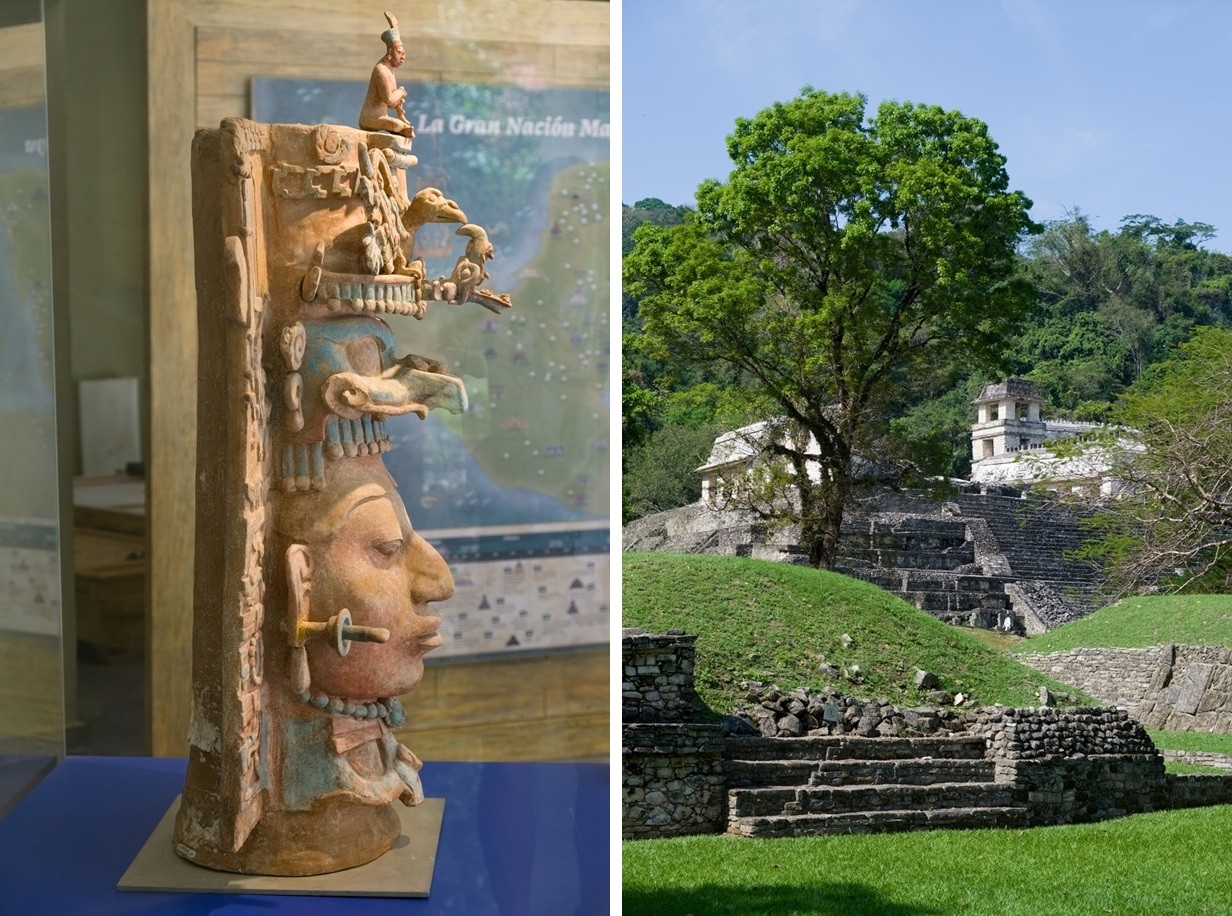
This censer greets visitors entering the Site Museum; a last look at the Palace




 Plus Ultra
Palenque is a wonderful site isn’t it? We didn’t get inside the museum at Palenque, so I was very happy to see your pictures and descriptions of it. Did you get to see any of the howler monkeys? They’re quite small considering their load roars. Maggie
Hi Maggie, somehow we never did catch a glimpse of the howler monkeys! They were always out of sight and/or we may not have spent enough time in the jungle around the ruins to properly look for them in the trees.
It’s amazing to think that only a tiny part of the site has been uncovered. I’m off to Palenque in November and am very excited, even more so now after reading your post and seeing your wonderful photos. I’ll try to remember to look out for the entrada sign in the museum.
So nice to hear you’ll be going there soon! If you’re staying in Palenque’s La Cañada area, it has some great local restaurants and little cafés, including one that specializes in delicious cacao-based drinks. I’ll be writing about those places in a future post.
Thanks so much for the tip, it’s really helpful! I’ll be sure to keep an eye out for your post 🙂
I’ve heard of Palenque, but I’ve never been! Looks absolutely stunning, and this is a part of Mexico I hope to check out, hopefully soon! Thanks for sharing your adventures there with us, James 🙂
My pleasure, Rebecca—thank you also for reading and leaving a comment! I hope you’ll get the chance to visit Palenque in the not-too-distant future. 🙂
Such a cool site! Wish I had visited but didn’t have time, if I ever get back to Mexico I would definitely add to the must see list!
It is so worth the detour, Anna! Palenque was nowhere near as crowded as Chichén Itzá, and it was definitely one of my favorite places on the trip. I’d have loved to visit Oaxaca as well, but we decided it was better to focus on the Maya region given our limited days off and save it for next time.
Palenque is beautiful! Chiapas is great!!
Yes, indeed! We had such a wonderful time there.
You were lucky to get into the museum; I don’t remember it being there when I visited. Your photos give a good impression of the site; I love that beautiful, transparent morning light. I don’t remember hearing howler monkeys in Palenque, but I do remember seeing a scorpion clinging to a wall. After that, I looked more closely.
We visited the archaeological zone on a Monday so the museum was closed. But it was a blessing in disguise as I’m not sure how much information I’d be able to absorb after being out for hours in the heat and humidity. Bama and I went back early the next morning and were told the place was being cleaned, so it only opened at 10 a.m. We didn’t see any scorpions in the ruins—was it a big one?
In my eyes, it was a quite a big scorpion, but probably smaller in reality.
I’m so glad that you and Bama finally got to visit Mexico! Every part of the country has something to offer – scenery, history, architecture, music, color, art, and of course FOOD. And everywhere friendly people! I really enjoyed your and Bama’s blogs about your trip.
Thank you, Marilyn! I have quite a few more posts on Mexico in the pipeline, including one about all the fabulous food we tried over those two weeks. If we had another week to spare, I’m sure we would have budgeted in at least a few days in Oaxaca!
I see another trip to Mexico some time in your future!
A spectacular site and a bonus that Pakal the Great’s tomb was not shipped off to Europe like some many ancient
Absolutely. Had the tomb been discovered early on during the Spanish-colonial era, the artifacts would probably have ended up in a museum in Madrid.
It seems quite fitting that Bama would spy the obscure entrance to the replica of Pakal the Great’s sarcophagus! What a special find for both of you history buffs. I also enjoyed the strange coincidence of your hearing a song from your own past while there!
I think Bama would be a very good archaeologist, being observant, detail-oriented, and most importantly passionate about history. This past August we spent a week in a remote part of Indonesia to seek out the traces of a centuries-old sultanate and track down some prehistoric cave paintings. Those are experiences I will get to posting about eventually!
What a site and I can’t believe it’s only 10% of it. It’s wonderful that you were able to hear a song from the past and how it evoked so much memories and emotions.
I’m finally going to do a trip to Asia (HKG, Malaysia and a bit of China) in November. I’ll be going through your blog and Bama’s blog looking for ideas. I haven’t travelled in ages so I’m kinda nervous about it.
Actually, I haven’t explored very much of Malaysia or China so the blog may not be very helpful on that front. But if you’re into hiking, November should be a pretty good time to get on the trails in Hong Kong, provided it isn’t too hot when you’re there!
I’m glad we went to Palenque. Although the present-day archeological zone is not as expansive as Chichen Itza or Uxmal, it’s special because of its setting. The lush forest made it such a magical place, especially early in the morning. For me, Palenque turned out to be one of the highlights of this two-week trip to Mexico. If only all artifacts at the Site Museum were displayed when we went. But we were still so lucky to go there when it had been reopened after it was closed for renovation.
I wholeheartedly agree, Bama. And Palenque will always have a special place in our hearts and memories as the first Maya site we’ve ever visited. I wouldn’t mind going back someday to see what we missed at the Site Museum and try our luck with the smaller temple ruins farther away from the main pyramids.
I read Bama’s recollection of Palenque and wondered if you’d do a write-up. You certainly did and this trip sounded like a very memorable one for you. I smiled when you described hearing the sound of a howler monkey for real – one of those things you have to hear and experience it to believe it. The temples seem quite the highlight and what’s on display offered perspective and understanding of the history of Pakal the Great – right there as it happened in the past. The colectivos ride at the end seemed very fun and a good way to end the day. You could have sang along very loud on the ride back 😜 Thanks for sharing, James. Beautiful images 😊
Hi Mabel! Thank you too for the lovely comment. 🙂 Visiting Palenque was definitely one of the highlights of our Mexico trip. Thankfully the weather was in our favor and the ruins never got too crowded even when the tour groups arrived later that morning. I may have heard the driver of the colectivo singing along (but softly) at one point!
Such a fabulous account of Palenque, James. stumbling upon the replica of Pacal’s tomb must have felt so exciting. I could well relate to the nostalgia triggered by the pop song, how wonderful that it’ll now trigger memories of this special part of Mexico.
Sadly, we’ll have to pick between Chiapas and experiencing the day of the dead traditions in Michoacan. I think it is going to be the latter.
Thank you so much, Madhu. It is a good thing Bama is so observant when we travel. And now we will always remember Palenque as the first ancient Maya site we’ve ever visited. The ruined pyramids amid the jungle have a magic all their own.
That is indeed a tough choice. I remember Jeff Bell raving about Morelia in one of his posts from Mexico a few years back, and being there for the Day of the Dead will be a very memorable experience.
What a great blog post this is. Thank you for sharing your valuable information about your visit to Palenque!
You’re welcome, and thank you in turn for taking the time to read and comment!