
A Brush with the Maldives
Anthony Bourdain once said in an episode of Parts Unknown on the Greek Islands: “My rented villa is pleasant enough. But to be perfectly honest, lonely. Is it worse to be someplace awful when you’re by yourself, or someplace really nice that you can’t share with anyone?”
When I heard those words, I instantly recalled a work trip this past August that took me to the Maldives for the very first time. I’d been on assignment to write about a pair of new connected resorts by the Thai hospitality brand Centara, and take some decent pictures for the magazine, which often meant rising before dawn to shoot before the tropical sun got too harsh. At the time I wondered if I was the only person there traveling solo. Everywhere at both resorts I saw couples and families on holiday: eating together, walking hand-in-hand on the beach, observing baby reef sharks in the shallows from a bridge, never alone.
The feeling of social isolation peaked one morning when a staff member came knocking with a floating breakfast clearly meant for two. Indulgent as it was, that impractical eating arrangement is not something I’d wish to try again. Floating breakfasts were first popularized in Bali’s luxury resorts about a decade ago and are only good for social media snaps — not only is the weighted tray prone to drifting; I couldn’t get used to the strange sensation of eating while half-immersed in water. All the while I had a nagging worry in the back of my mind that I’d end up dropping part of a croissant, a drink, or a runny egg yolk into the pool.
Before I’m dismissed as an ungrateful grouch, let me add that the Maldives is just as beautiful as it looks on postcards and desktop screensavers. One night, while en route to a teppanyaki dinner prepared by a Sri Lankan chef, I stopped to admire the idyllic scene around me. Beneath twilit skies awash in dark purples and deep blues, the resort’s romantically lit coconut palms and overwater walkways looked flawless. There was a cool sea breeze, the Indian Ocean surf lapped ceaselessly against the nearby breakwaters, and the stars twinkled in the unpolluted night sky. I could think of at least three people I would have liked to come here with.
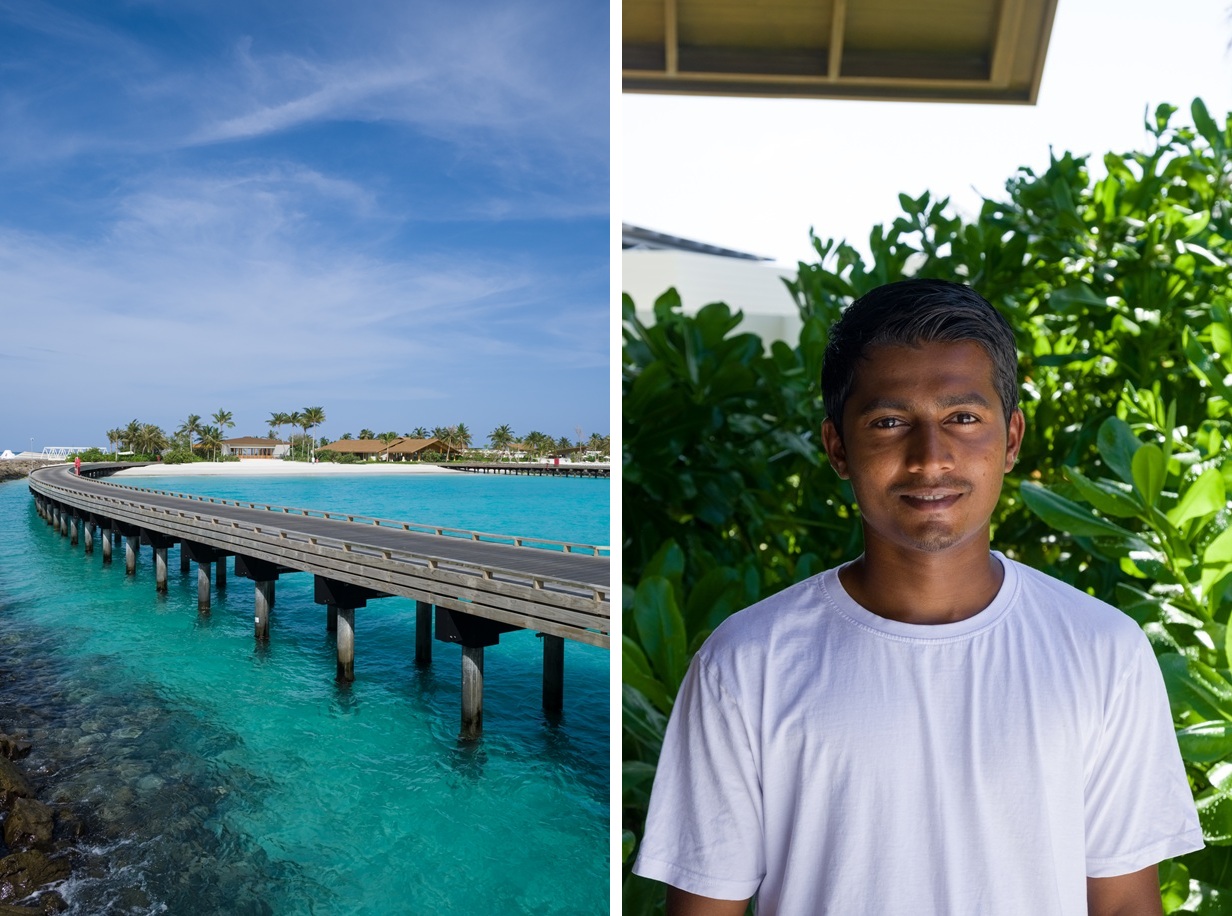
An overwater walkway at Centara Grand Lagoon Maldives; a young local staffer
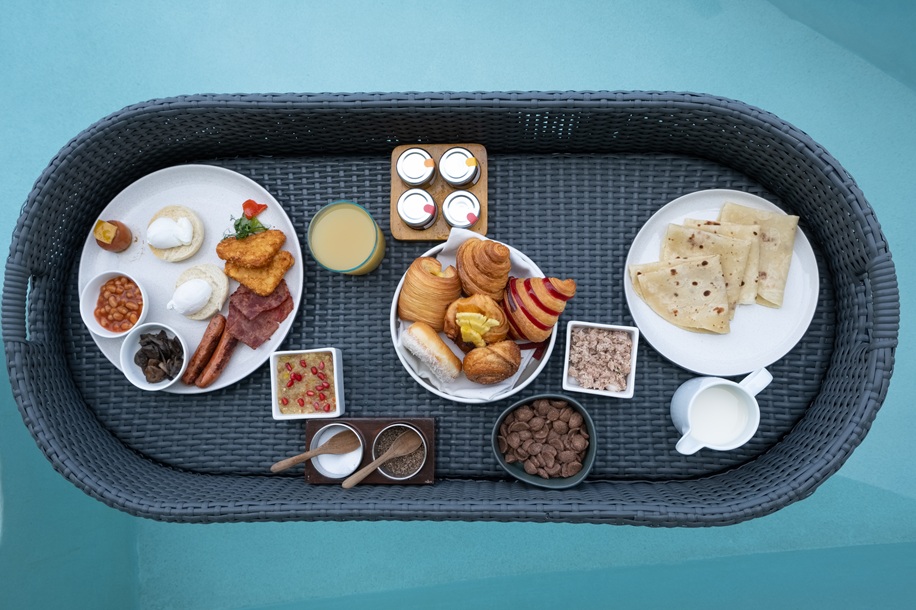
My in-villa floating breakfast was clearly meant for two
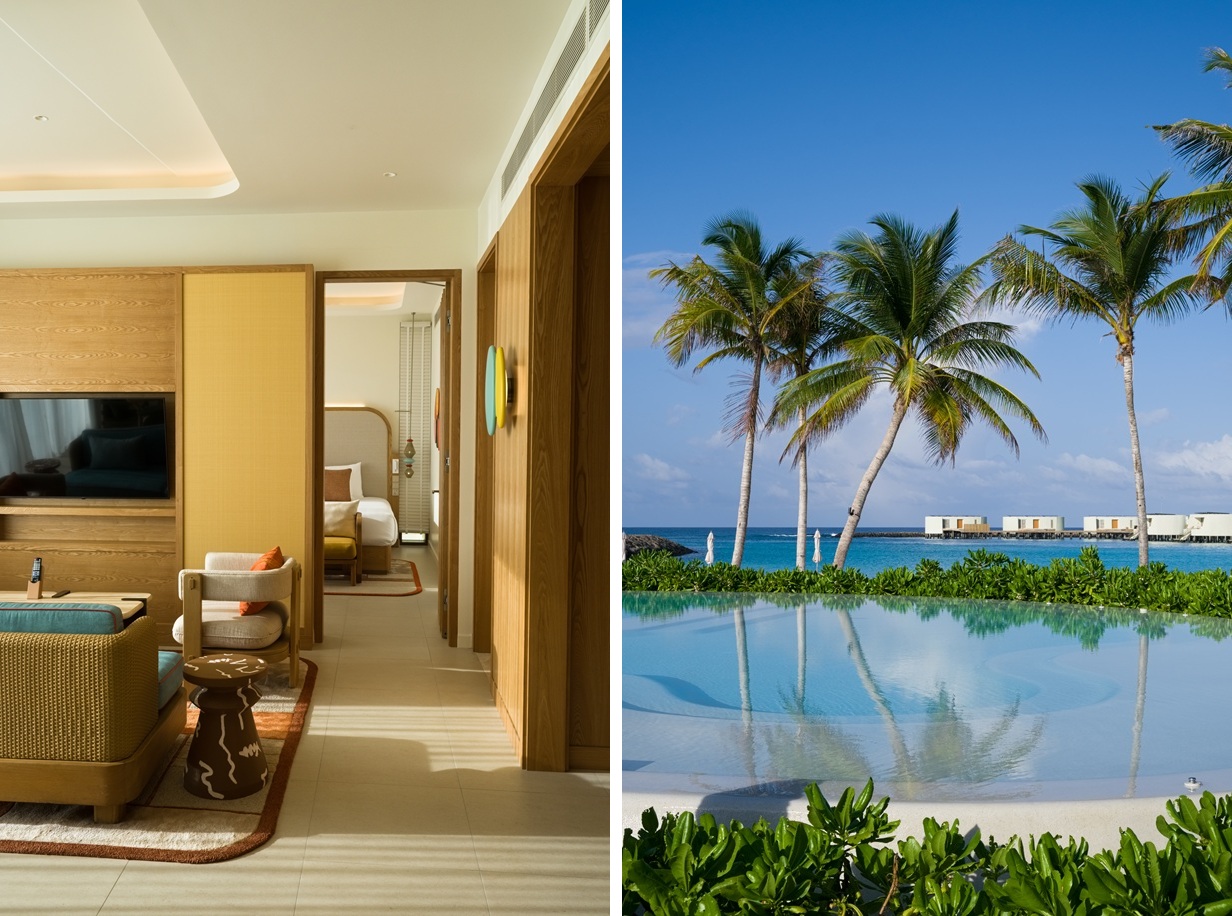
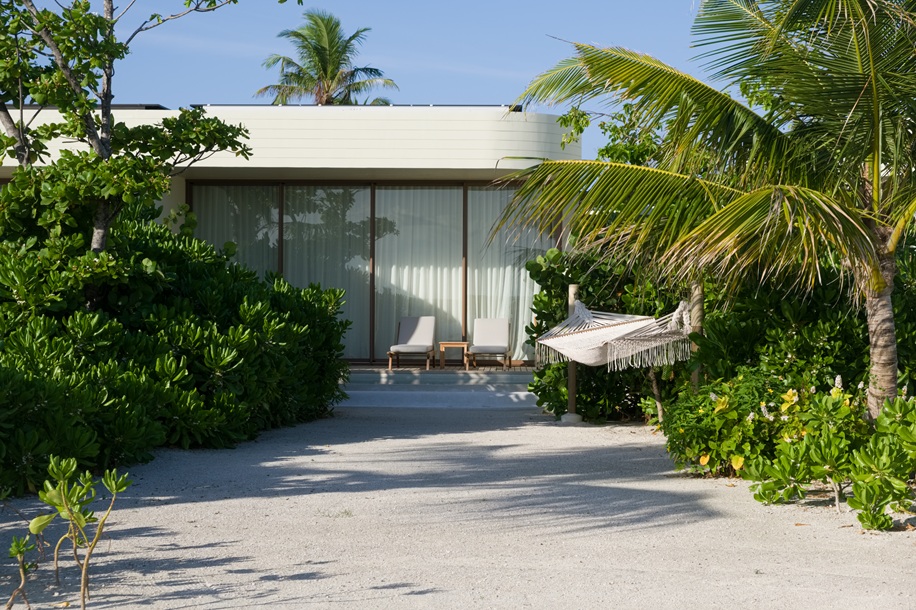
A two-bedroom beach villa (not mine) at the Centara Grand; looking out from the main pool
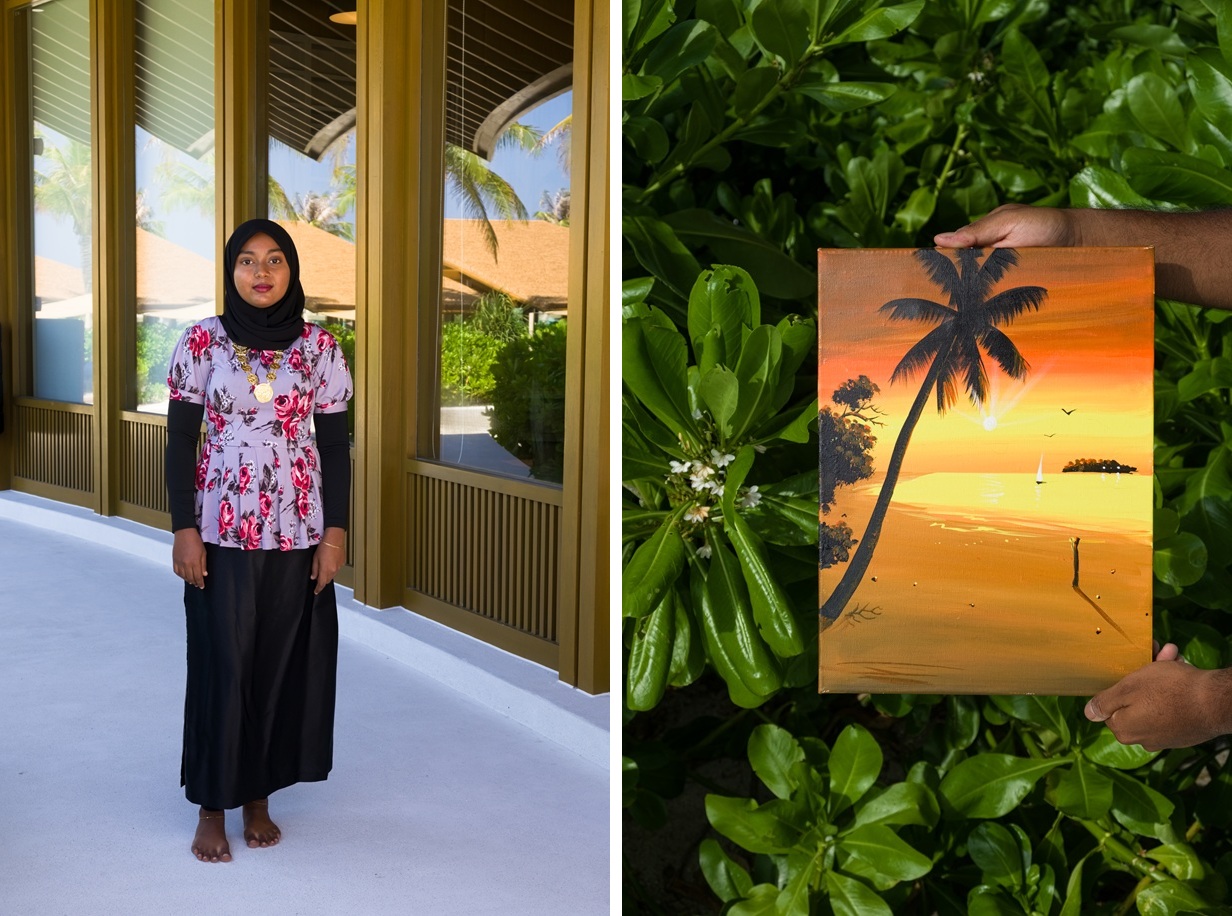
A kids’ club staffer in a hedhun buri top and feyli skirt; a painting by the resort’s artist
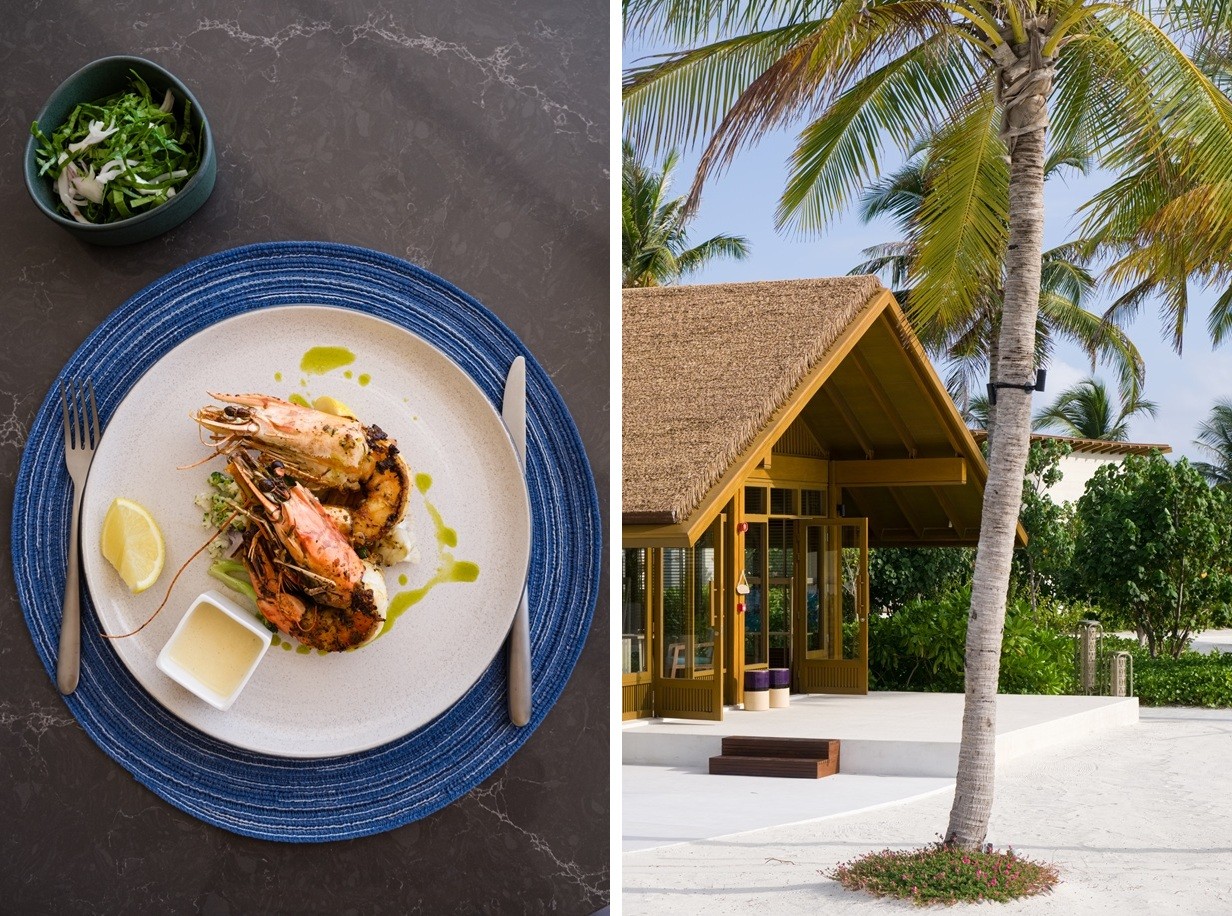
Grilled prawns with basil oil and a side of kopee faiy leaves; on the grounds at Centara Grand
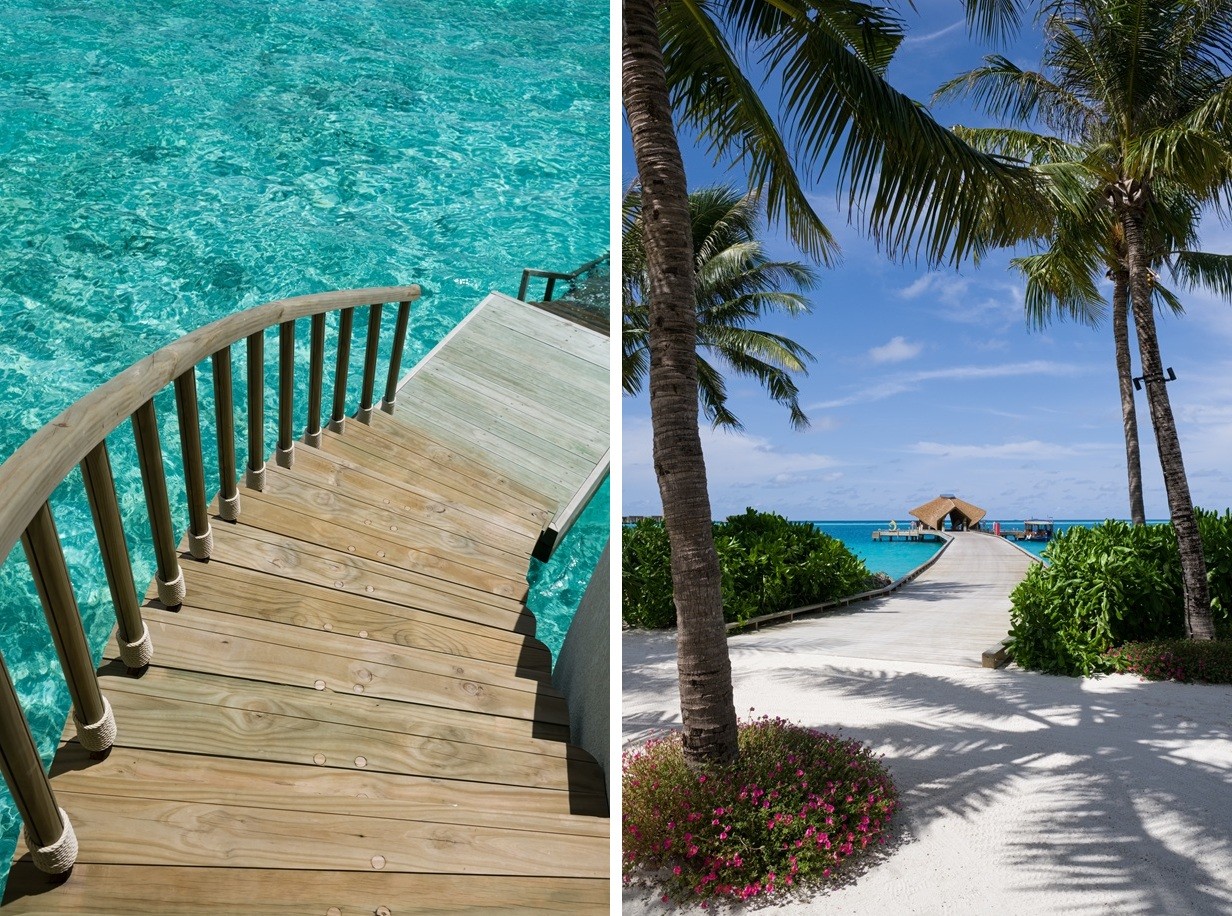
Villa stairs leading down to the sea; the arrival jetty’s pavilion is inspired by a manta ray
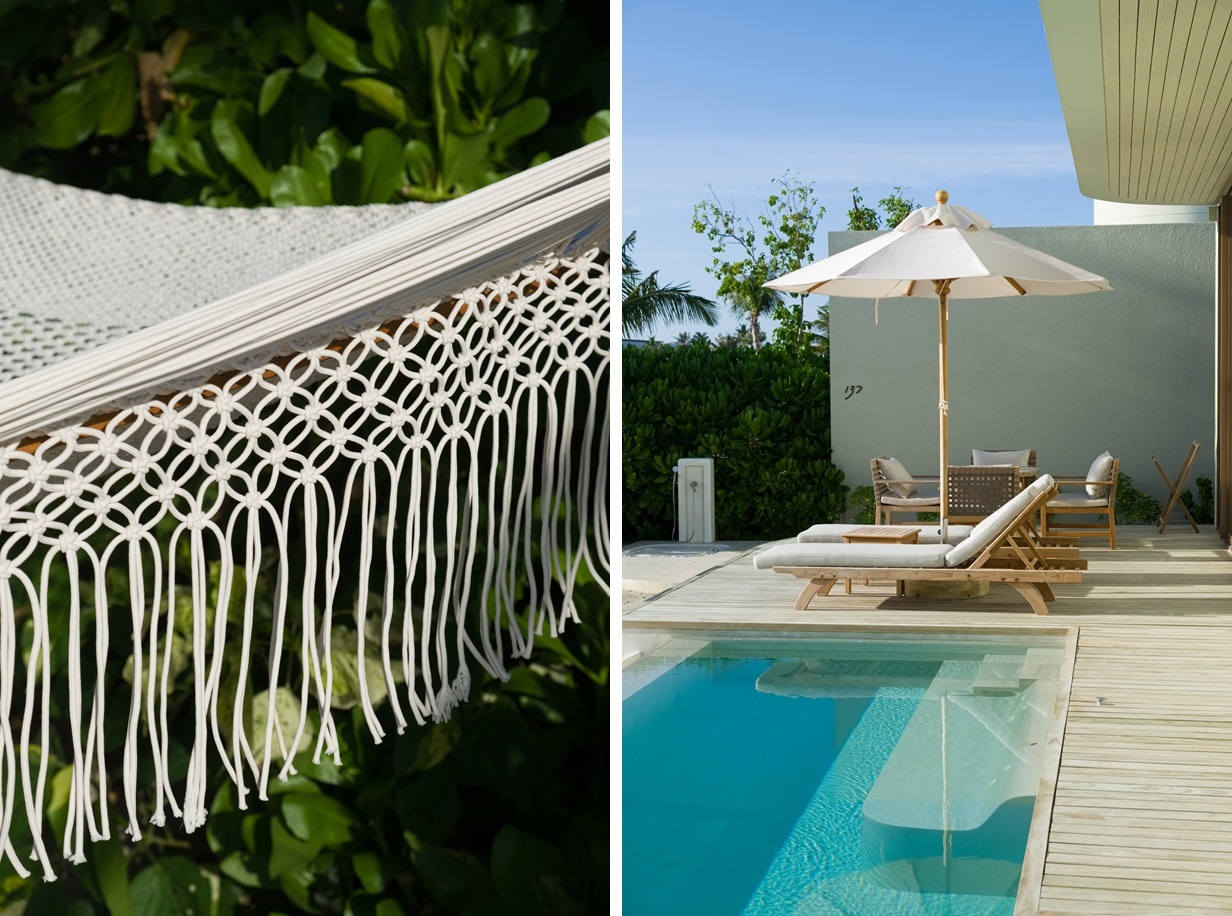
Woven patterns on a hammock; the pool deck of a beach villa at Centara Grand
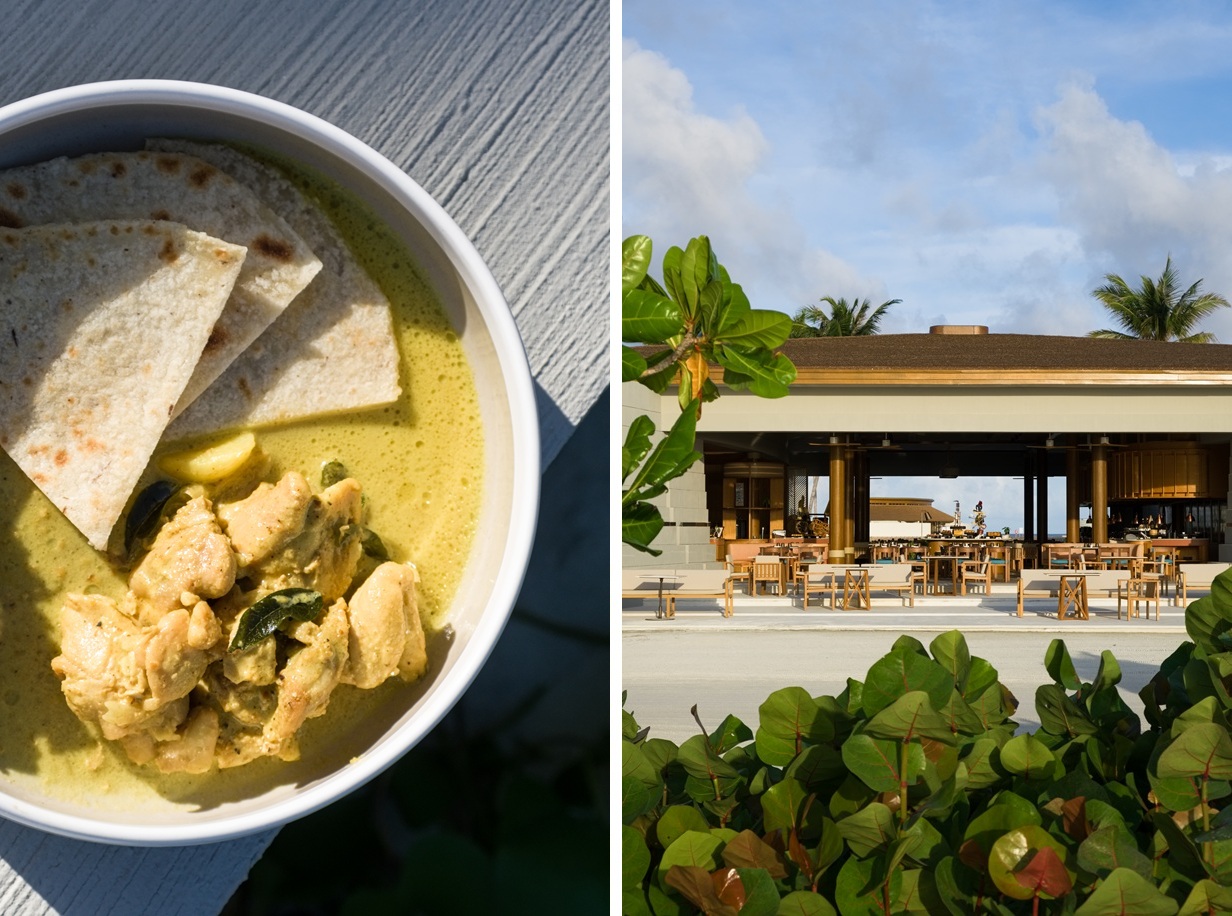
A Maldivian breakfast of huni roshi flatbread and chicken curry; the resort’s all-day restaurant
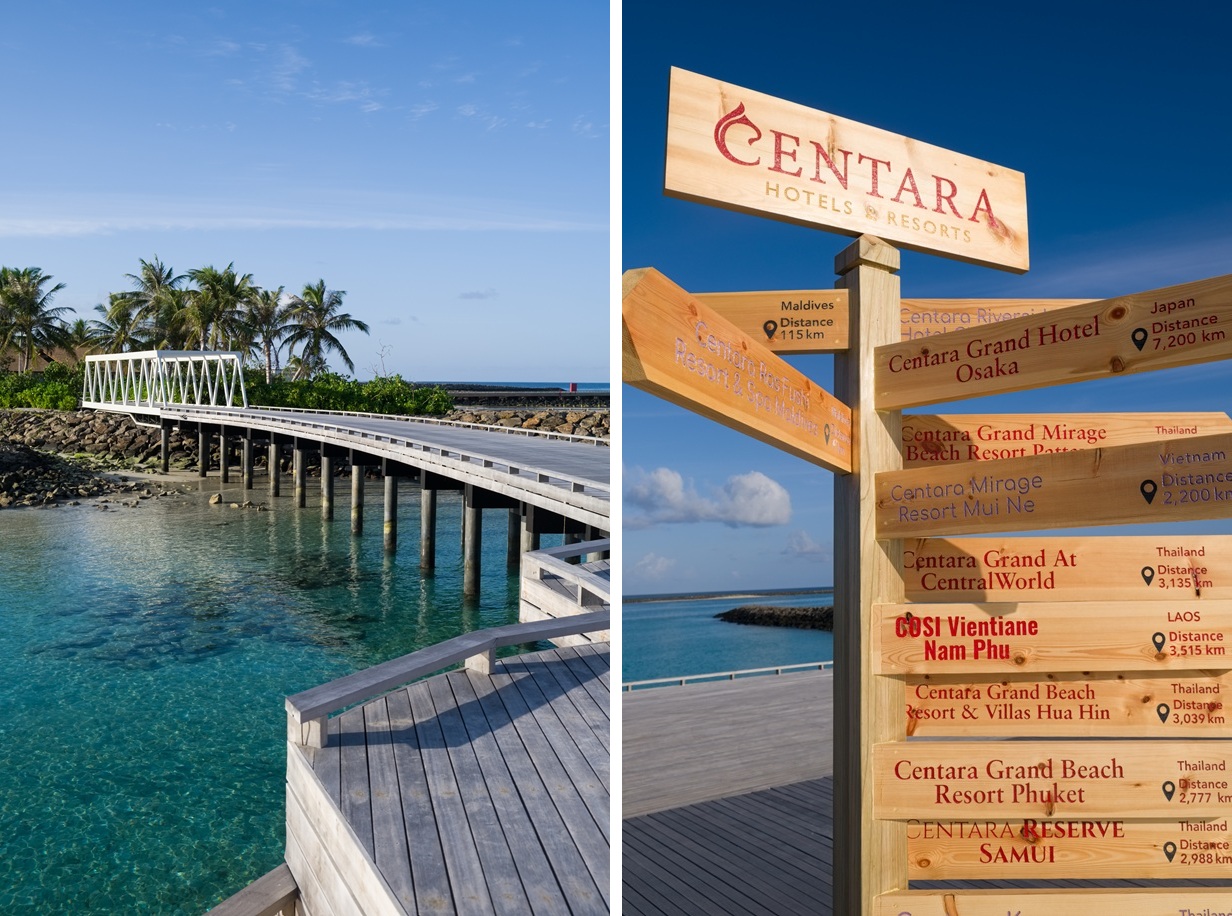
The bridge connecting Centara’s twin resorts; pointing the way to sister hotels around Asia
But after spending a few days at the twin resorts, I was itching to get off the man-made private islands and do some exploring. I was in luck. Several guests were checking out and I could tag along on the speedboat shuttle to the airport island, which is connected to the capital city of Malé by a Chinese-funded bridge. The bright lights of Malé had piqued my interest the night I arrived on a fully loaded plane via Sri Lanka. This place is rightly considered one of the most densely populated cities on Earth. Over 200,000 people — more than half of the Maldives’ entire population — have been crammed into a tiny chain of several built-up islands in the middle of the Indian Ocean.
Zam, a medical student and part-time guide, met me at the airport wharf and flagged down a taxi to take us into the city. He had planned a three-hour whistle-stop tour of the main sights. It might be because I’m a city person through and through, but I was captivated the moment I stepped out of the vehicle. Vibrant and full of life, Malé didn’t feel as overcrowded as I’d imagined, with some streets shaded by mature trees. This was undeniably the nerve center of the country, with plenty of cafés, grocery shops, restaurants, banks, and schools. Only 30 percent of Malé’s population hails from these parts: Zam told me he was originally from the island of Naifaru in the Lhaviyani Atoll, an eight-hour ferry ride away.
We were in Malé just before the National Day celebrations and Maldivian flags festooned the streets. Zam explained that the anniversary marked the 1573 expulsion of the Portuguese, who held sway over the archipelago (though did not rule it outright) for 15 years. “Why? The Maldives had the best corals, pearls, and shells. So, they were trading them and getting rich without giving anything back.” These greedy Portuguese merchants were resented by the local populace as hoara viyafaaraverin, “thief businessmen” in the local Dhivehi language.
Malé’s historic landmarks are almost all positioned along a single street: there’s the Muliaage or Presidential Palace, the nearly century-old Majeediyya School (the oldest in the country), and a few more significant sites. Hidden behind a turquoise-and-white gateway is Medhu Ziyaaraiy, a tin-roofed shrine containing the tomb of Abu al-Barakat Yusuf al-Barbari, a Moroccan trader and saint credited with bringing Islam to these shores in the 12th century and converting its last Buddhist king. The highlight of the city tour was Malé’s 400-year-old Friday Mosque, dating to 1658 and built from interlocking coral stone blocks joined together without mortar. Zam showed me one of the six decorated “keystones” in the outer walls. “You take this out first, and then you can take the rest of the blocks out one by one without them falling apart.” So, the whole structure was like a 3D jigsaw puzzle.
Inside the mosque’s humid prayer hall, Zam gently pulled down a cloth around a stone pillar to reveal a swirling ancient script used during pre-Islamic times. I marveled at the beautifully carved portals and screens in ebony and sandalwood, lacquered beams painted with Islamic calligraphy, and solid columns fashioned from the trunks of coconut and mango trees. Outside, the sturdy wedding cake–like minaret seemed to glow in the midday sun. We wandered around a series of 17th-century royal tombs and the grave of Ibrahim Nasir, the second President of the Maldives who was instrumental in modernizing the country and opening it up to tourism. He was fondly nicknamed Velana by the populace — hence the name of Malé’s international airport.

Early morning at the Centara Grand; the doors at the gateway to Malé’s Medhu Ziyaaraiy
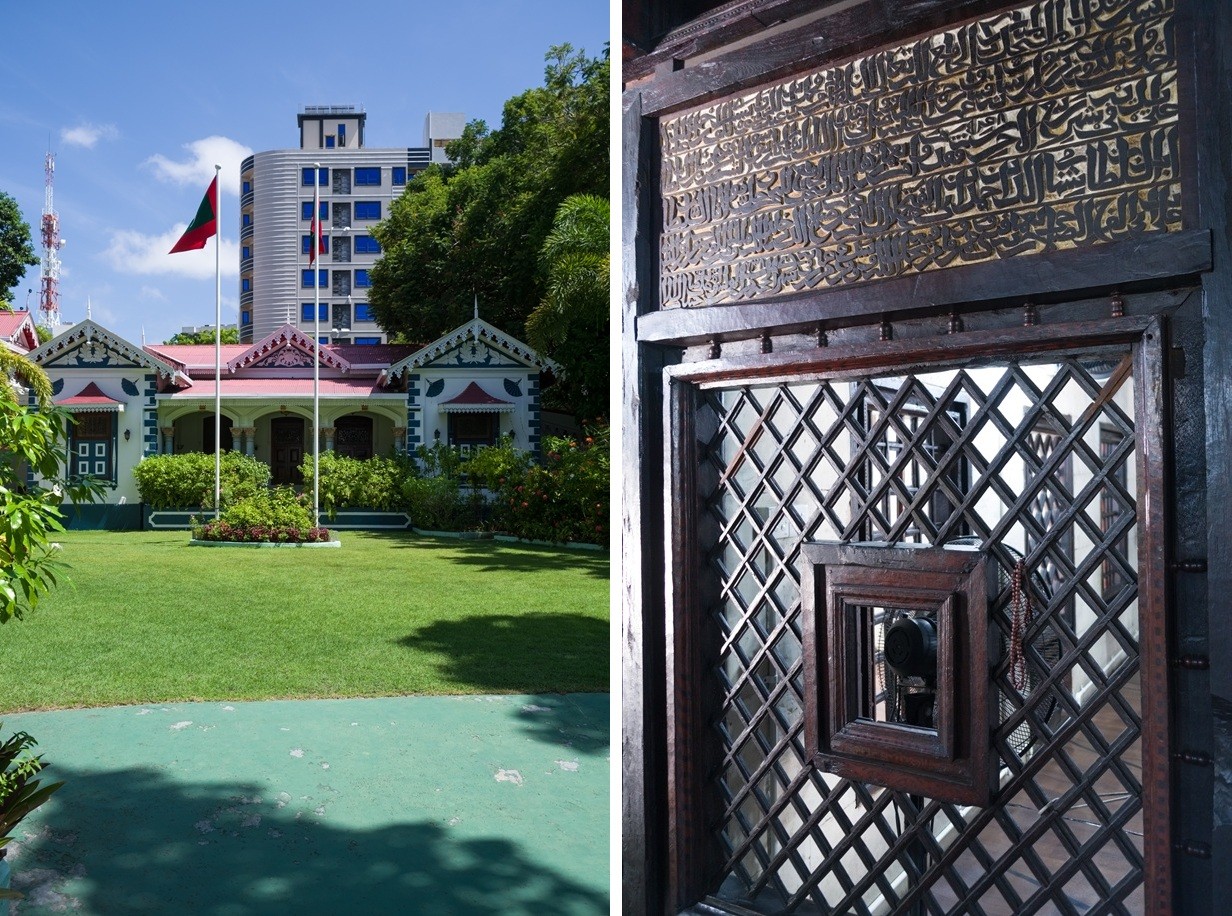
The Presidential Palace of the Maldives; inside the historic Malé Friday Mosque
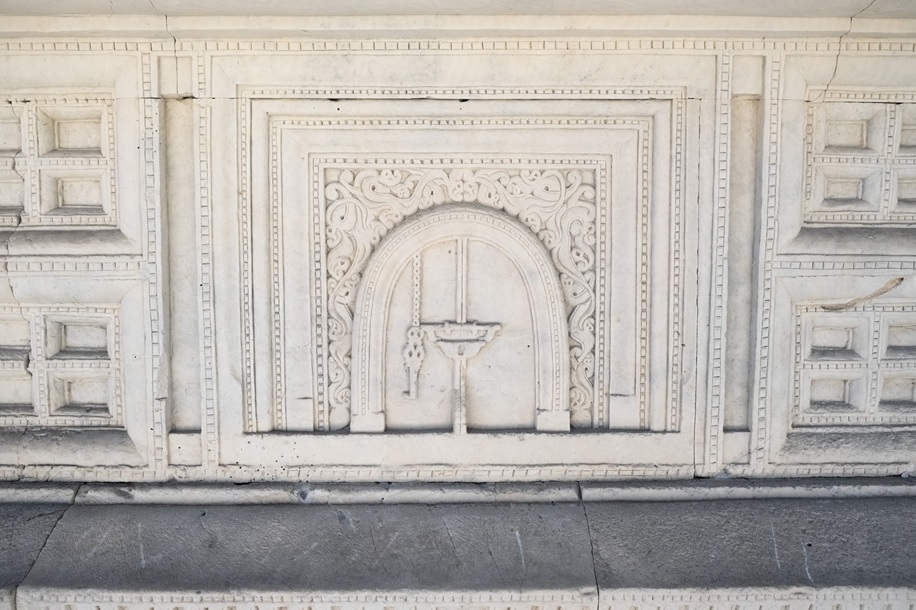
One of six ornately carved keystones around the coral-stone mosque

Zam at a vestibule of the mosque’s two prayer halls
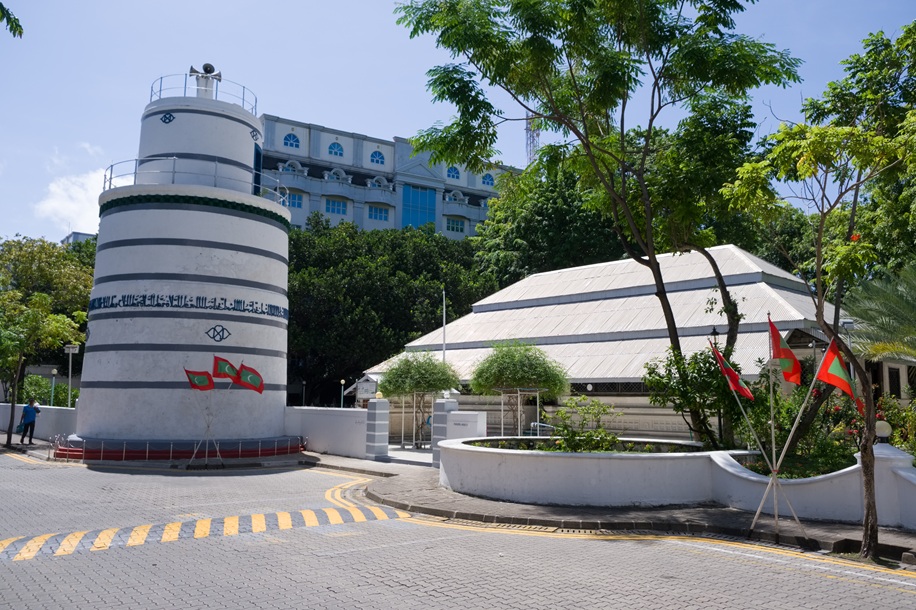
The tin-roofed mosque and its stout minaret, which dates to 1675
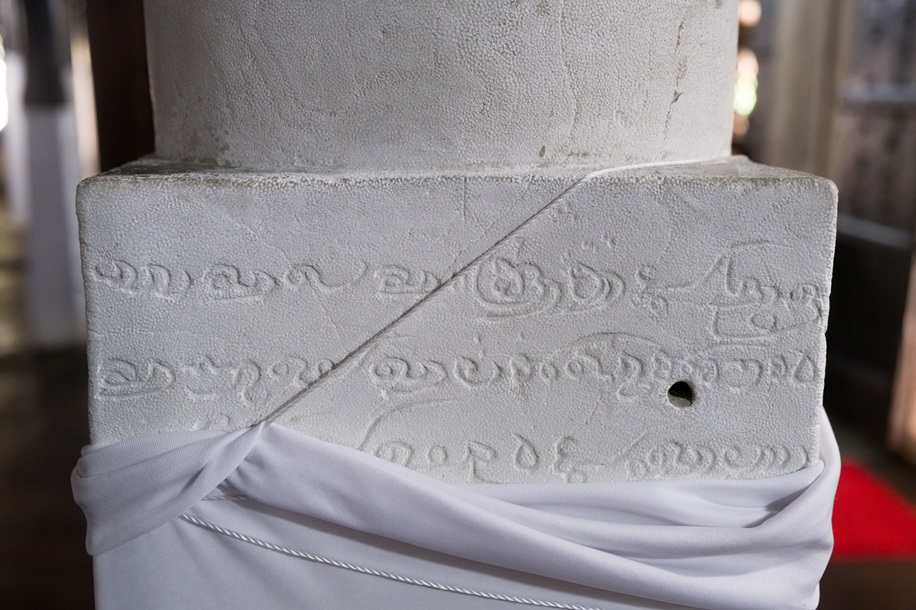
Pre-Islamic script adorns a pillar inside the mosque
Continuing the walking tour, Zam told me of the darkest day in recent Maldivian history. We stopped for a few quiet minutes at the Victory Monument, a memorial to the 19 people killed in a 1988 coup attempt by a local businessman and Sri Lankan separatist group the Tamil Tigers, whose operatives took control of Malé in a daring surprise attack. The planned overthrow of the government was foiled barely a day later with the arrival of 500 Indian paratroopers.
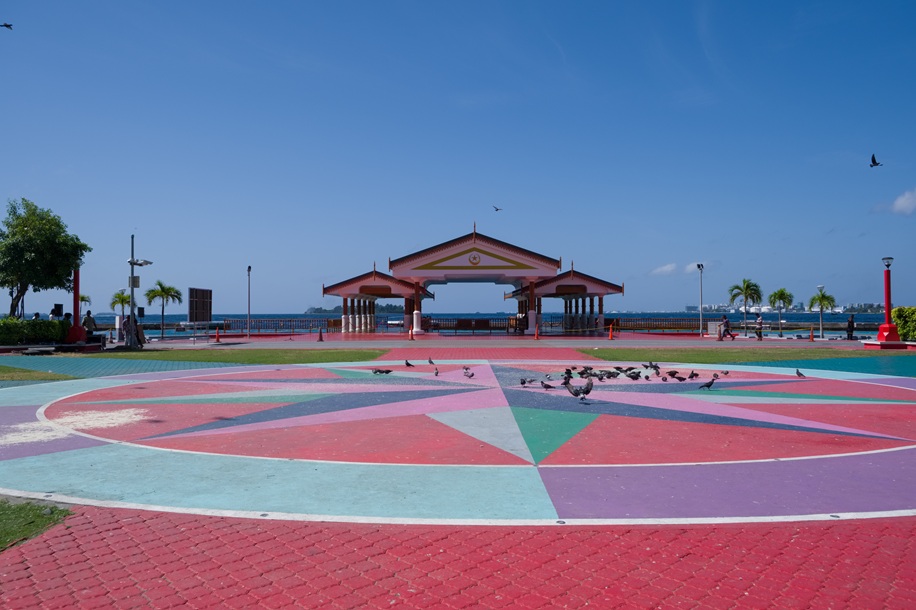
Not far away on the seafront Republic Square, Zam gestured beyond the Presidential Jetty toward an island in the distance, full of tall trees. “Do you know what that is?”
I offered up my best guess. “A resort?”
“No, that’s a prison. Dhoonidhoo is our Alcatraz!”
During my architecture school days, one of our professors noted the stark similarities between a hotel and a prison: both rely on a system of corridors with rows of rooms or cells on either side. And I knew well before this trip that I was just not a resort person at heart. While relaxing for a few hours on a sun lounger by a private pool might appeal to some, I’d much rather spend it soaking up the sights and sounds of places like Malé’s no-frills fish market, which was still busy after lunchtime. We dodged workers hauling in large plastic tubs full of freshly landed fish; one dragged a headless marlin across the tiled floor. There were impressively sized groupers and red snappers, and yellowfin tuna so big I couldn’t help taking a quick photo on my phone. I was tempted to take out my camera — until I saw Zam surreptitiously handing the fishmonger some cash.
I then hopped onto the back of Zam’s scooter for a short but thrilling drive to the western edge of the island to see the Tsunami Monument. We wove through the afternoon traffic, with Zam plotting out alternative routes down Malé’s narrow backstreets on the way there and back.
Our final stop near the heart of town was Dhathuruveringe Market, whose produce stalls overflowed with screwpine, fiery scotch bonnet peppers, and foodstuffs I recognized back in Southeast Asia: rambutan and mangosteen, breadfruit and bitter gourd. Zam pointed out the dainty green local mangoes and bunches of plump bananas still on stalks. “The mangoes, bananas, and other fruits that grow in the Maldives have the same trait — they are small and sweet,” he said. Most valuable of all were the prized sea almonds called kanamadhu, which cost just over 160 U.S. dollars a kilo — or 40 times the equivalent weight in tuna at the nearby fish market.
We lingered at a stall selling the local specialty of valhomas (smoked tuna) and an assortment of traditional Maldivian snacks. After being offered free tastings by the generous vendor, I bought two small bags of sea almond, which taste like sunflower seeds; vacuum-packed valhomas; and some edible souvenirs for my coworkers: sticky screwpine toffee, cigar-like coconut toffee called bondi (Zam: “this is the local version of chocolate”), and another coconut-based sweet, but molded into a large round biscuit with a geometric flower pattern. When it came time to pay, Zam spoke to the seller in rapid-fire Dhivehi. I caught the word hadhiyaa, which sounds just like its Indonesian cognate (hadiah) as they share the same Arabic root: both mean “gift.” Without hesitating, the grandfatherly vendor tossed in a small sausage-like treat in a dried-leaf bundle that contained black pepper, turmeric, ginger, and other spices. But what was it for? I watched as the proprietor banged a fruit knife against the counter and flexed an arm, saying something in Dhivehi as he hardened his fist. “This is good for men,” Zam translated with a smirk. I just about doubled over with laughter.
All too soon it was time to head back to the airport jetty for the resorts’ speedboat shuttle. “That was the longest city tour I’ve ever done!” Zam beamed. Now that I’ve been, I can tell you conclusively that my favorite side of the Maldives was not the manicured luxury stays it is so famous for, but the local islands like Malé, where real life unfolds in all its complexity without on-demand buggy service and floating breakfasts. ◊
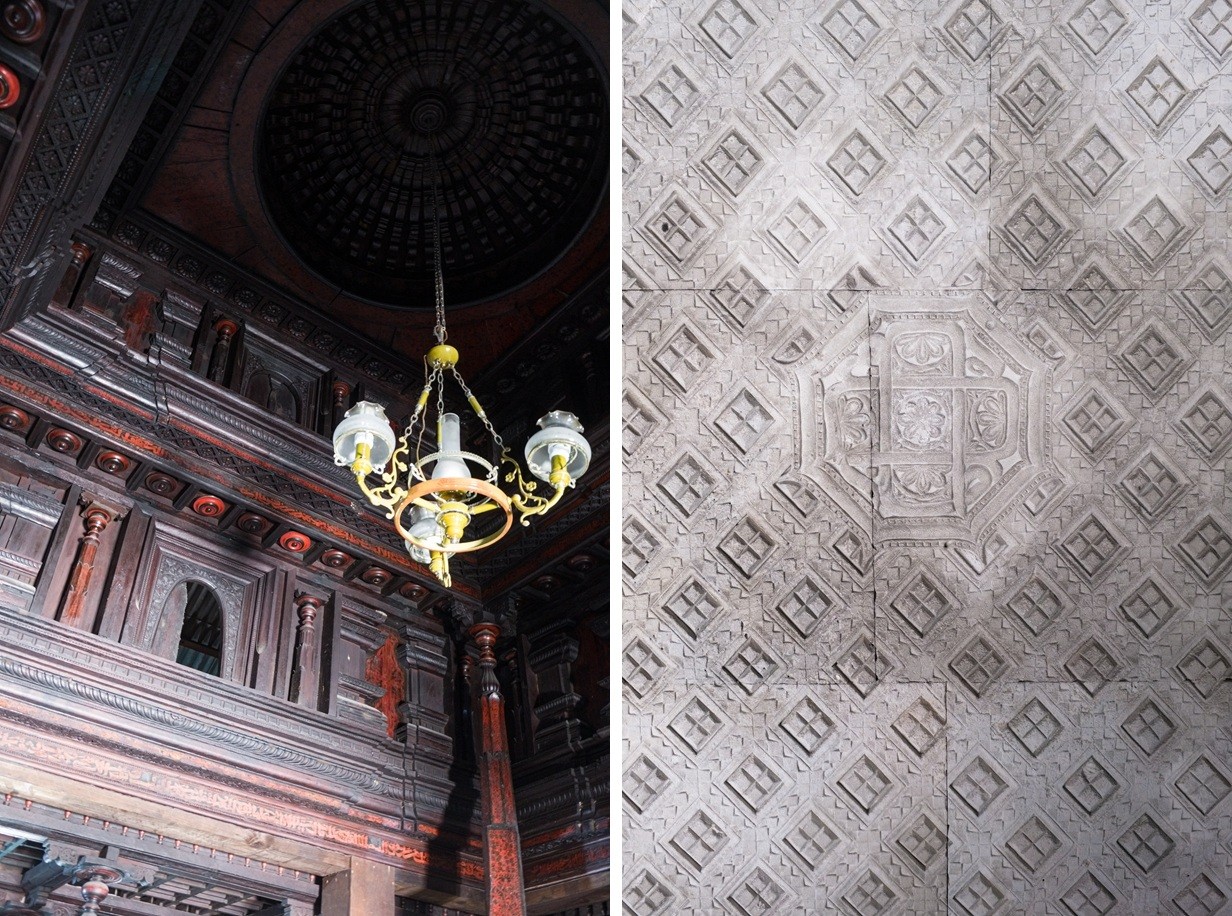
The mosque’s interior is clad in lacquered wood; patterns in the coral stone
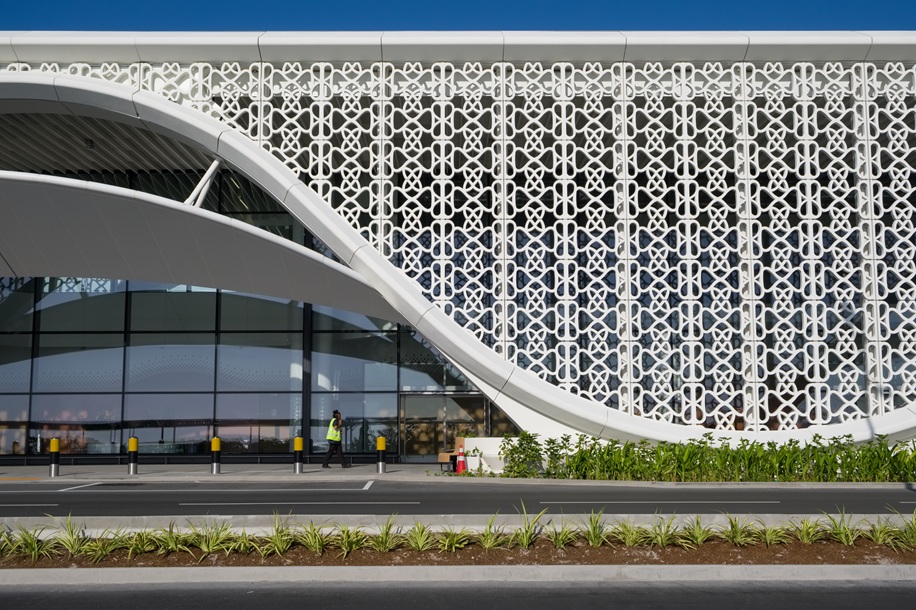
Maldivian motifs on the new terminal at Velana International Airport
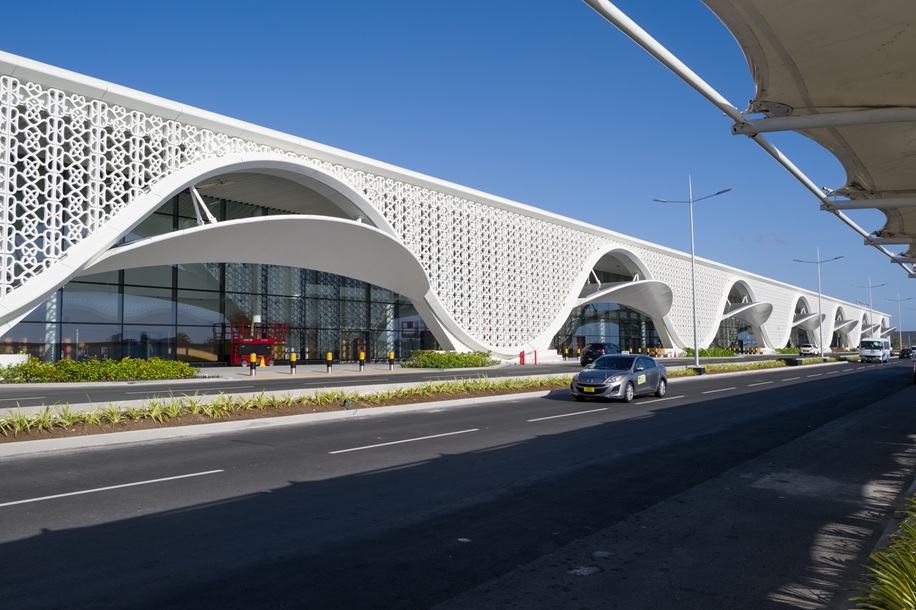
These graceful openings reminded me of manta rays in movement
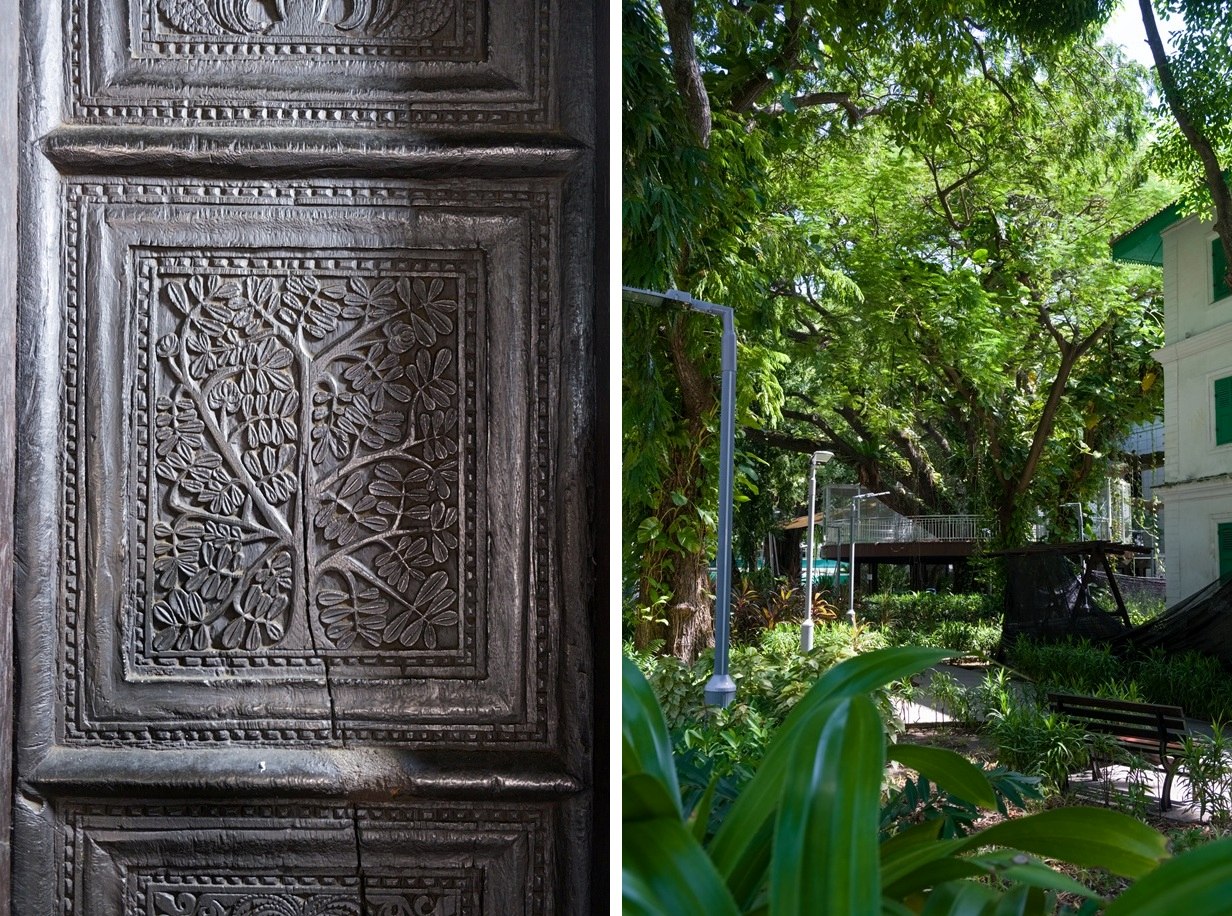
An intricate relief at Malé Friday Mosque; a nearly 500-year-old acacia tree in Sultan Park
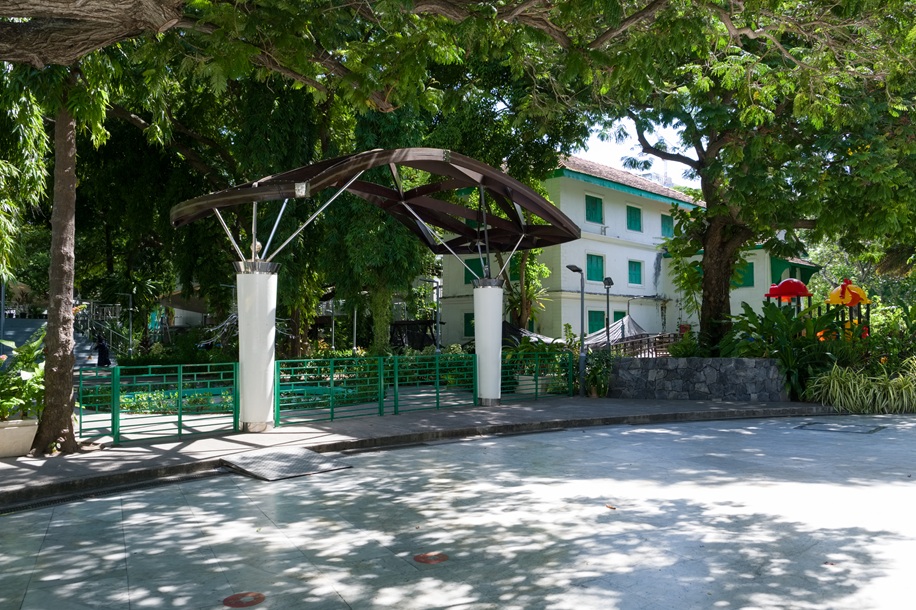
The main entrance to Sultan Park, once the grounds of the former royal palace
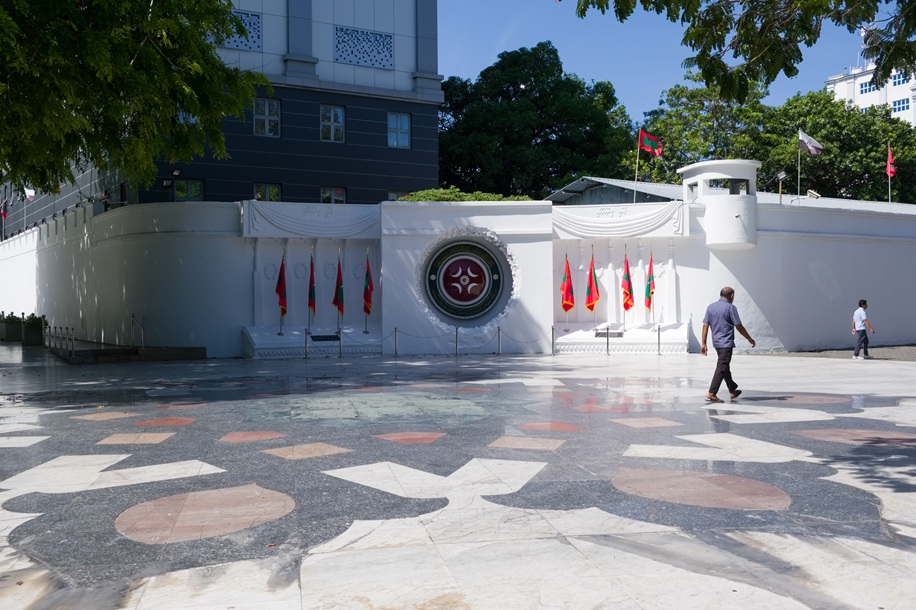
Across the square lies the solemn Victory Monument
The Presidential Jetty at Republic Square, with Dhoonidhoo prison island in the distance




 Plus Ultra
Malé does look lovely and I agree that resorts aren’t the best place to get the vibe of a country. I recently read on BBC that the Maldives are opening up wider than the luxurious and expensive resorts. They have allowed locals to open Homestays and that you can now travel independently throughout the islands going from one homestays to another. I must admit that we are very tempted by this option as we aren’t lovers of expensive resorts that are all the same everywhere in the world. Thanks for the virtual tour (Suzanne)
Suzanne, that sounds wonderful — thank you also for sharing the good news about the Maldives opening itself up to more independent travelers. I do love the idea of hopping from homestay to homestay and getting a feel for how people really live on the islands. And I’m sure it will be infinitely more interesting than being cooped up in a fancy resort!
The tone and mood of your entry changed when you started to write about the tour into town with Zam. While I like resorts, I tend to get bored after a couple of days and need to do something different. By the way, was that snack good for men? lol…
That excursion and city tour of Malé made the whole trip worth it in the end — I was so happy to step out of the resort and do some exploring. To be honest, I have no idea if the medicinal snack the market vendor gifted me had any real effect! Guess we’ll never know…
This was a marvelous tour!! Thank you for bringing us along, and I am sorry to hear how melancholy it was for you, being alone in a place designed for sharing with others. I appreciated seeing some of the inner workings of the resorts, since I doubt I could ever afford to visit the Maldives. Your description of the city tour was the best. I am fascinated with the mosque held together like a puzzle of coral stones, and also with the script at the base of the column, the likes of which I have never seen.
I would have preferred spending the entire day touring Malé but three hours was still better than nothing! One thing that struck me about the Maldives was just how expensive it was, even at the local markets and shops. Zam told me rents are exorbitant in Malé for both locals and foreign workers, while things can get pricey as the vast majority of goods and foodstuffs must be imported from elsewhere.
What a stunning trip! The Maldives are the stuff of dreams, and you’re fortunate you got to go for work. Some day, I hope to head over there!
I was told the Maldives has become much more accessible in terms of air links and also the price point (more affordable hotels and resorts have opened in recent years), so maybe you’ll make it there soon!
The Maldives are a short hop away, but I’m still looking for the right reasons to visit. Resorts are not something I enjoy
Beyond the resorts, I think the local islands do have some intriguing culture and history to delve into. And something I didn’t touch on in this post was Maldivian food, which I really enjoyed. Tuna and coconut are two staples of the local cuisine, and I happen to love both ingredients!
I loved how you captured both the postcard beauty and the quieter, real side of the Maldives and especially Malé. That contrast made the story feel very human and memorable.
Thank you for the lovely comment! If I do go back to the Maldives I will probably spend a few nights in Malé, wander around independently, and eat at local restaurants. After returning home, I realized there was an even older historic mosque I missed just a block away from the main sights.
That sounds like an even richer way to experience it, James. Spending time in Malé independently and eating at local places would add so much depth beyond the resort side. And isn’t it funny how travel does that, only after you’re home do you realize how many layers a place still has waiting, like that historic mosque just around the corner. It feels like the perfect reason to return 😊
Male does seems interesting, especially the beautiful mosque.
I felt like I barely scratched the surface of it in those three hours… but I’m thankful I had a local guide to show me around.
You know, when it comes to the Maldives, I’ve always been more intrigued by Malé than by the resorts. Sure, pictures of the latter are beautiful. But I’m more curious about how life is like in the country’s capital, a city that seems to be floating in the middle of the Indian Ocean. I once read about the very few vestiges from the pre-Islamic era when these islands were still predominantly Buddhist. I think those are worth checking out too.
Should we go to the Maldives on one of our trips someday, I’m sure we will take our time exploring Malé on foot. I found the place utterly fascinating and loved the fact that it was brimming with life. Your idea of tracking down ruins or artifacts from the pre-Islamic age sounds like a lot of fun!
I was very much relaxing into those perfect resort accommodations and views and thinking about how much I’d love to see the Maldives someday, but I know myself well enough to know that, like you, I’d get bored pretty quickly and want to see some more vibrant life and scenery. I was imagining a dial with cities on one side and beaches on the other and decided my needle would sit 3/4 or more toward the cities!
I was a bit taken aback at just how expensive those resorts are, and how people are willing to shell out so much money for a do-nothing holiday! I think the ideal situation would be to live in a fun, bustling city with nature (and some beautiful beaches) right on the doorstep. That’s one of the things I miss the most about Hong Kong.
This sounded like an unforgettable trip to the Maldives. To me it always seems like one of those places rather secluded but once you are there, it is quite the experience. I was amused at the floating breakfast you had and a serving for two – and you had to pay for the price of two, as that’s how it is 😄
It sounded you were very careful with eating from the floating table! Malé sounded like a very local experience, the kind that will open your eyes to how others live differently. Zam sounded like he got along with you. The Friday Mosque sounds fascinating, especially the part where Zam was explaining the keystones. It’s an interesting observation, how hotels and prisons have the similarities of corridors with rooms on either side. Sometimes when you are walking through a dim corridor hotel, in a way it can feel pretty on edge! All of your photos stunning. Thank you for sharing, James 🙂
Thanks too for the comment, Mabel. 🙂 To be honest the Maldives was never high on my travel wish list but I’m glad I got the chance to go for work — I loved the food there and Zam’s city tour of Malé alone made the trip worth it.