
Mexico City to Mérida: A Culinary Adventure
In a nondescript yellow building off the main plaza of Santa Elena, a sleepy little town on Mexico’s Yucatán peninsula, Doña Mirna gently set down bowls of sopa de lima on the table. There was one each for Abdiel — the blue-eyed Cuban driver who took us on day trips from the city of Mérida — Bama, and myself. Here at Restaurante La Central, we were most intrigued by this classic Yucatecan soup featuring the sweet local lime. “I also use herbs, tomatillos, guajillo chilies, and strips of chicken,” Doña Mirna said with a smile. Around us, the simple but cheery dining room reflected the grandmotherly matriarch’s heartfelt warmth.
Food was a big part of our trip to Mexico last March, and over those two weeks, Bama and I tried as many regional specialties as we could manage. Restaurante La Central’s sopa de lima turned out to be a highlight. Never mind the fact that it was close to 40°C (104°F) outside; the refreshing bowl of hot soup hit all the right notes. One spoonful and we were hooked. Its complex, home-cooked flavor had just the right amount of acidity, with the guajillo chilies lending the broth a tangy smokiness and a vibrant reddish hue. “My sopa de lima is made fresh,” Doña Mirna later told us. “Other places might not do the same, but it tastes different if it’s reheated.”
We then ate breaded chayote and two Yucatecan dishes with Maya origins: poc chuc, or citrus-marinated grilled pork, and fall-off-the-bone pollo pibil — chicken smothered in achiote paste, citrus juices, and spices before being baked in an underground oven. The three of us also shared a two-liter jar of homemade chaya juice mixed with lemon and a bit of sugar. Herbaceous, sweet, and grassy, its star ingredient is a medicinal plant that Doña Mirna explained was good for cleansing the kidneys. Indeed, scientific studies suggest that chaya (a.k.a. tree spinach) is a superfood: not only is it high in vitamins and minerals, but the antioxidant-rich leaves are also proven to have antimicrobial and antidiabetic properties.
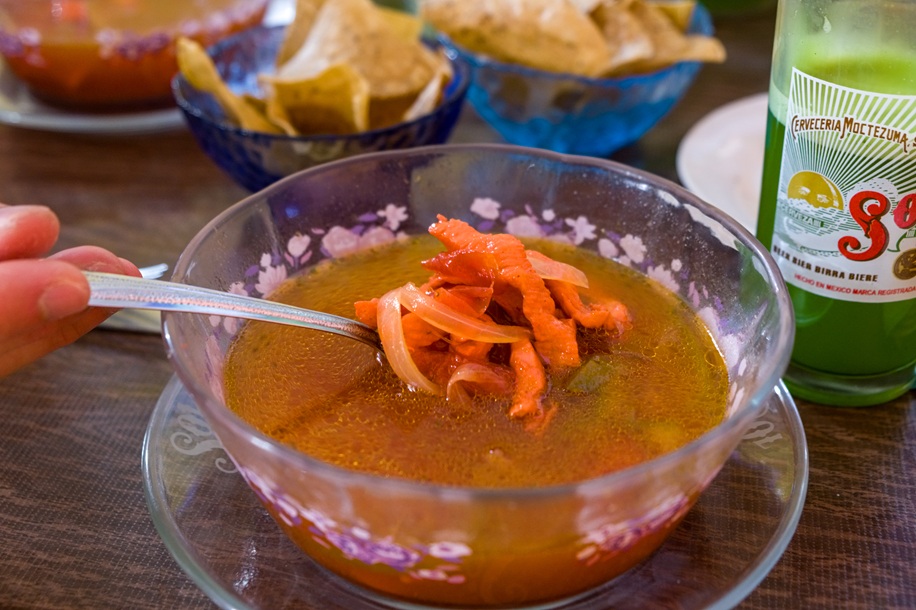
Doña Mirna’s fabulous sopa de lima at Restaurante La Central
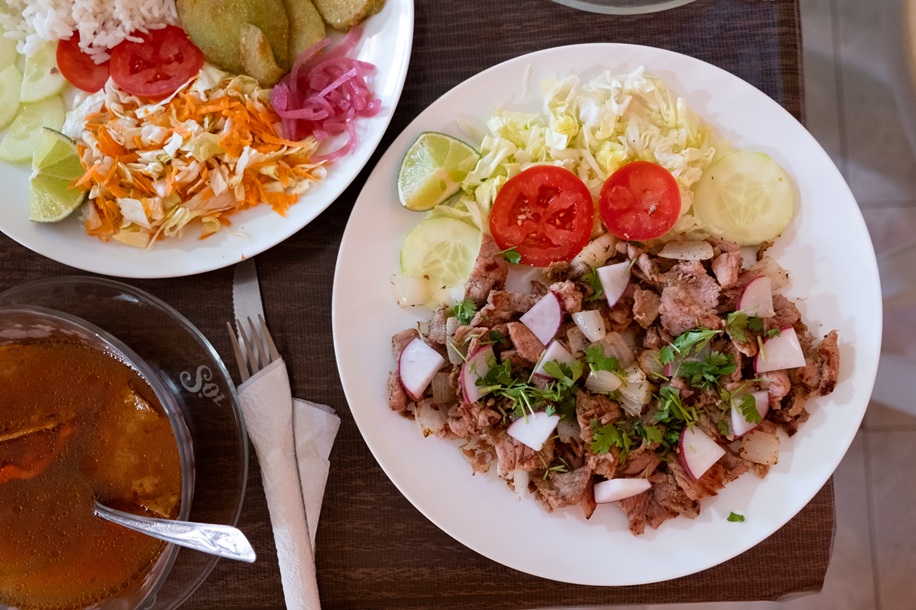
Succulent poc chuc (grilled pork) and breaded chayote (top left)
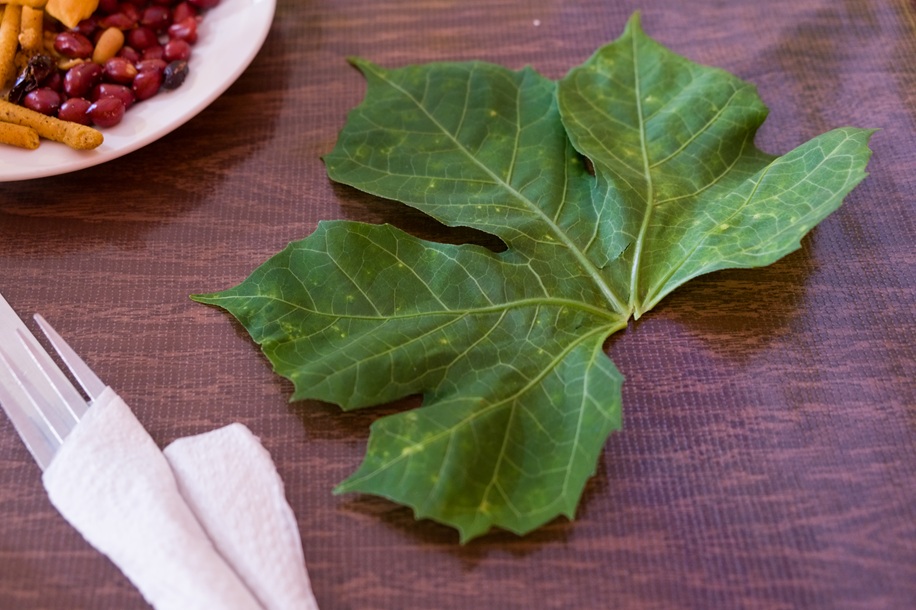
Doña Mirna brought us this fresh chaya or tree spinach leaf
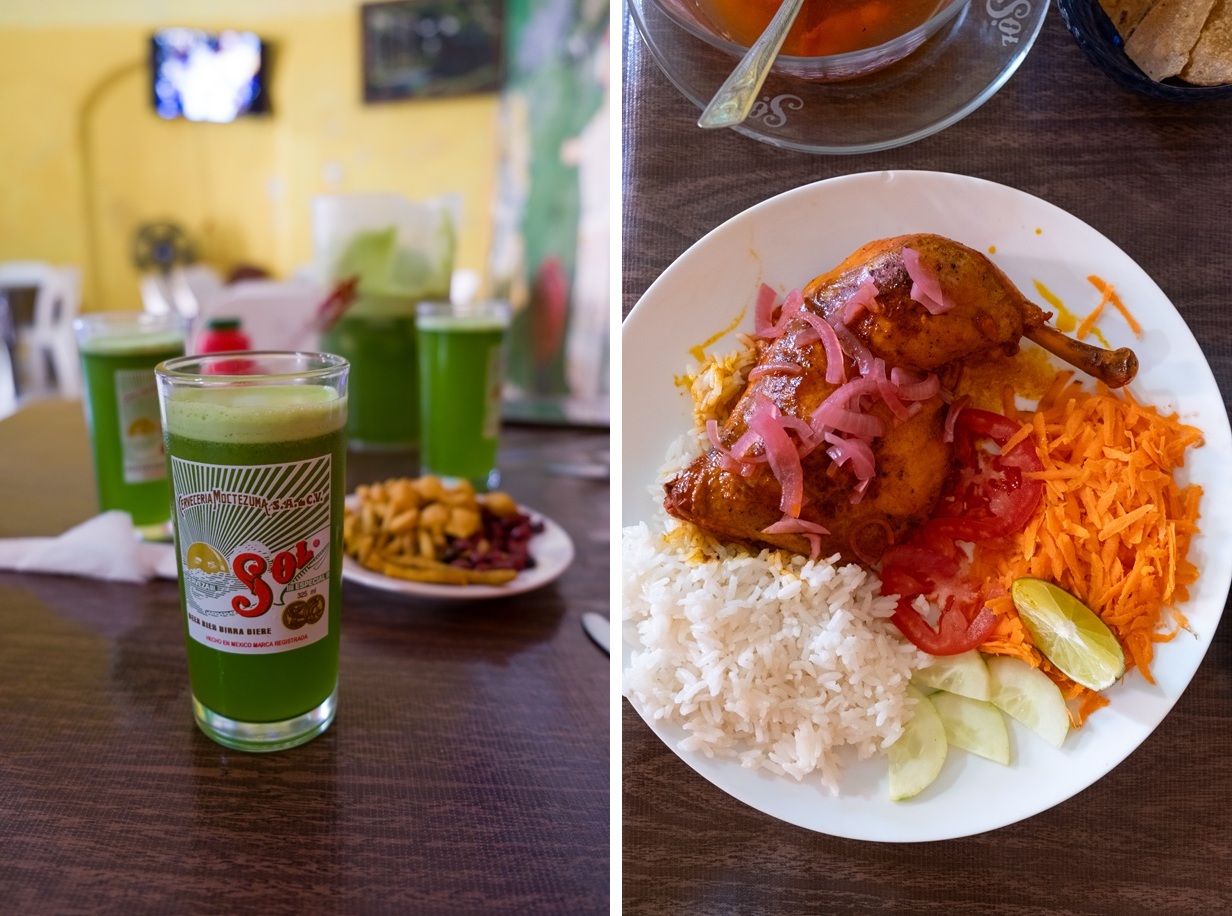
Glasses of chaya juice; Restaurante La Central’s chicken pibil is cooked in an underground oven
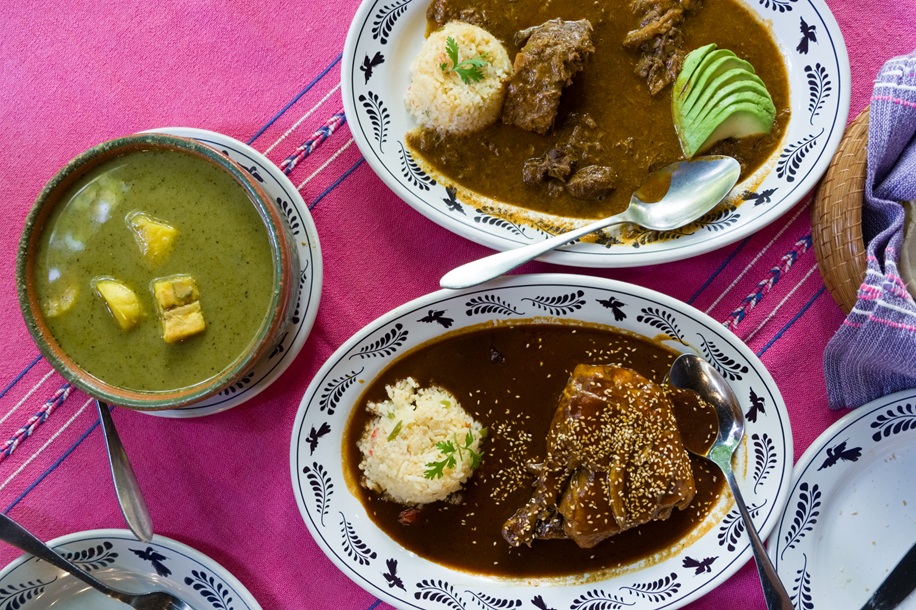
Our culinary adventure had begun six days before in Mexico City (a.k.a. CDMX). Despite being jetlagged following a 48-hour journey from Jakarta via Istanbul, we mustered up the energy to visit Restaurante Típico Oaxaca en México, an informal eatery just a few blocks from the hotel. Bama and I enjoyed two types of traditional Oaxacan mole sauce: mole negro (black mole) poured over a hunk of pork belly — the restaurant had run out of chicken — and soupier mole amarillo (yellow mole) with more pork and small, round chochoyote dumplings. Of the various kinds of mole we sampled over the course of the next two weeks, Oaxacan mole negro was our favorite. Beyond the smooth, velvety texture, it had incredible depth and a balance of sweet, savory, and smoky flavors. The sauce had a nuttiness, too, and the underlying heat from charred and dried chilies was tempered by rich dark cacao. Unwrapping the steamed banana-leaf parcel of a tamal oaxaqueño, we found the same mole negro spread on flattened masa (corn dough). As for drinks, our pick was frothy tejate: water mixed with a delicious paste of toasted maize, cacao, processed seeds of the mamey zapote (more on this ambrosial fruit later) and a plant called flor de cacao.
Unaware that Mexican food portions are just as prodigious as those of its northerly neighbor, we ordered a platter of Oaxacan sides. Two handmade memelitas, thick discs of masa with pinched-up edges, acted as a vehicle for the generous toppings heaped on the plate. This included two versions of Oaxaca cheese — milder pasteurized queso and the richer unpasteurized quesillo — crumbled chorizo, grilled slices of salted and sun-dried beef (tasajo), chili- and spice-marinated pork (cecina), and shredded lettuce. While Bama and I polished off just about everything else, we could only finish about half the sharing platter.
The next day, lunch at Castacán in the hip Roma Norte neighborhood involved nopales, the pads of a prickly pear cactus with an okra-like texture. It was sliced up in salad as a side dish for Yucatecan-style tacos stuffed with cochinita pibil (shredded slow-roasted pork). These were the first tacos of our trip and they did not disappoint: they had a striking pink garnish of pickled onion and proved even better drizzled in both salsa verde and spicier habanero salsa. At another Mexico City restaurant that evening, we tried crispy roasted grasshoppers called chapulines on guacamole-topped tostadas. Bama and I are not ones to shy away from insect protein on our travels: we are up for eating almost anything so long as it isn’t an endangered species or doesn’t pose a particular health risk.
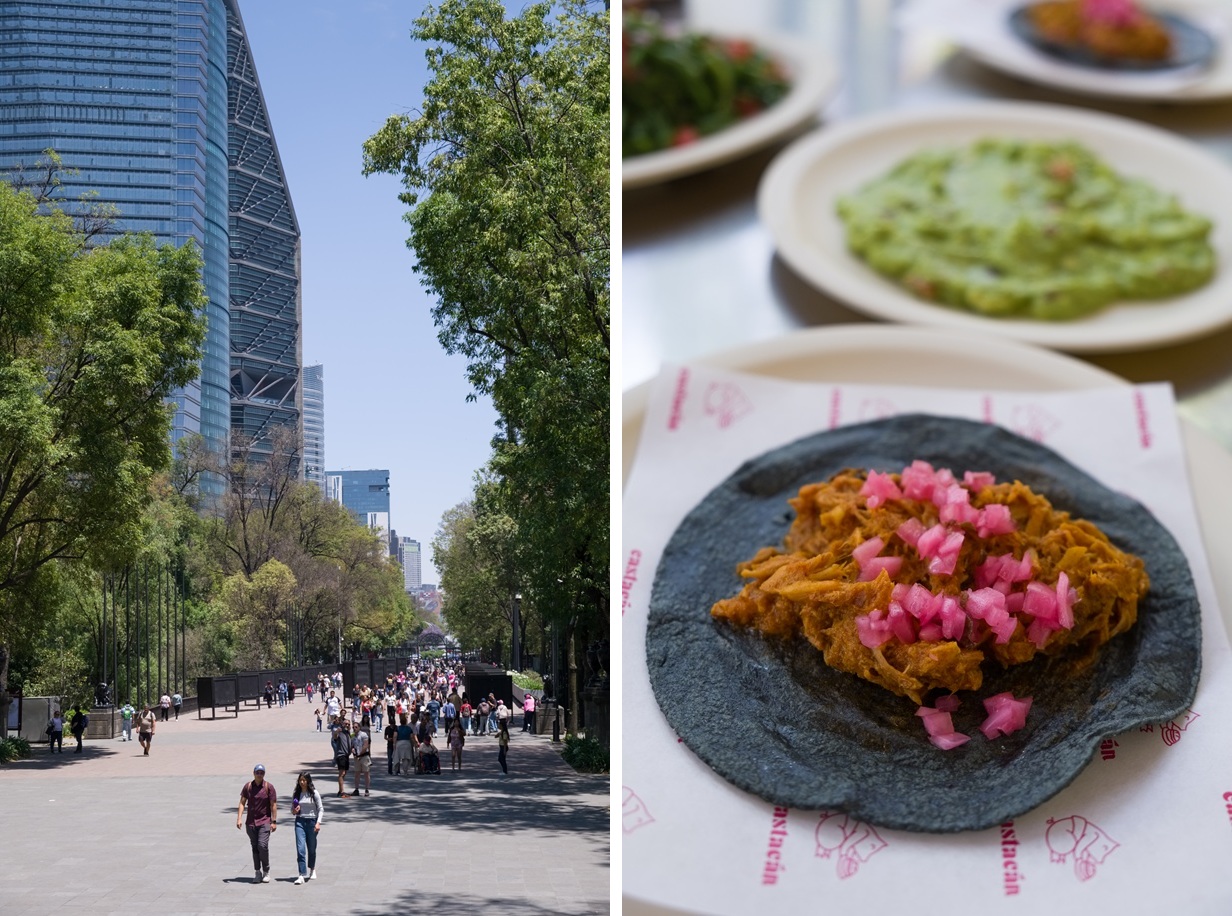
Mexico City’s Avenida Juventud Heróica; a taco of cochinita pibil at Castacán
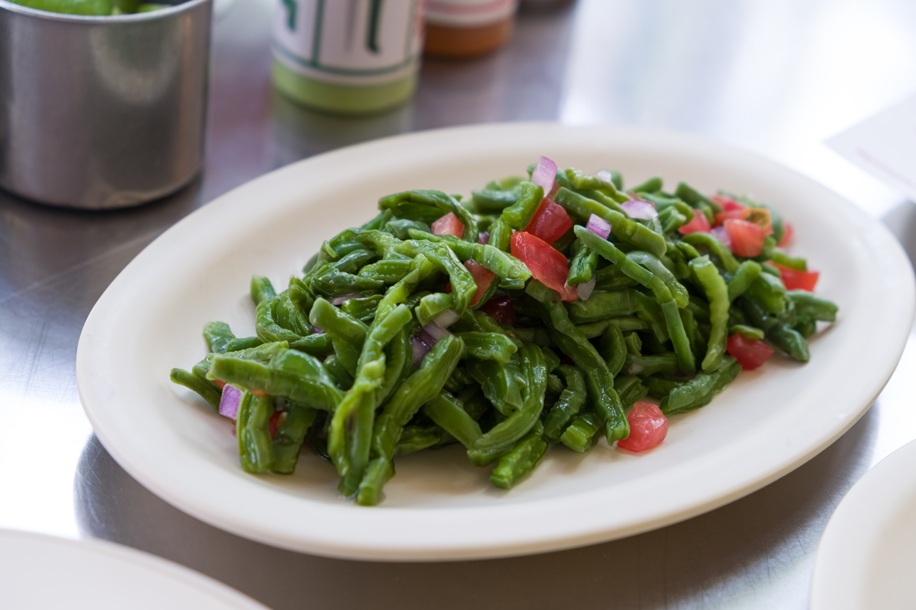
Bama and I enjoyed this side dish of nopales (prickly pear cactus pads)
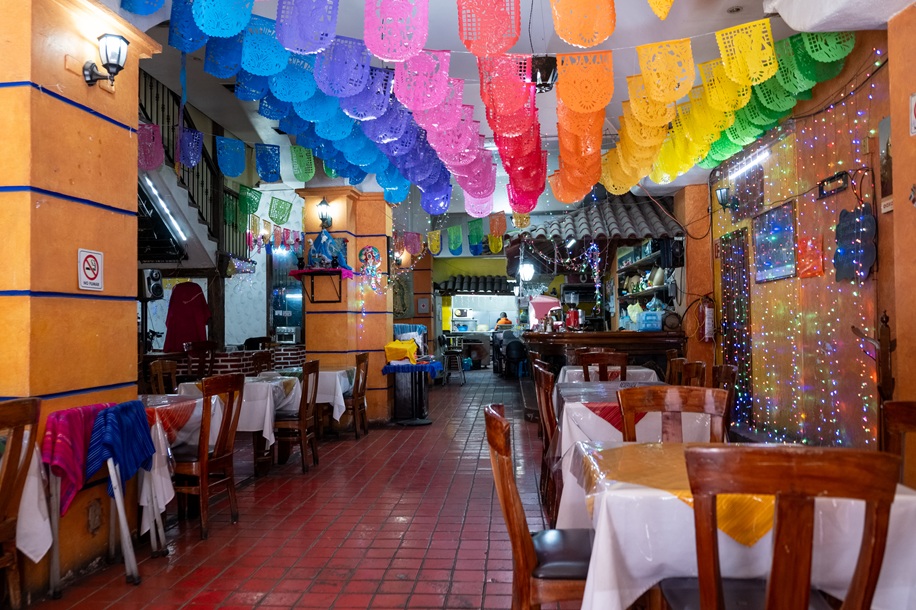
The casual dining room at Restaurante Típico Oaxaca en México
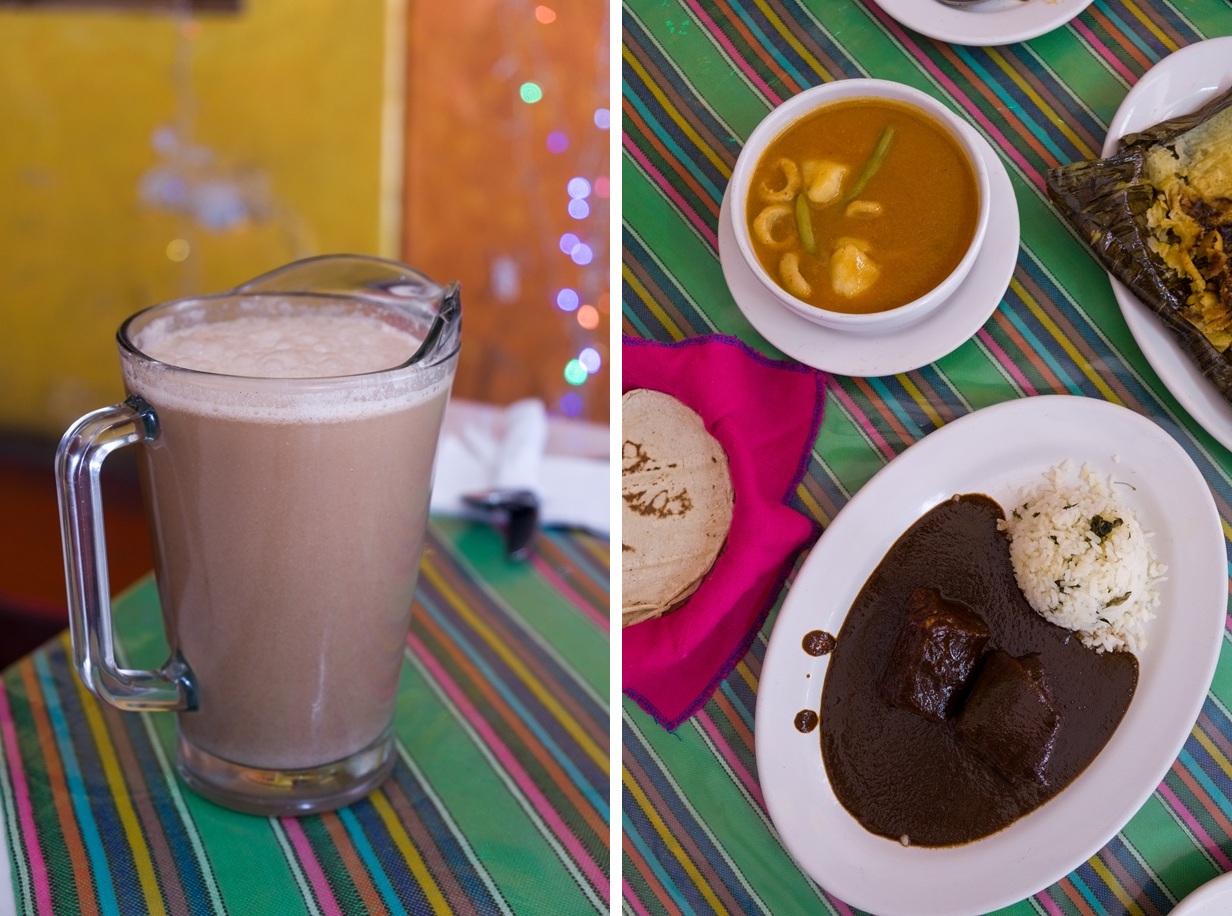
A tall pitcher of tejate; Oaxacan yellow mole and black mole, both with pork
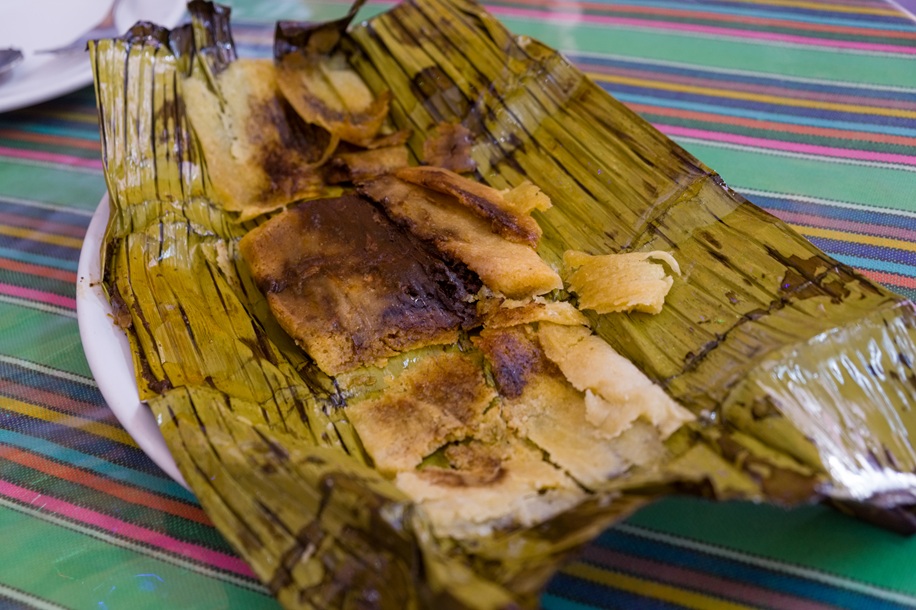
We each had a Oaxacan tamal with black mole wrapped in banana leaf
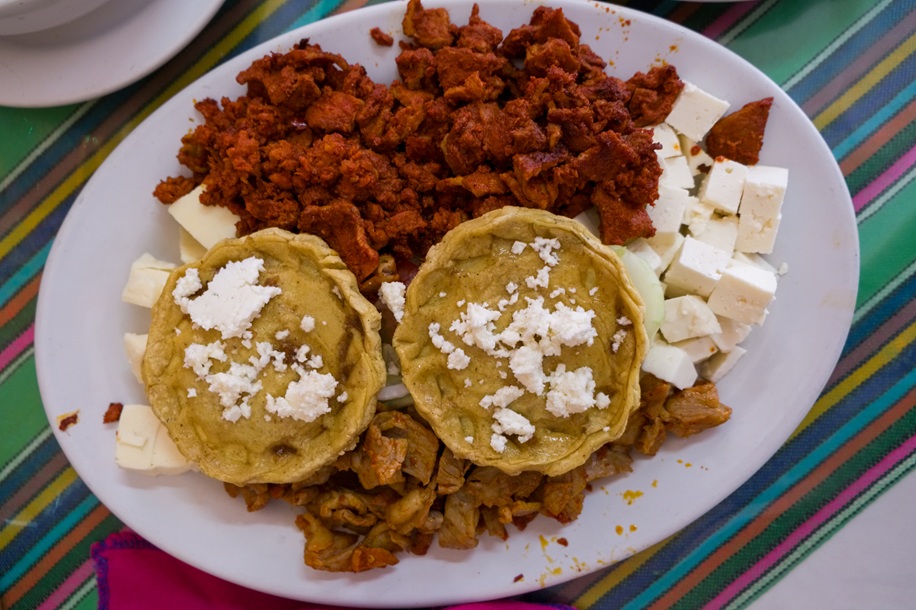
This platter of memelitas, cheese, dried beef, and pork could have fed three people
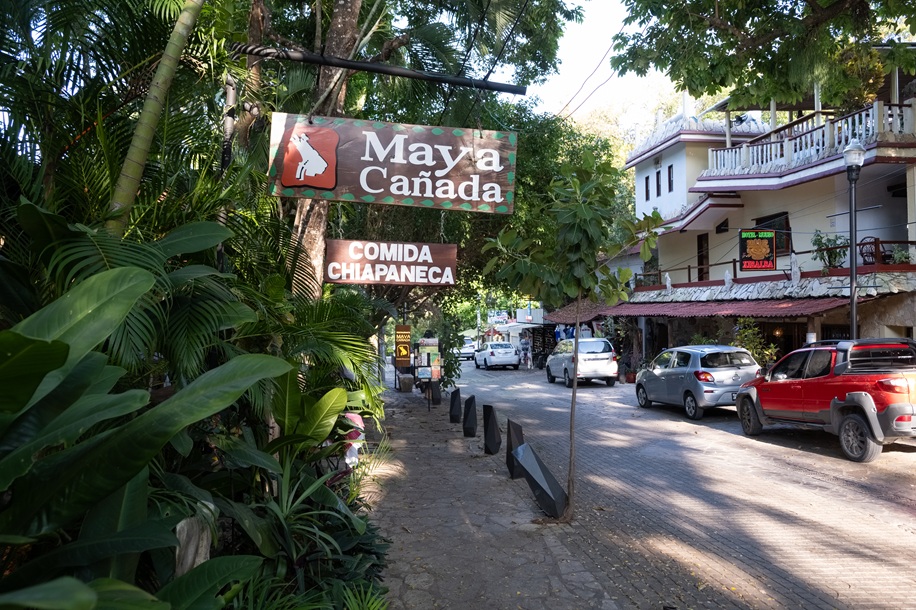
Restaurante Maya Cañada was our go-to lunch spot in Palenque
Arriving in a place with no prior knowledge of the food can help keep expectations in check. So it was with Mexico’s southernmost state of Chiapas, where we spent a few days visiting Palenque. As luck would have it, an excellent spot for Chiapaneco cuisine stood just two doors down from our hotel in the La Cañada ecotourism quarter. Restaurante Maya Cañada drew us for two reasons: the first was its inviting open-walled dining room framed by lush greenery, and the second its intriguing menu of mostly local specialties.
Lunch there began with a starter of a mysterious vegetable called chapay. Only later did we find out that it was the inflorescence of the chocho palm tree, a seasonal ingredient available only from November to April. Somewhat like grains of barley in their size and texture, the tiny but nutritious young flower buds were seasoned with tomato and onion, then served alongside frijoles refritos (rehashed beans) garnished with grated cheese. We assembled our own tacos at the table, heaping spoonfuls of chapay and the rich bean paste on soft, still-warm flour tortillas before topping it off with pickled red onion and preserved vegetables from a saucière. Another seasonal special we chose was zatz: fried cicada larvae that were surprisingly large. Crisp on the outside and soft inside, the grubs felt like protein-rich bar snacks.
Bama and I were also curious about shote con momo. Described on the menu as river snails with “holy herb,” it included thick slices of cooked plantain in a soupy sauce tinged a dark chartreuse green from medicinal momo leaves, which lent the dish an earthiness and a light grassy flavor. The shote were in conical black shells too slippery to handle with a fork. “Do you know how to eat them?” A server gently asked. When we confessed that we didn’t, he mimed holding the open end of the shell, puckered his lips, and pretended to suck out the snail meat in one sharp breath.
The meat-based mains we ordered weren’t quite as adventurous. Served with half a fresh avocado, chirmol de res featured beef cooked in a tomato- and chili-based stew. Our favorite dish of the bunch turned out to be the chicken leg in thick mole chiapaneco, which was sweeter, milder, and less cacao-forward than Oaxacan mole negro.
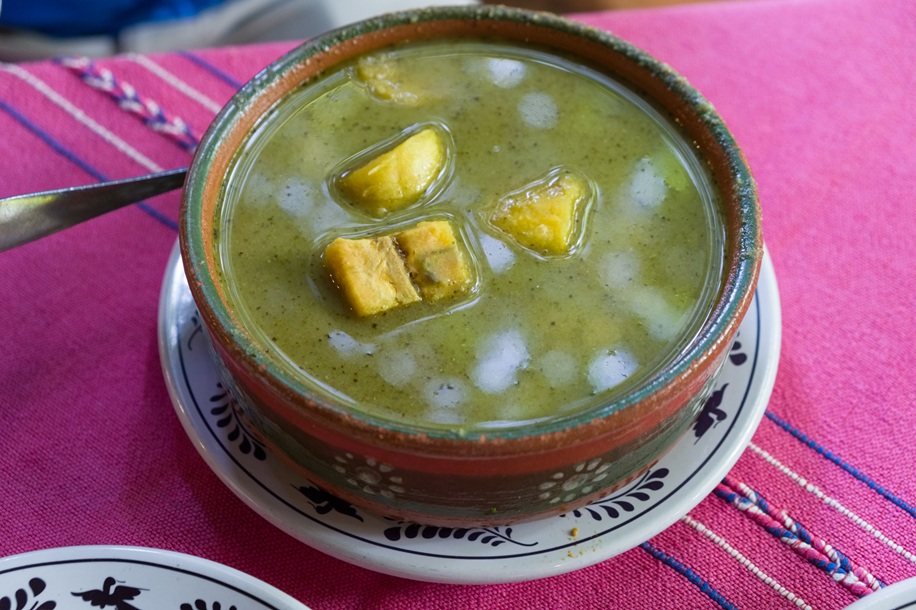
The river snails in Maya Cañada’s shote con momo were covered in a soupy sauce
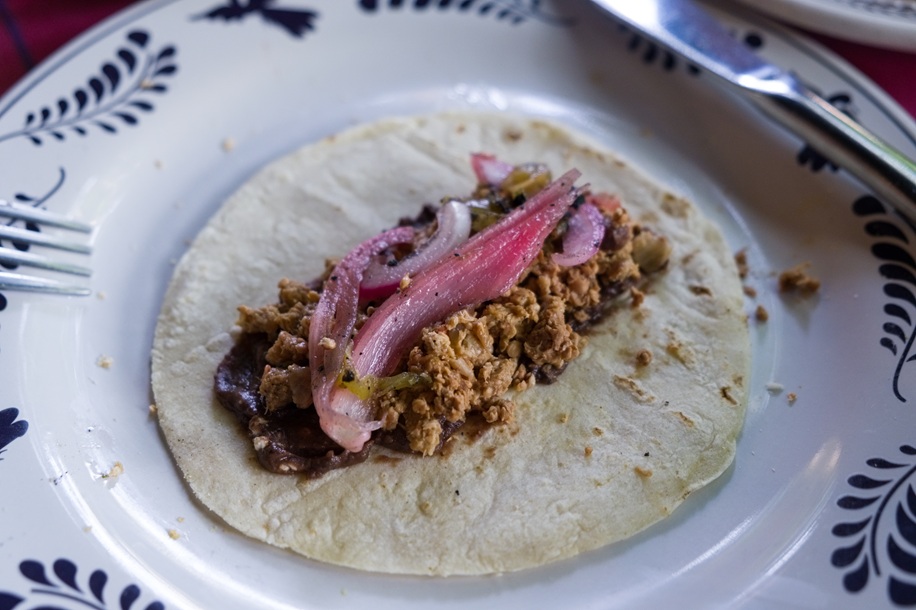
DIY tacos with rehashed beans, pickled onion, and chapay (chocho palm flowers)
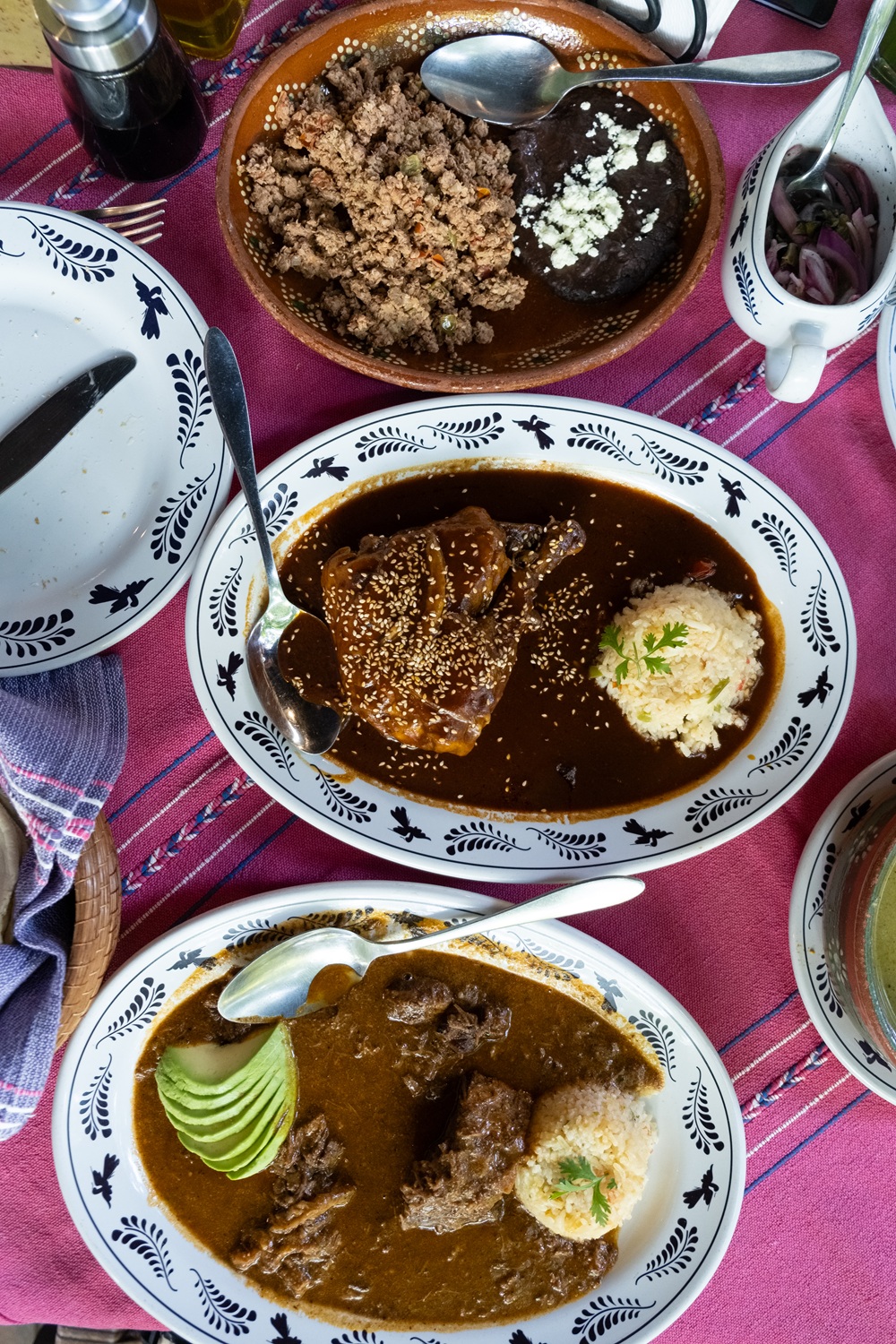
Chapay (top), Chiapas-style chicken mole, and the beef stew chirmol de res
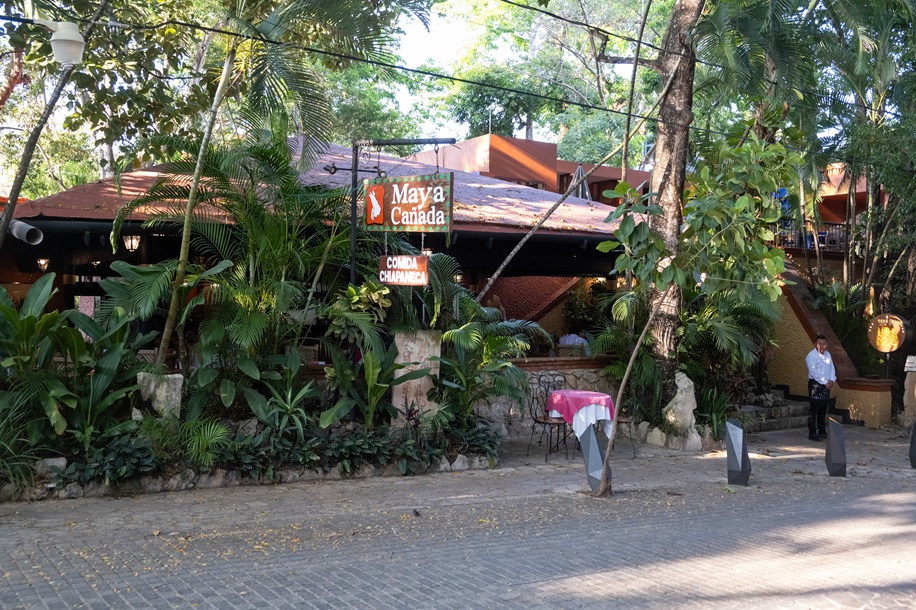
Lush tropical foliage outside the breezy dining room at Maya Cañada
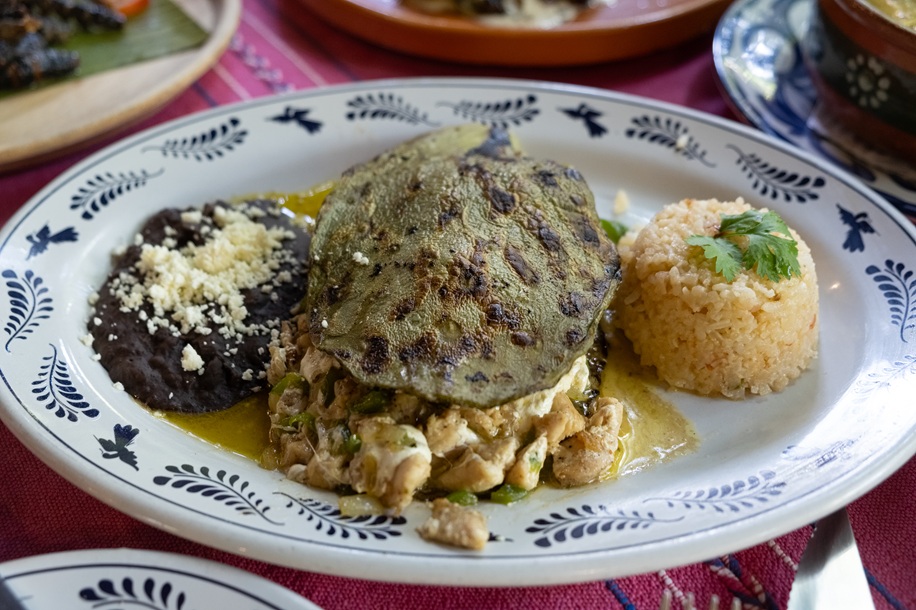
Prickly pear cactus stuffed with cheese and chicken breast
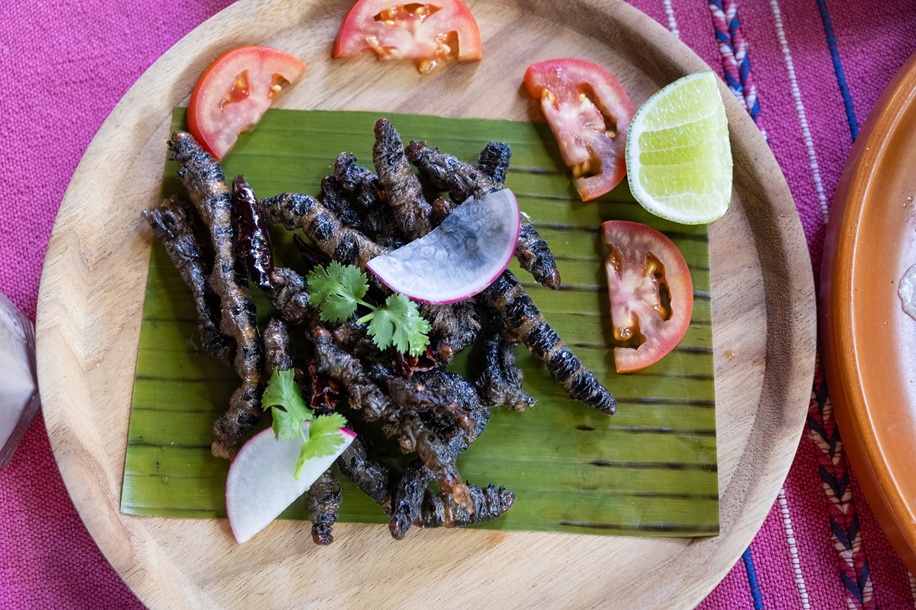
We did not shy away from the seasonal specialty of zatz, or fried cicada larvae
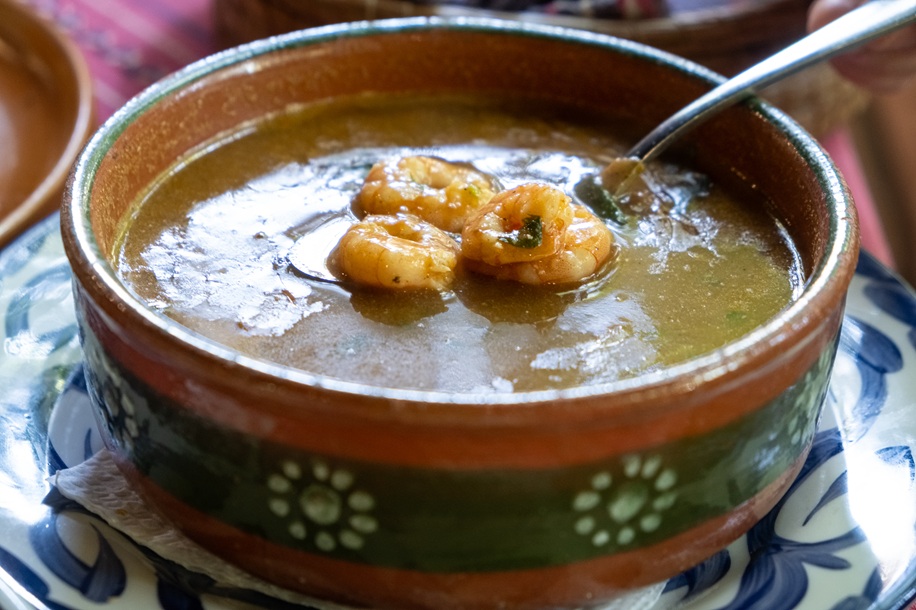
Chilpachole de camarón, a Veracruz-style prawn stew
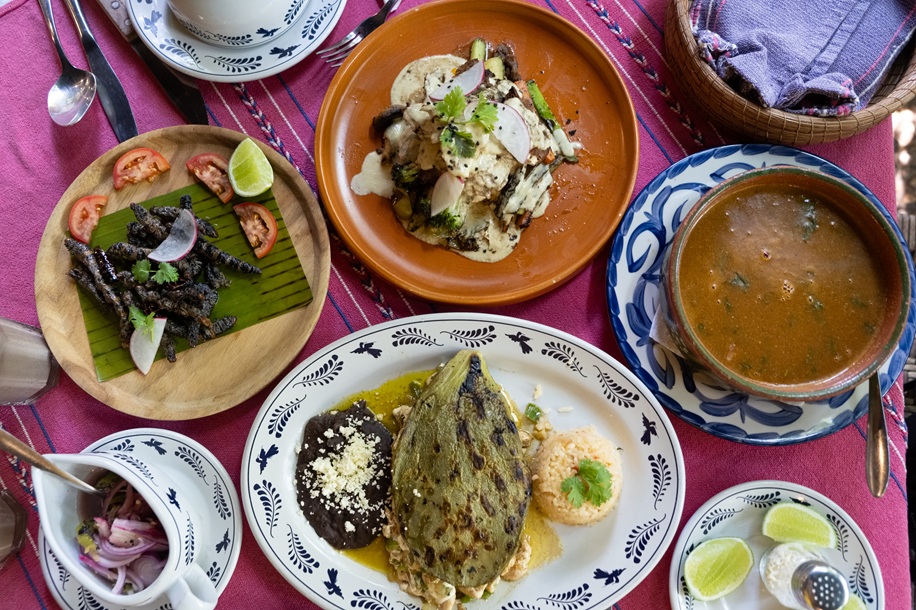
Our favorite dish from the meal was the jabalí (wild boar) in xcatic chili sauce (top)
The two of us returned to Maya Cañada the following day after touring Palenque’s Maya ruins, and promptly ordered four more regional Mexican dishes. Among them was chilpachole de camarón, a comforting seafood soup from Veracruz. Slightly thickened with cornflour, the soup combined the familiar richness of prawn broth with tomato and dried chili; a squeeze of fresh lime gave it a lift. We also enjoyed nopales rellenos de pechuga y queso: A whole prickly pear cactus pad stuffed with chicken breast and stretchy cheese, served with frijoles refritos and rice. The standout though was jabalí con salsa xcatic (pronounced “sh-KA-teek”), or flavorful wild boar and grilled vegetables in a creamy, smoky sauce made from roasted xcatic — a variety of mild and sweet yellow chili native to the Yucatán Peninsula — on a bed of mashed potato. We washed this all down with a tall pitcher of pozol con cacao, a pre-Hispanic thirst quencher made with fermented corn dough. Its distinctive, almost medicinal taste was strongly reminiscent of sarsaparilla soda.
La Cañada’s concentration of hotels has given rise to a cluster of lovely cafés and eateries. Late one morning, we followed our noses to La Chocolateria Artesanal, where the tantalizing aroma of freshly roasted cacao beans were being ground in a machine. We indulged in large oven-warmed bisquetes — a classic Mexican pastry not nearly as dense or crumbly as a scone. At La Chocolateria Artesanal, these were sliced in half and spread with homemade “Nutella” and honey. The bisquetes made for a heavenly combination with super-frothy traditional hot chocolate, unsweetened yet yielding only a faint bitterness. Bama and I also tried cold tascalate, a light, refreshing drink that gets its slight orange coloring from a mixture of cacao, roasted maize, and achiote.
Not keen on a heavy meal after the bisquetes and hot chocolate, we walked over to Café Jade Restaurant, whose rustic-cool design in bamboo, wood, and glass attracted a visibly younger crowd. It was the kind of place you might find digital nomads tapping at their laptop keyboards over coffee and pastries. On Café Jade’s shaded terrace, Bama and I shared a jug of horchata, salad, and plates of slightly glammed-up street food. The panko-breaded fish tacos featuring xcatic chili mayo were excellent, and I especially loved the sopes de cochito chiapaneco: slow-roasted pork with rehashed beans, cilantro, lettuce, and red onion on a base of fried masa much thicker than a typical tortilla. A small ramekin beside the sopes contained cured white chilies floating in vinegar.
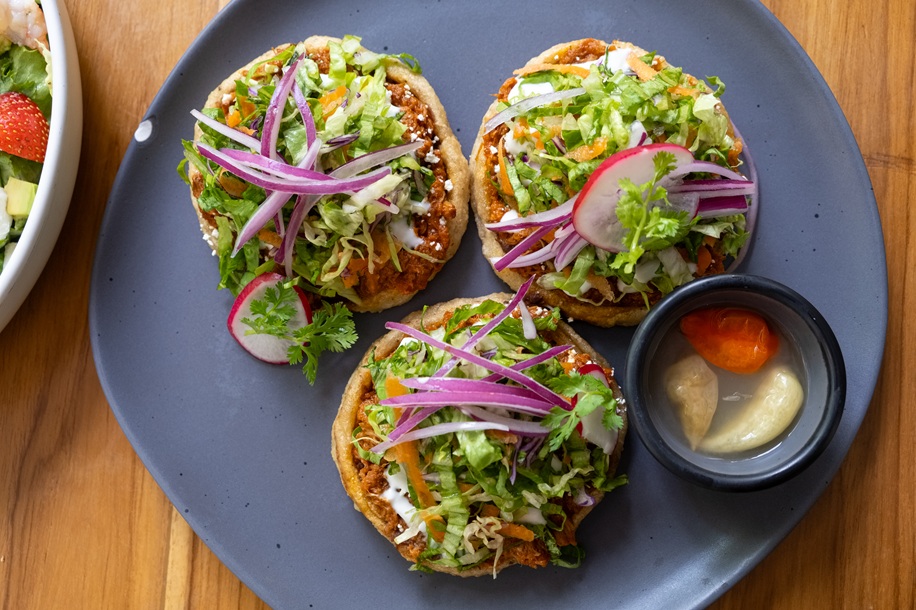
The delicious sopes de cochito chiapaneco at Café Jade Restaurant
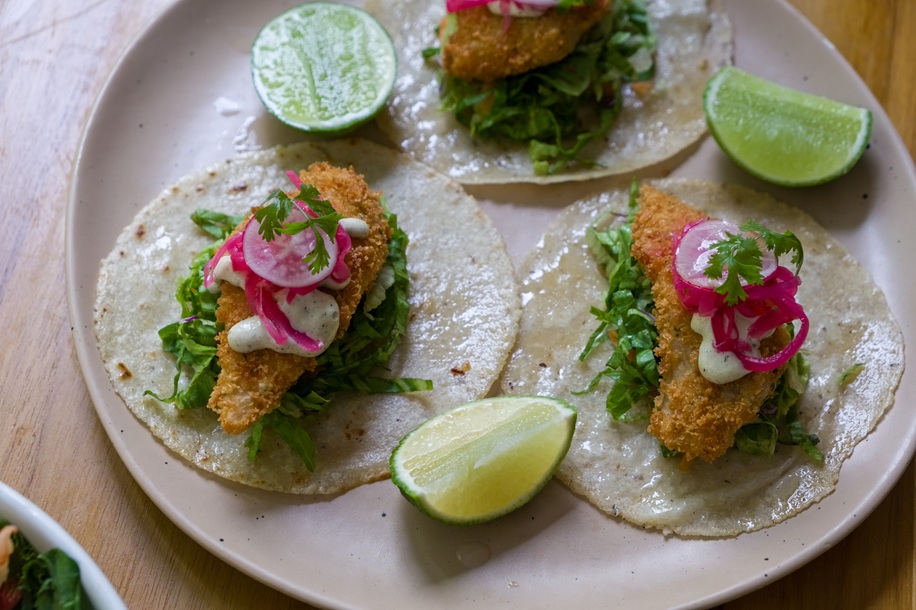
We also shared a plate of panko-breaded fish tacos
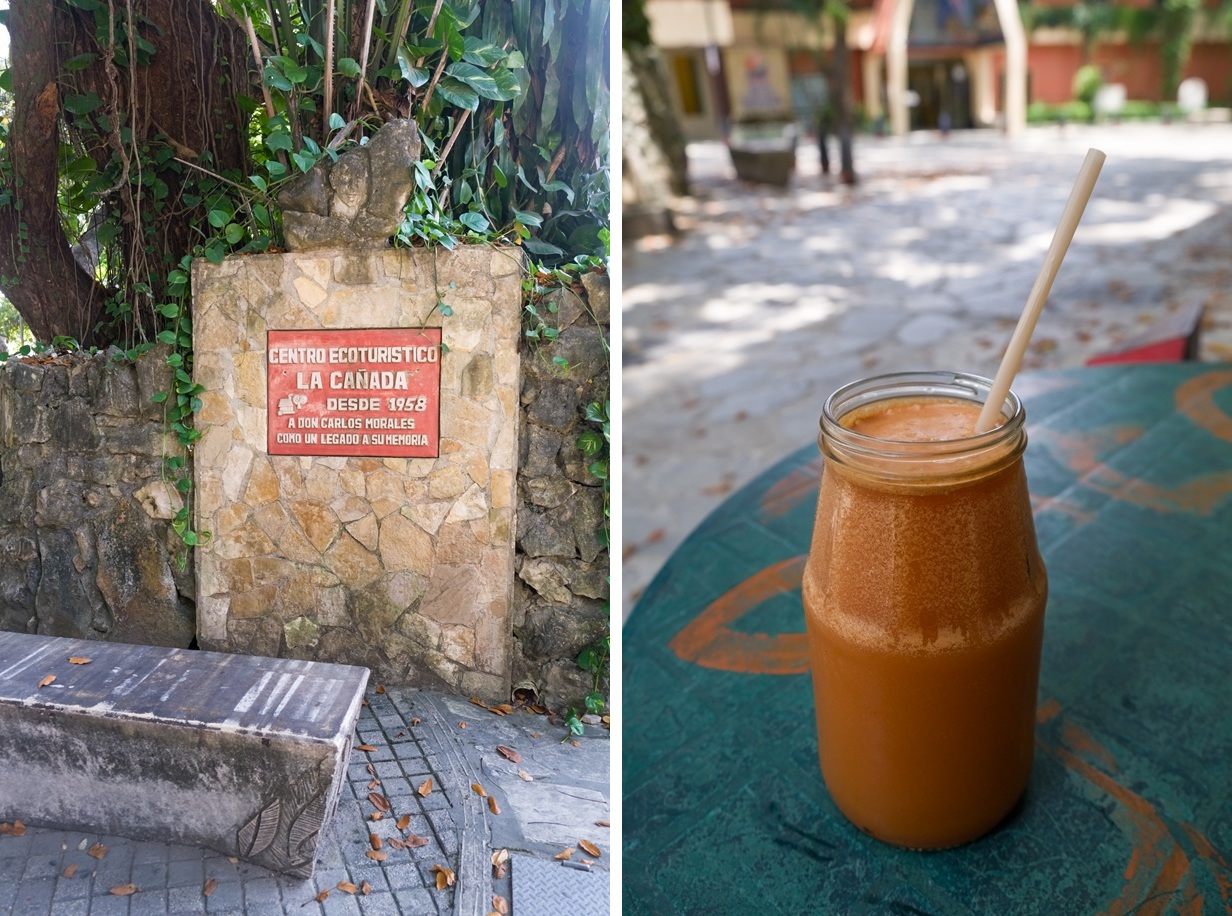
A plaque dedicated to the founder of Palenque’s La Cañada quarter; a drink of tascalate
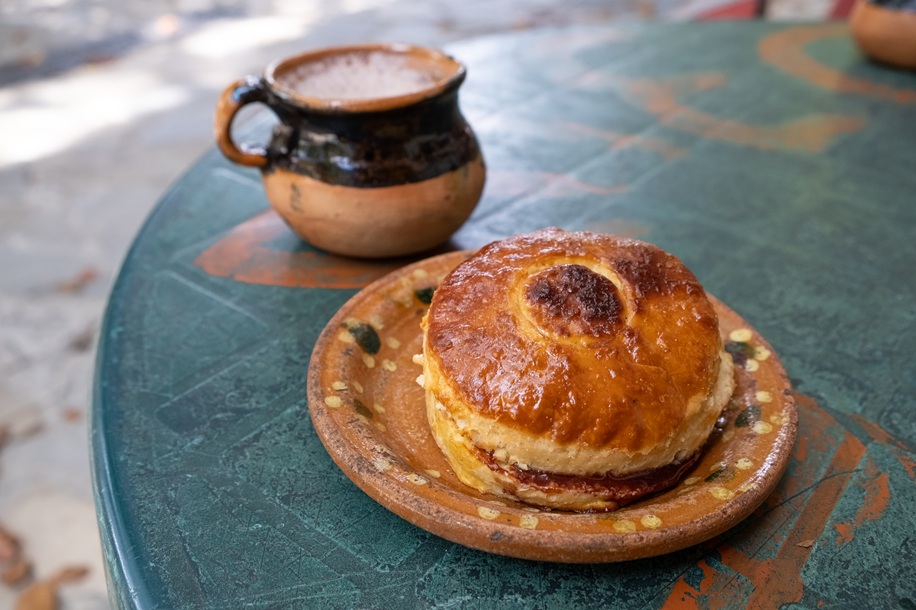
Frothy hot chocolate and a bisquet with homemade “Nutella” at La Chocolateria Artesanal
Traveling from Chiapas to the Yucatán felt almost like crossing into another culinary realm. The distinct character of Yucatecan cuisine comes from the use of base ingredients like citrus (especially the local sour orange) and earthy achiote paste; ancient Maya techniques like pibil, whereby food is wrapped in leaves and cooked in an underground oven; and a Caribbean influence in the use of spices like cinnamon and cloves.
Searching for a place to eat on our first night in Mérida, the state capital, Bama and I were met with an unexpected jolt of familiarity. An easy 15-minute walk from our B&B, the no-frills food court at the Mercado de Santa Ana turned out to be a mirror image of the hawker centers we were used to seeing back in Southeast Asia. Everything from the utilitarian architecture, red plastic chairs, and tablecloths in loud colors to stall vendors calling out for the attention of passersby felt just like Indonesia. This unpretentious food court became our go-to spot for hearty dinners over the next few days.
The laminated picture menu of our preferred stall featured Yucatecan classics like escabeche: shredded turkey (or chicken) with plenty of onion in a tangy soup flavored with sour orange and spices such as black pepper. Akin to enchiladas, papadzules are rolled-up tortillas stuffed with hard-boiled eggs, drenched in tomato salsa and a thick green sauce made from pumpkin seed and the indigenous epazote herb.
We were most curious about the relleno negro, a soupy dish of Maya origin that gets its distinct black hue from burning local chilies known to the Maya as chawa iik. The charred chili is blended with garlic and spices to create a paste that imparts a deep and smoky flavor. Hard-boiled egg and pieces of boiled turkey lie half-submerged in the broth, as does a large meatball composed of minced pork, beaten eggs, the spiced black chili paste, tomatoes, and corn dough or flour.
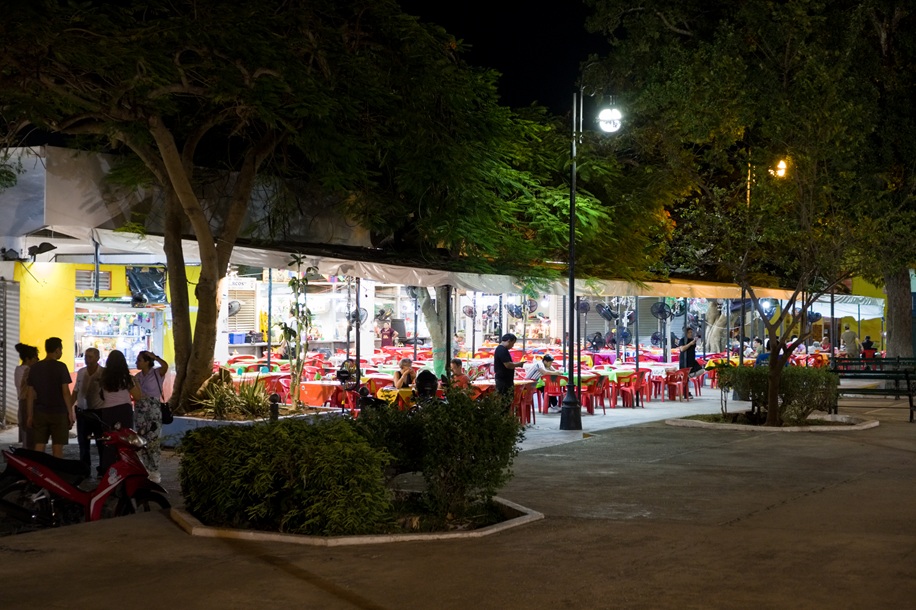
The plaza-facing food court at Mérida’s Mercado de Santa Ana
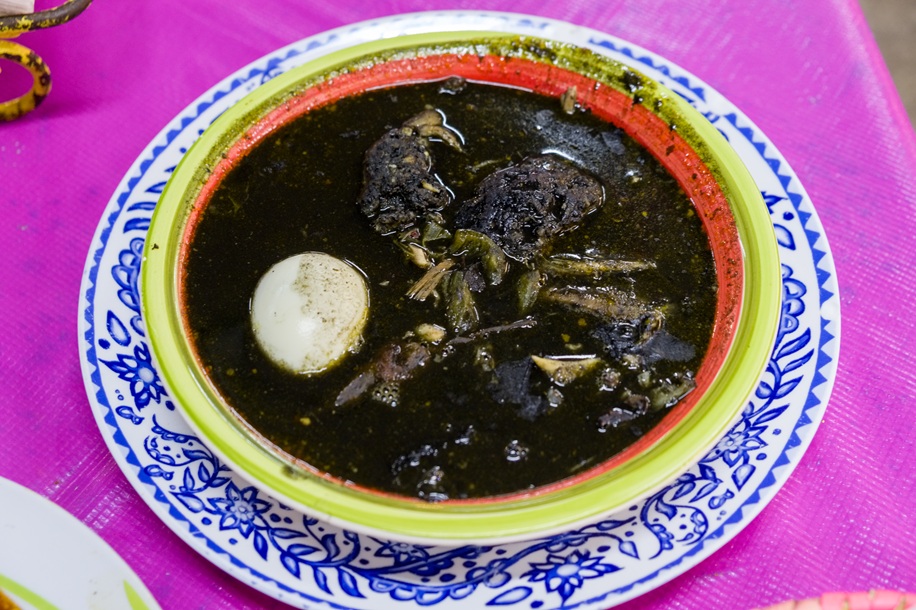
Relleno negro, a classic Yucatecan dish that gets its coloring from burned chilies
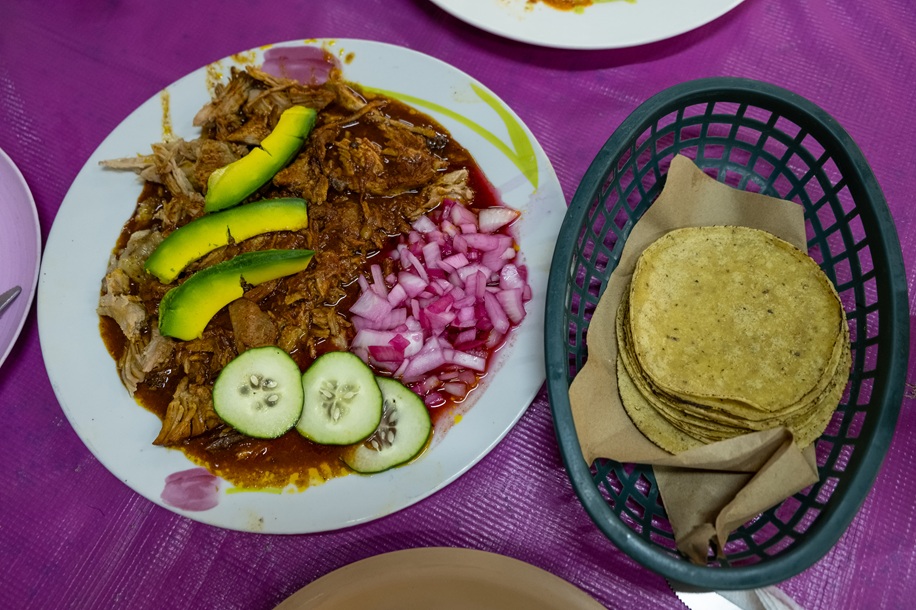
Cochinita pibil with warm tortillas on the side
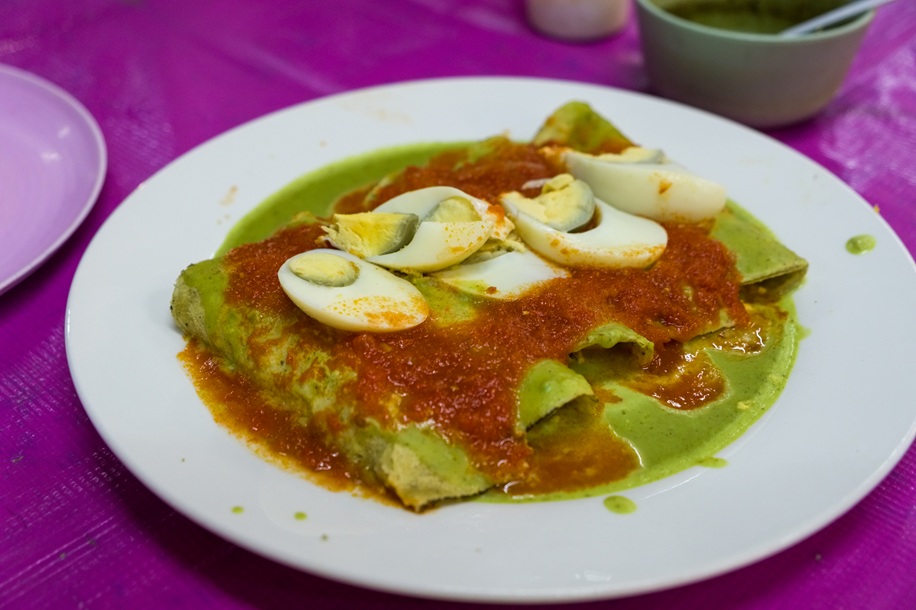
Papadzules dressed with tomato salsa and a pumpkin seed-and-epazote sauce
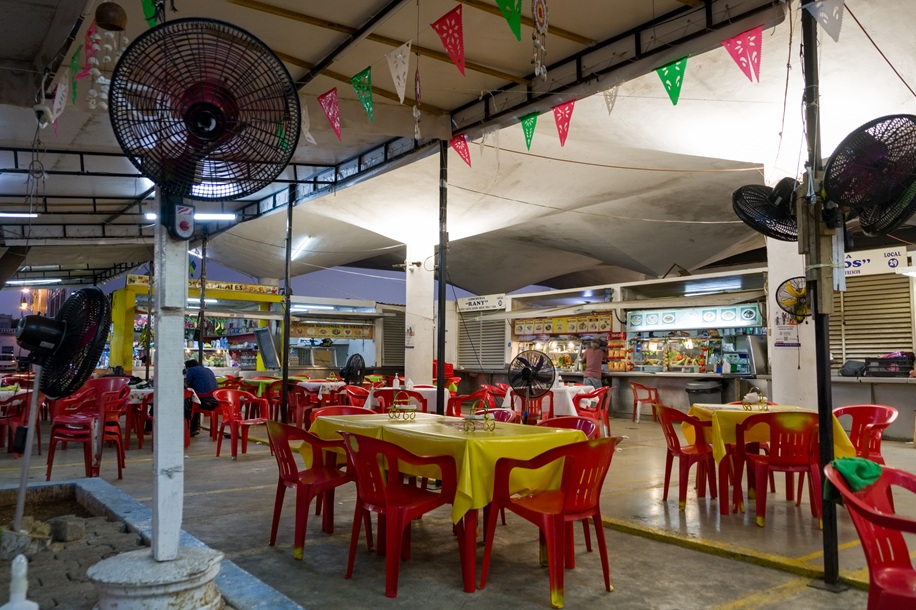
This food court is practically identical to those we’re used to seeing in Southeast Asia
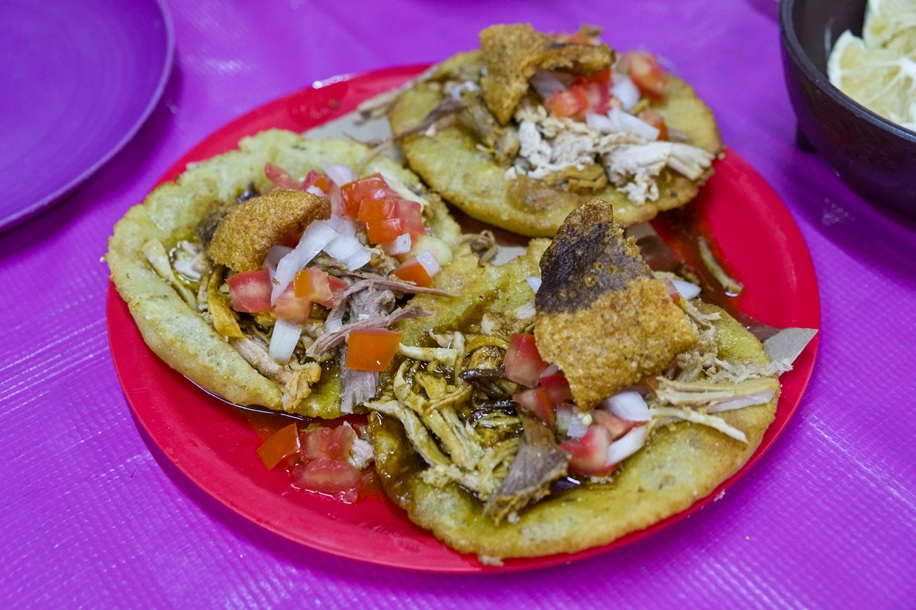
Puffed-up salbutes topped with lechón (roasted suckling pig)
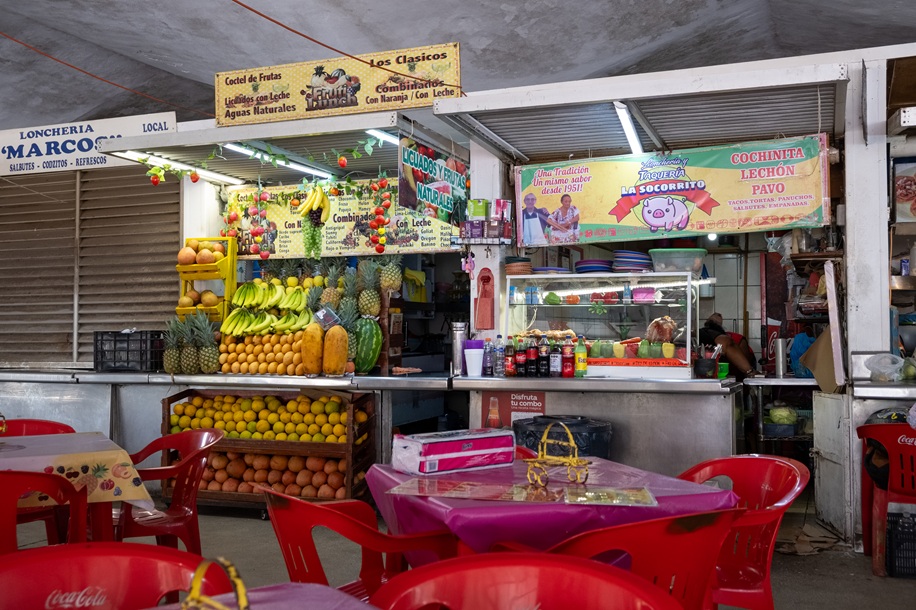
These food stalls serving quick meals are known as loncherías
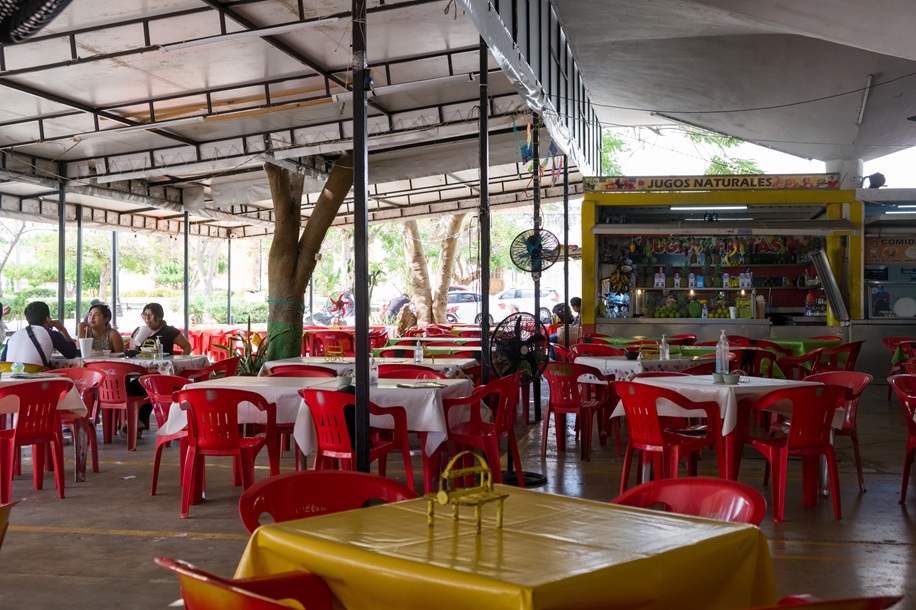
Mercado de Santa Ana’s food court late one afternoon
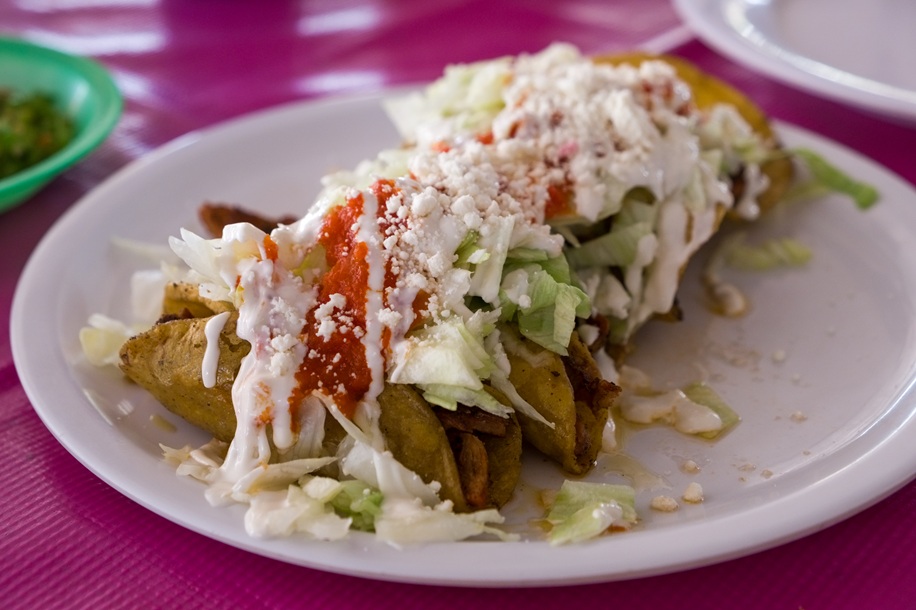
Crispy meat-filled flautas with lettuce, sour cream, tomato salsa, and crumbled cheese
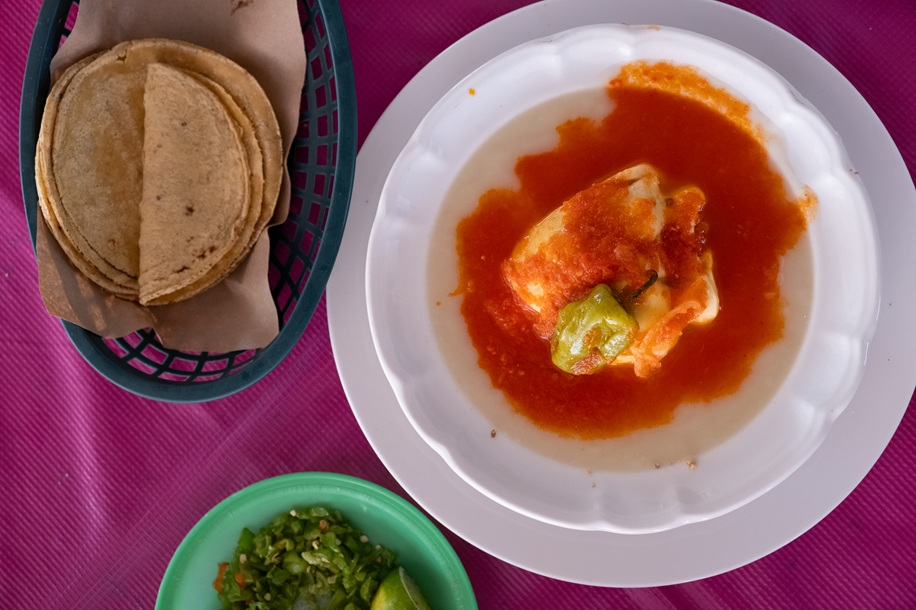
Queso relleno — slightly molten Edam cheese stuffed with minced pork
Other quintessential street-food favorites we had included panuchos: tortillas stuffed with rehashed black beans and fried until crunchy, before a heaping of protein like roast turkey or cochinita pibil, and avocado and pickled red onion. I loved panuchos’ thicker counterpart, salbutes, especially with the usual topping of pulled turkey or chicken swapped out for lechón (roasted suckling pig). The succulent meat and chicharrón (pork crackling) were a perfect match for the puffed deep-fried tortillas, which had crispy edges and a soft, fluffy interior. In my opinion, salbutes are even tastier than Yorkshire pudding.
And there was one last item on the menu that drew our attention. Queso relleno (“stuffed cheese”) is every bit as indulgent as it sounds. Imagine a semi-molten glob of edam cheese with a minced pork filling in a pool of rich tomato sauce and k’ool, a flour-thickened white sauce. Bama cut out slivers of fresh green habanero to give it an added kick. Needless to say, we polished off the whole thing — cheese, meat, sauces, and all. “I can tell you liked the food,” a senior staff member told us with a grin. “The plates are clean!”
While in Mérida, our excursions to ancient Maya sites like Uxmal and Chichén Itzá often meant being out of town until the late afternoons or early evenings. Lunch on the sole day we spent entirely in Mérida was at El Lagarto de Oro (literally “The Golden Lizard”), an industrial-ish restaurant and bar with aged communal tables and worn concrete ceilings. Here, cheekily designed notices on the walls about Mexico’s smoking ban had enlarged certain words to the point that the rest of the text could only be read at very close range. Here’s what was legible from a distance:
FREE SEX … IN THE GOLDEN LIZARD … IN PRIVATE … IN THE BATHROOM … AT THE BAR … IN THE COURTYARD AND … IN THE CELLAR.
But the local specialties on the menu ended up being even more memorable. Cue a snack of boat-shaped macha-chayitas: fried corn dough mixed with finely shredded chaya leaf, used as a vessel for plump prawns, fresh cheese, and pickled onion. An addictive salsa macha on the side added a layer of heat and complexity. Then there was the charcoal-smoked longaniza sausage from the city of Valladolid — rich in umami flavor, with a slightly crumbly interior and a beautiful deep red color from the use of achiote. It proved absolutely delicious in a DIY taco with avocado, grilled and lightly pickled onion, strained white beans, pieces of habanero chili pepper and fried sweet plantain. We happily drizzled the taco fillings with two sauces served on the side: chiltomate (made of chili and roasted tomato) and habanero. For dessert, the corn ice cream featured pieces of fried plantain and a burnt meringue topping.
Another day, we strolled up Mérida’s tree-lined Paseo de Montejo to Dulcería y Sorbetería Colón, an old-school ice cream parlor that first opened its doors in 1907. The service was quick and efficient — a server approached us seconds after we settled in at a streetside table. Our pick? Two sorbets of crema morisca, a blend of guava paste, milk, egg yolk, cinnamon, vanilla, and a splash of rum. The recipe was invented back in 1876 and tastes exactly like it sounds — fruity and rich, creamy and sweet with an alcoholic touch. Crema morisca exists only in the Yucatán.
Bama and I soon developed a hankering for all things made from mamey sapote, an indigenous fruit whose flesh is a reddish-orange color when ripe. Luscious and sublime, mamey combines the refreshing tropicality of papaya with the rich creaminess of sweet potato. Our first taste of it was in a peach-hued ice cream at an heladería opposite the monumental pyramid of Kinich Kakmó in the town of Izamal. The next day, we had more mamey in another ice cream — this time paired with a soursop and lime sorbet — at Mérida’s La Plancha Park, and in oversized goblets of agua fresca (fresh fruit blended with water and sugar) at Mercado de Santa Ana.
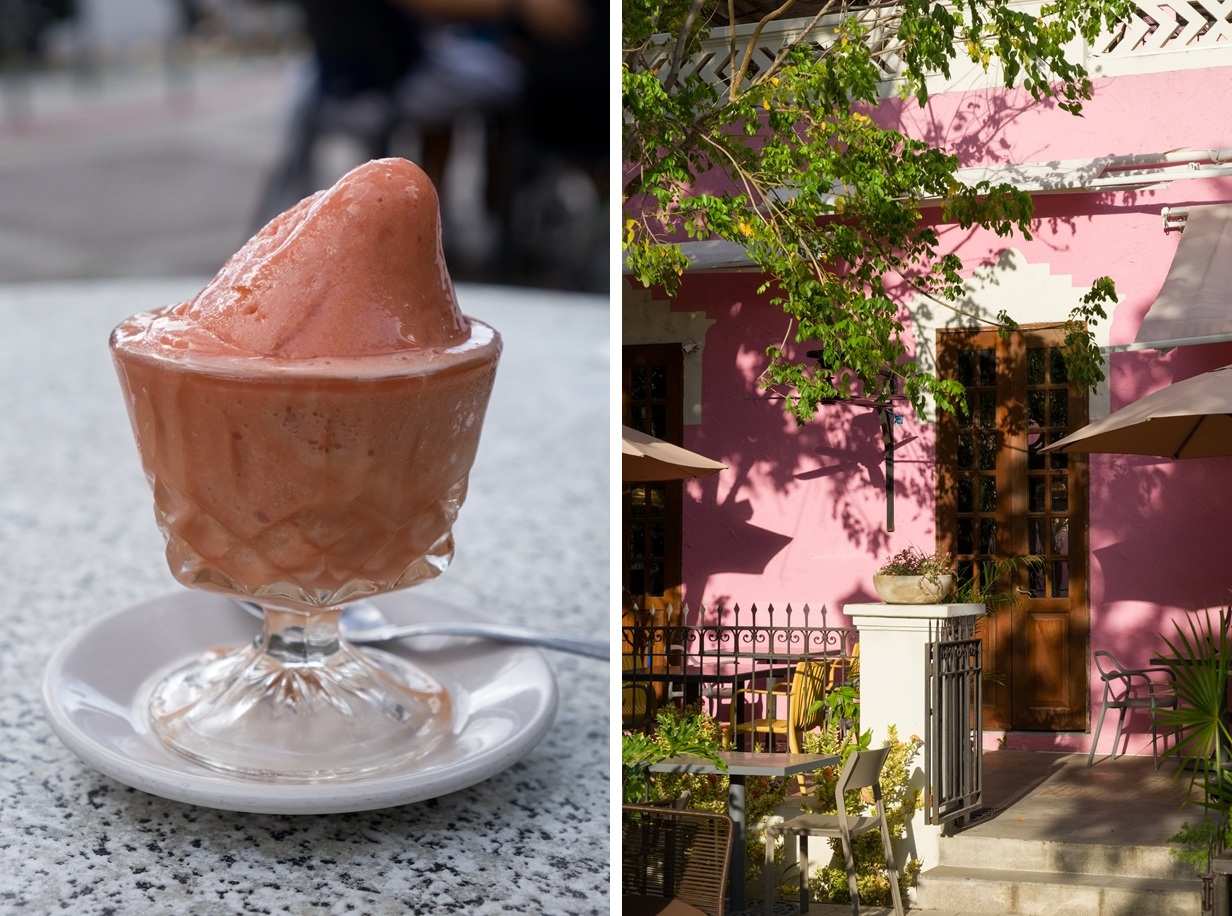
The crema morisca sorbet at Dulcería y Sorbetería Colón; a nearby boutique hotel
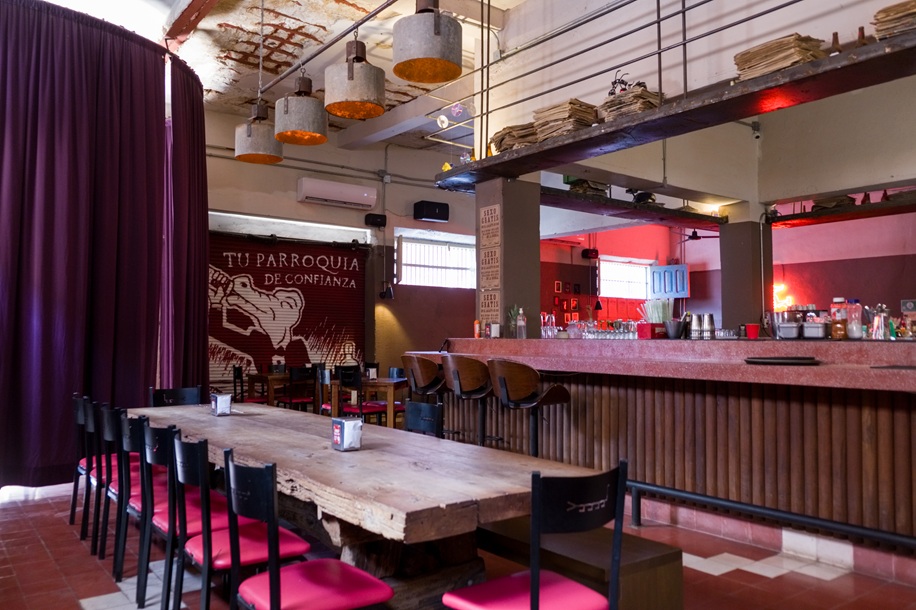
El Lagarto de Oro’s indoor bar and dining area
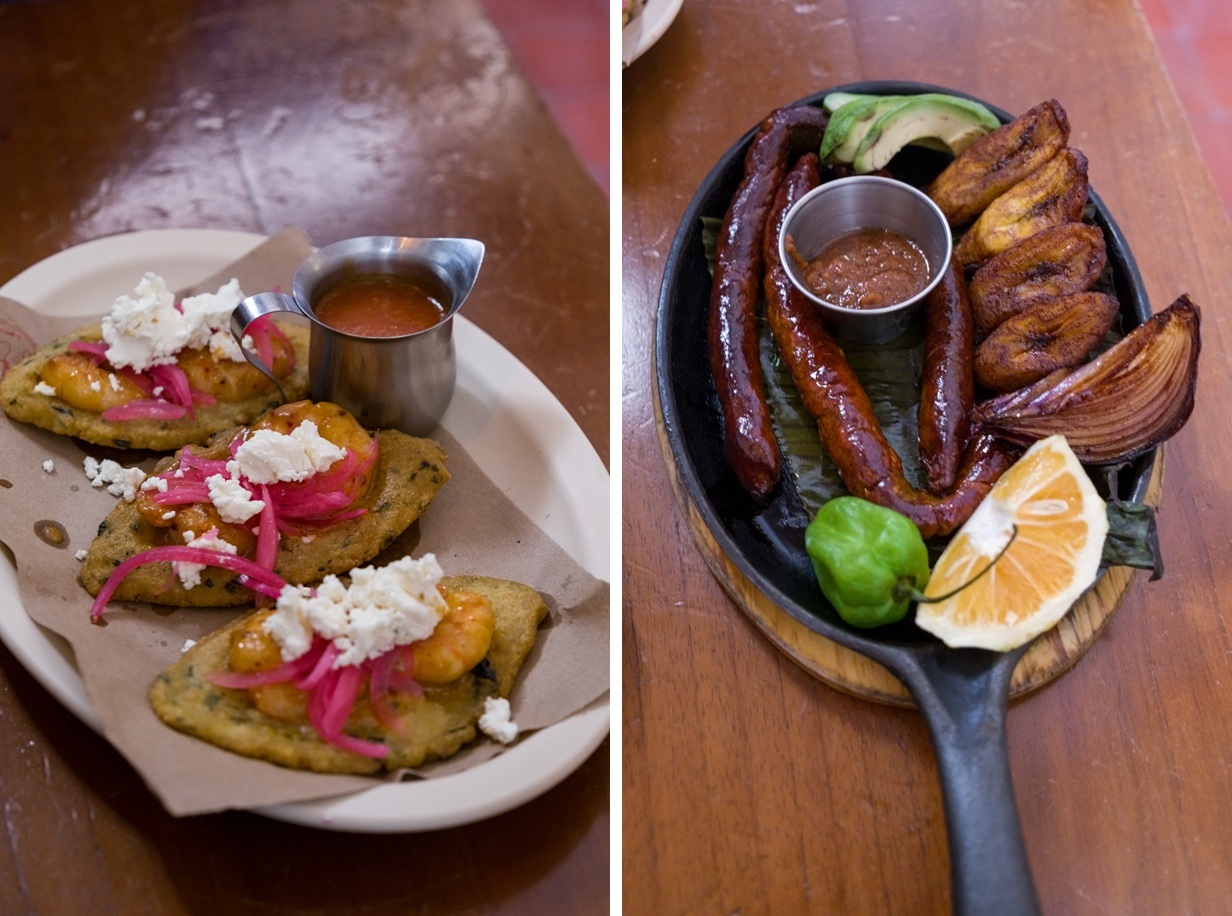
Macha-chayitas with prawns and cheese; smoked longaniza sausage from Valladolid
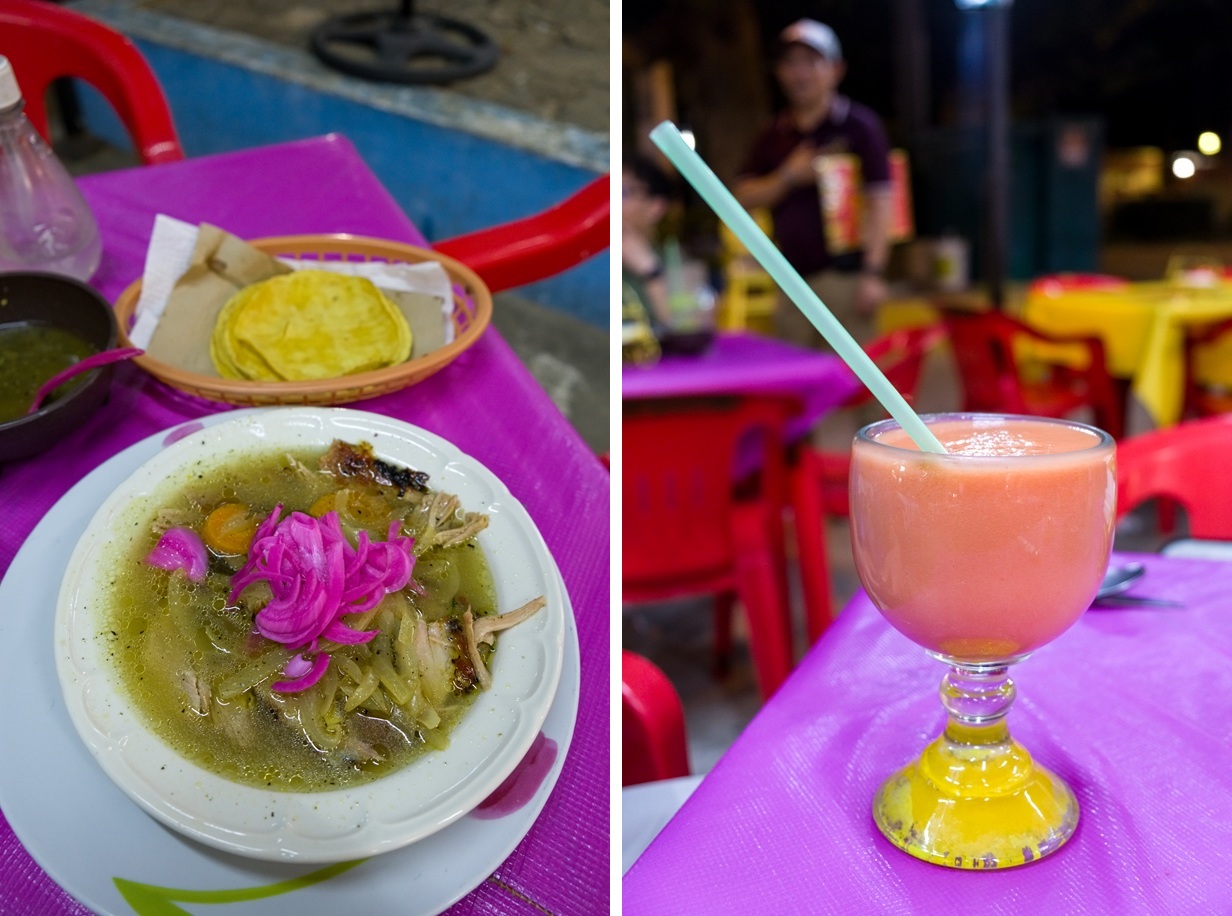
Escabeche with turkey at Mercado de Santa Ana; an agua fresca of the mamey sapote
Back in Mexico City, we were thrilled to find agua fresca de mamey at Taquería Los Paisas, an informal joint highly recommended for tacos al pastor. First created in the city of Puebla during the 1930s by Lebanese immigrants, who brought over the vertical spit-roasting technique meant for shawarma, it evolved over time from using simply seasoned lamb to thin slices of pork marinated with a zingy blend of chilies, spices, and achiote.
After we’d ordered and paid upfront, the cashier handed us red plastic tokens corresponding to the number of tacos. Then it was on to a prep station where a chef flipped large thin slices of fresh meat on an oiled griddle before gathering them neatly in a heap. I asked for six pastores and he stretched out one hand with a clear plastic container for the tokens. We watched as the chef prepared our tacos at an impressive speed, folding three large soft tortillas on each plate and filling them generously with roasted meat sliced off the tower of pork by another cook. “Do you want pineapple [with that]?” he asked. Bama and I immediately said “yes”.
Beside the cooking station sat a row of rectangular stainless-steel pans piled high with various toppings: guacamole, nopales, mashed potato, white beans, pico de gallo, marinated onion, and cucumber slices. Wanting a bit of just about everything, I ended up filling my already well-stuffed tacos al pastor almost to bursting point. We agreed that these were the best tacos of the whole trip.
This time, our hotel in Mexico City’s UNESCO-listed historic center put us close to the original outlet of Restaurante El Cardenal. Located in a French-inspired stone building from the turn of the 20th century, it’s something of a local institution: diners have flocked here since 1969. We took the elevator to an upstairs dining room with high ceilings and stained-glass windows for a light lunch. Molcajete, named after a traditional stone mortar, comprised thick avocado slices and slabs of fresh queso de rancho cheese in a green tomato salsa featuring onion and coriander. It was fabulous spread on warm bread. We also had tender roasted octopus alongside ensalada de palmitos: hearts of palm salad with lettuce, tomato, avocado, and strips of red bell pepper.
One block away, La Vasconia was founded by Basque immigrant Marcelino Zugarramurdi back in 1870, making it the oldest bakery in the capital. We went twice to buy pan dulce, the beloved sweet breads that are an inseparable part of Mexican culture and daily life. The most famous of them all is the concha, which pairs a soft and fluffy interior with a sweet cookie crust whose curving patterns resemble those on a seashell. That textural combination reminded me very much of the pineapple buns I grew up eating in Hong Kong. (As it happens, Chinese Mexicans deported from Mexico during the anti-immigrant movements of the mid-20th century created their own spin on the concha, still sold today in Hong Kong bakeries as the “Mexico bun”.)
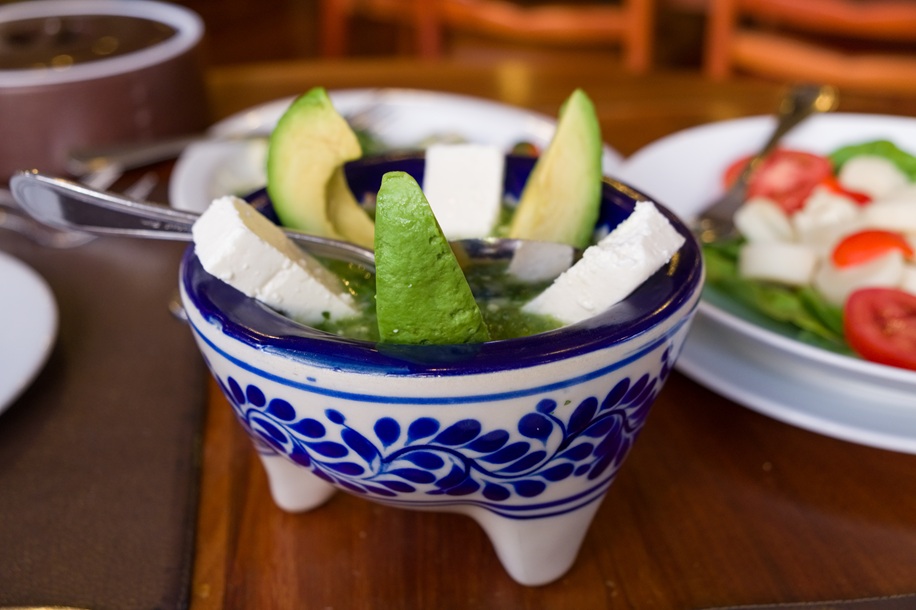
Molcajete, a signature side dish at Mexico City’s Restaurante El Cardenal
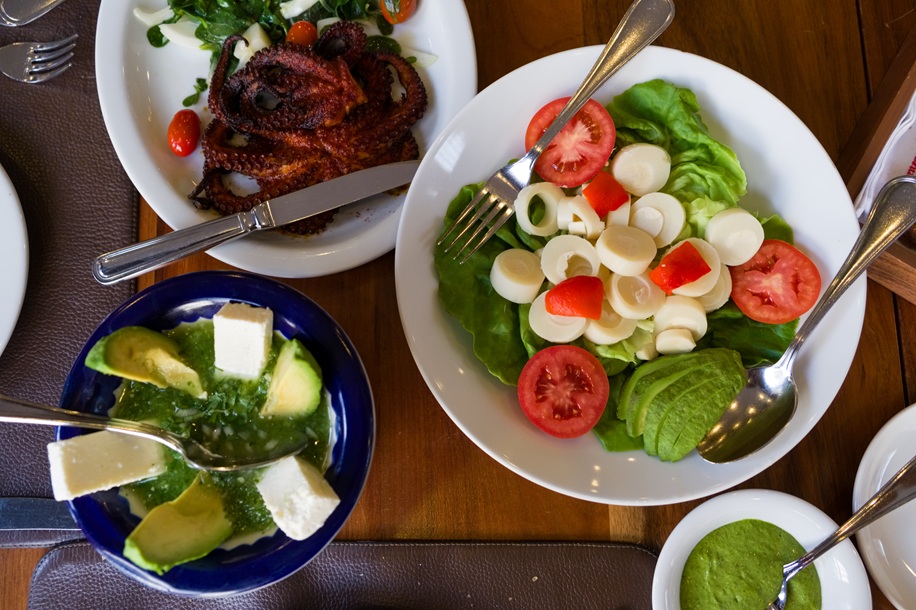
Our light lunch there also featured hearts of palm salad and roasted octopus
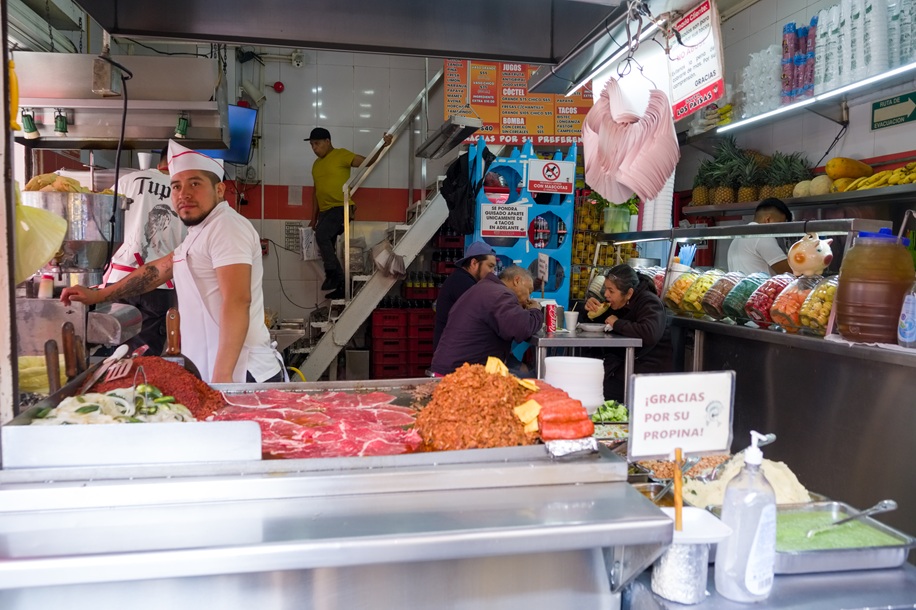
A prepping station and diners at Taquería Los Paisas in Mexico City
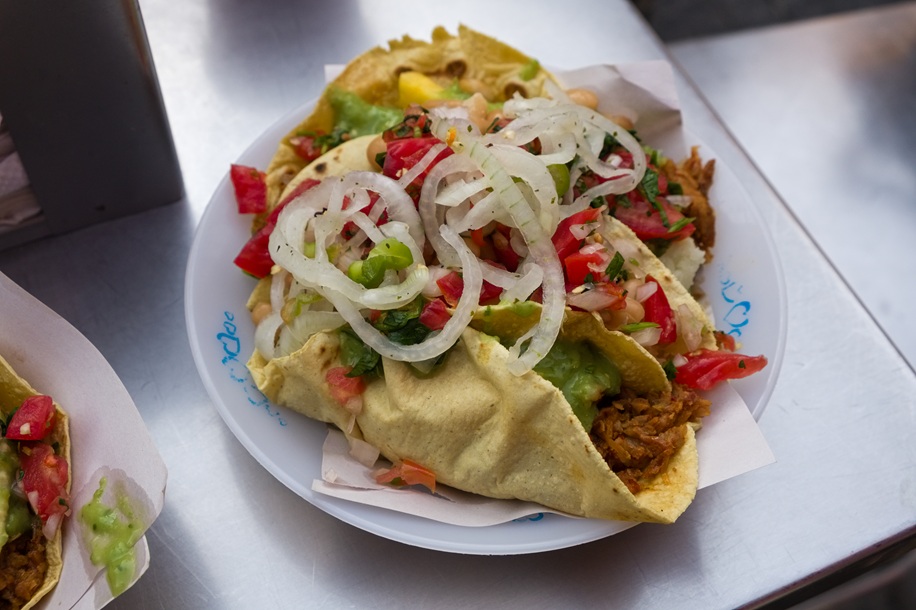
Bama’s prettily plated tacos al pastor with various DIY toppings
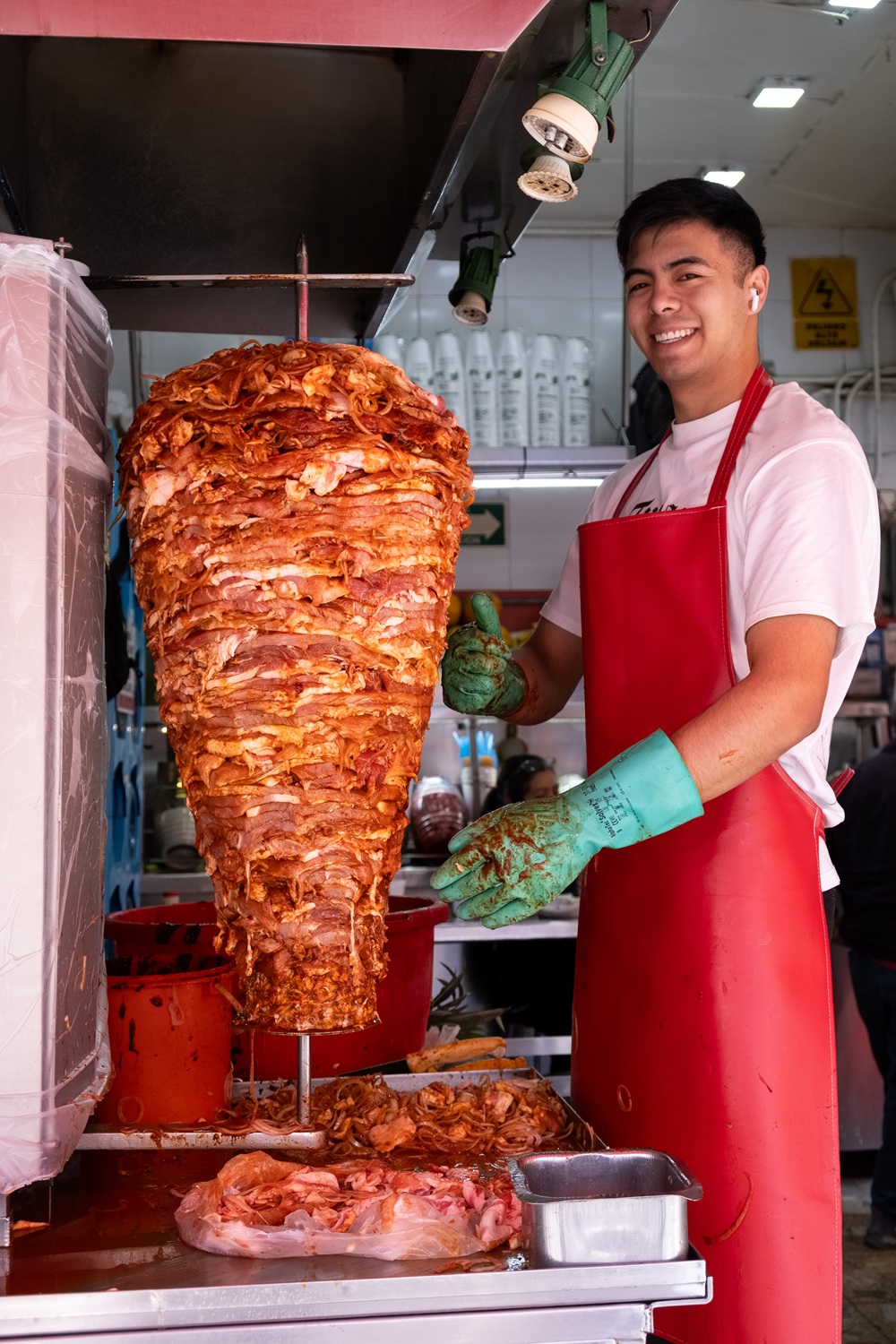
Assembling a vertical spit of marinated pork ahead of the lunchtime rush
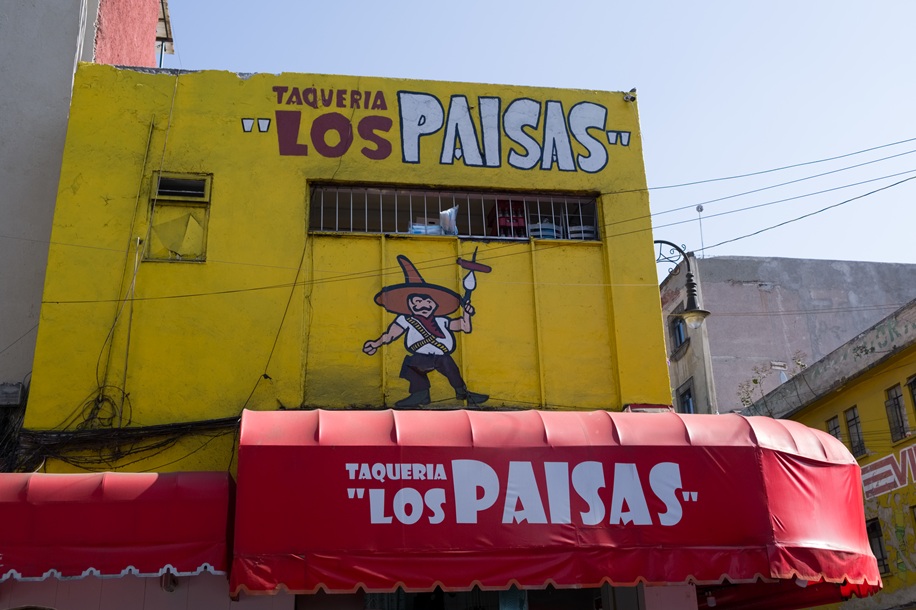
A fun mural above the taquería
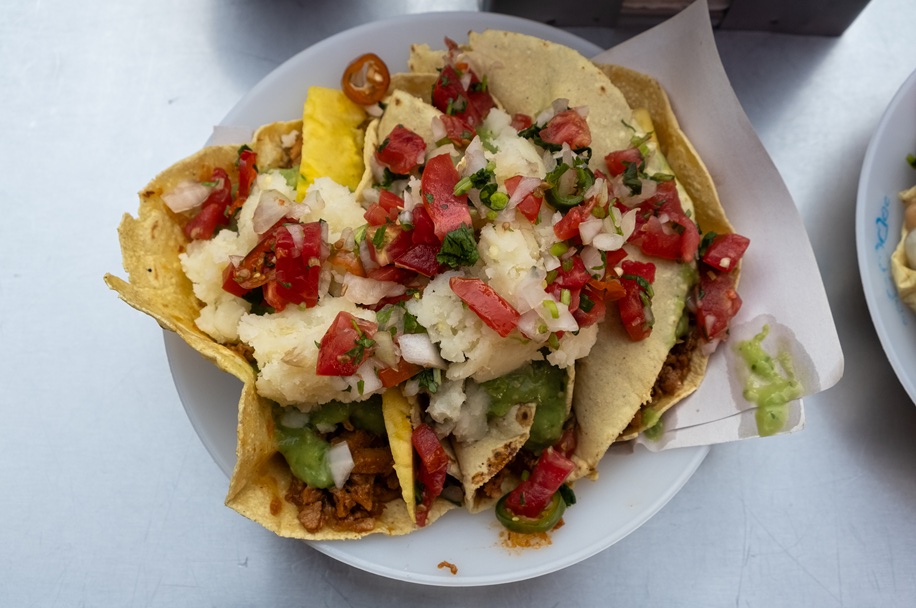
Overstuffed with mashed potato, my tacos were nowhere near as pretty as Bama’s
The most unique meal we had in Mexico might never have happened if it wasn’t for Sofía, our friendly seatmate on the nearly 15-hour flight from Istanbul to CDMX. When Bama told her we were planning an excursion to Teotihuacán, she immediately recommended La Gruta. “It’s a bit more expensive than other restaurants, but the food is good and you get to dine in a cave!”
Inhabiting a volcanic cavity just outside Teotihuacán’s archaeological zone, La Gruta has been in operation since the 1920s, and it mainly focuses on traditional pre-Hispanic cuisine made with seasonal local produce. We’d come at the wrong time of year to try huitlacoche — nutrient-rich corn fungus — but March fell within the harvest season for a prized highland delicacy once enjoyed by Aztec emperors. Escamoles, lauded as “Mexican caviar”, are the foraged eggs or larvae of velvety tree ants, and at La Gruta, they come sautéed in butter with the epazote herb. I was unsure at first, chiefly because the starter was much more expensive than all the other dishes on the menu. But when would we ever get to try it again? Bama and I agreed this was something we could splurge on.
Slightly bigger than grains of rice, the delicate escamoles proved savory and creamy, with a buttery taste and a fluffy texture like just-cooked scrambled eggs. We spooned them onto soft tortillas from a padded pouch that kept them warm and moist. A server soon explained how the tortillas got their different hues. Apart from the usual pale-yellow masa, another kind was tinted green with spinach and nopales, and a third reddened by the addition of guajillo chilies.
For our vegetable dish, we ordered La Gruta Salad: young and tender quelite greens, heirloom tomatoes, caramelized pecans, and cubes of farmer’s cheese dressed with a sweet-sour prickly pear and agave syrup vinaigrette. Prickly pear fruit, known in Spanish as tuna, provided the main ingredient for flamingo-pink agua de xoconostle — a refreshing and slightly tart drink.
Next up was mixiote, a meat dish wrapped in the papery, semi-transparent outer skin of the maguey plant before cooking. La Gruta’s version featured organic chicken, prickly pear, and onions, served alongside white rice and corn. On the server’s recommendation, we also tried a sweet mole with guajolote, a native Mexican turkey, prepared according to a recipe from 1927. I grew up eating roast turkey in Hong Kong every Christmas, and got used to the lean white meat being somewhat dry and stringy. But guajolote was a revelation: neither of us had ever eaten such moist and tender turkey before. Surprisingly, the thick mole it was slathered in reminded Bama of Indonesian peanut sauce in its rich flavor and viscosity. Sofía was right about La Gruta.
In the end, our two weeks in CDMX, Chiapas, and the Yucatán had given us a vivid snapshot of the breadth of Mexican cuisine, and a better appreciation for its diverse regional variations. We fell in love with mamey and enjoyed having frijoles refritos at nearly every meal. On this eye-opening journey, Bama and I savored unique ingredients like cactus pads, wild boar, chocho palm flowers, and velvety tree ant larvae — so much of it was new and memorable for us. Nor will we forget the taste of the knockout tacos al pastor from Taquería Los Paisas or Doña Mirna’s sopa de lima at her cozy Santa Elena restaurant. ◊
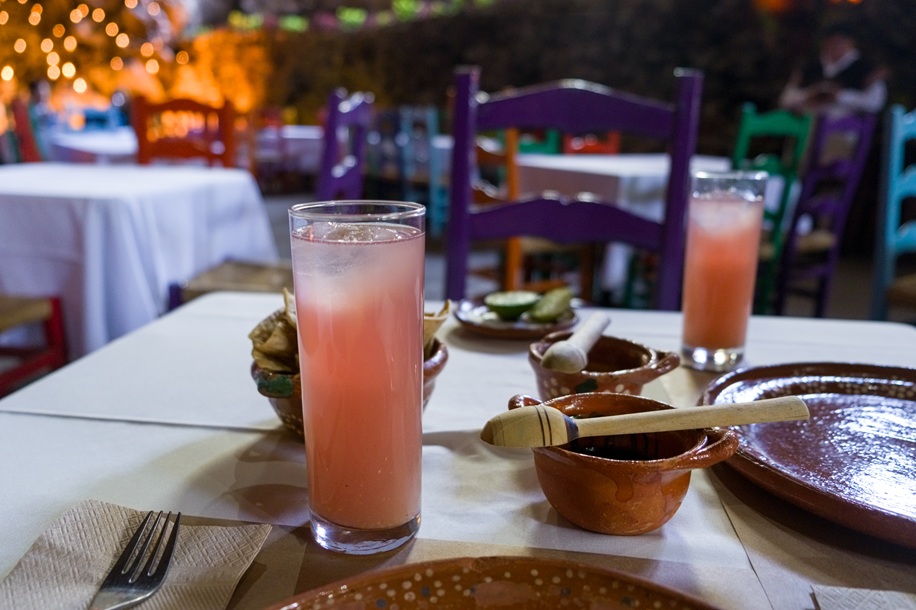
Agua de xoconostle (a prickly pear–based drink) at La Gruta in Teotihuacán
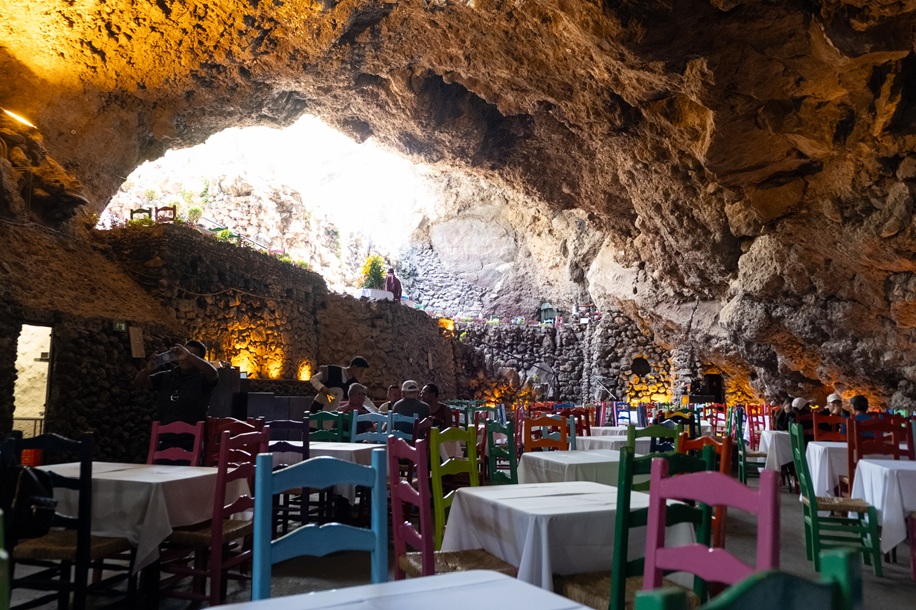
This was the first time Bama and I had ever dined in a cave
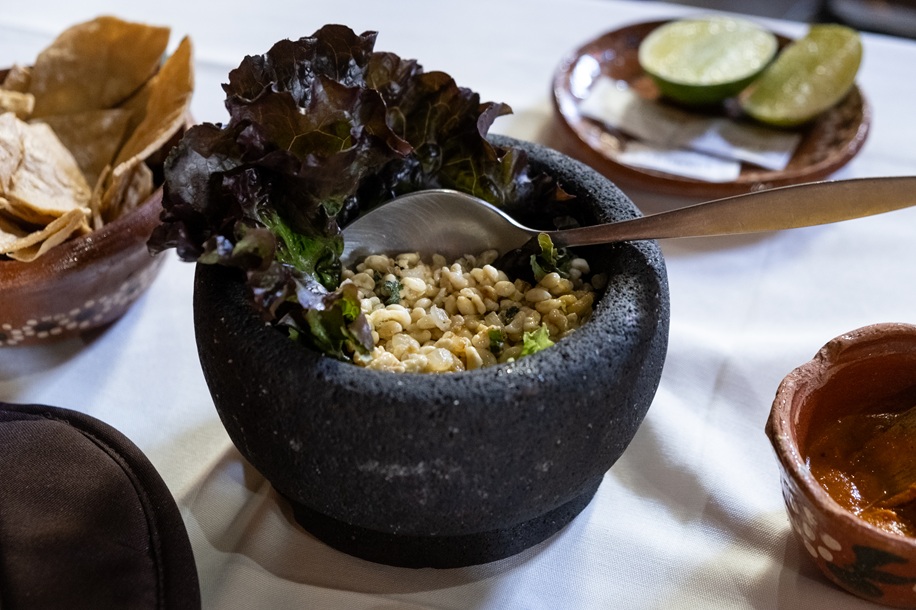
Escamoles (ant eggs or larvae) are a must-try for any foodie when in Mexico
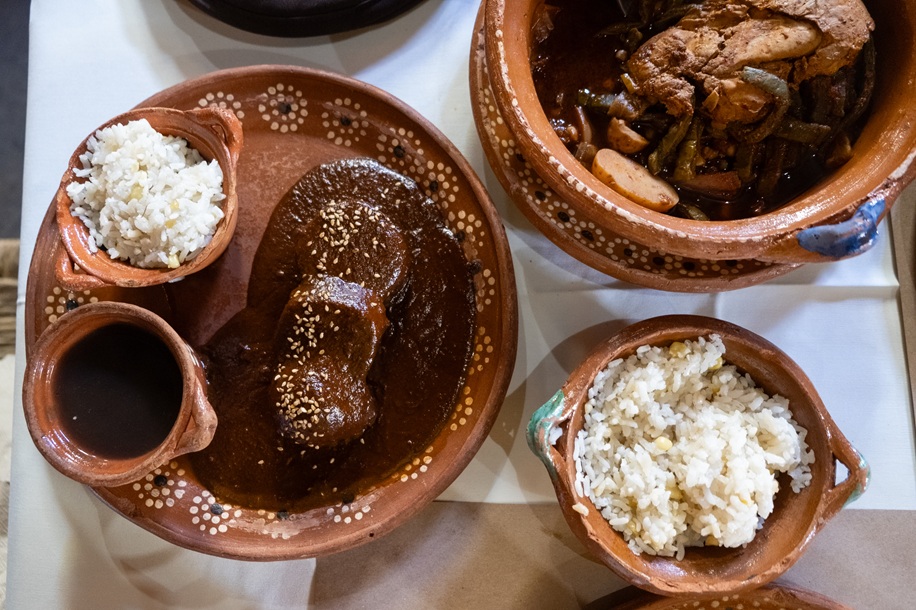
La Gruta’s mole with guajolote turkey and a pot of chicken mixiote (top right)
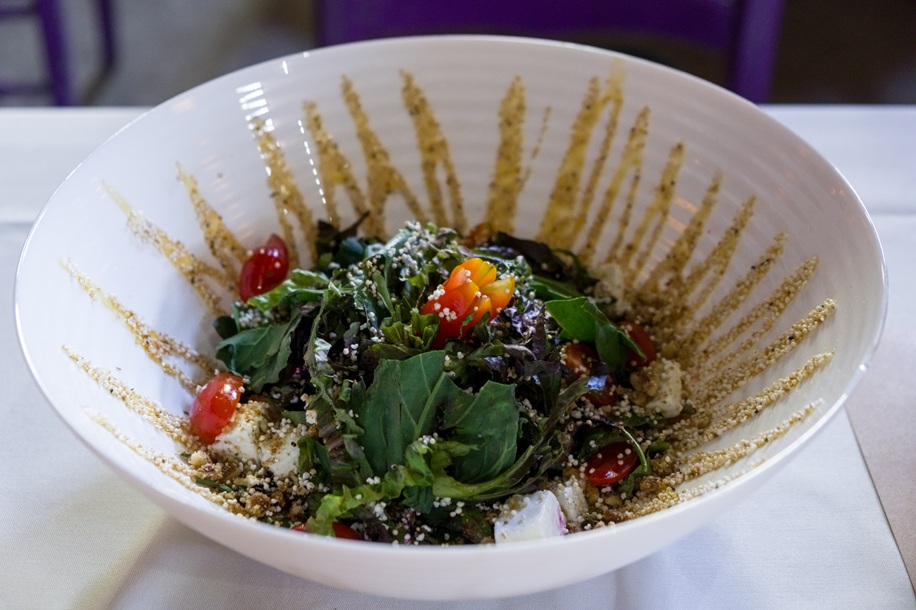
The delicious La Gruta Salad features a prickly pear and agave syrup vinaigrette
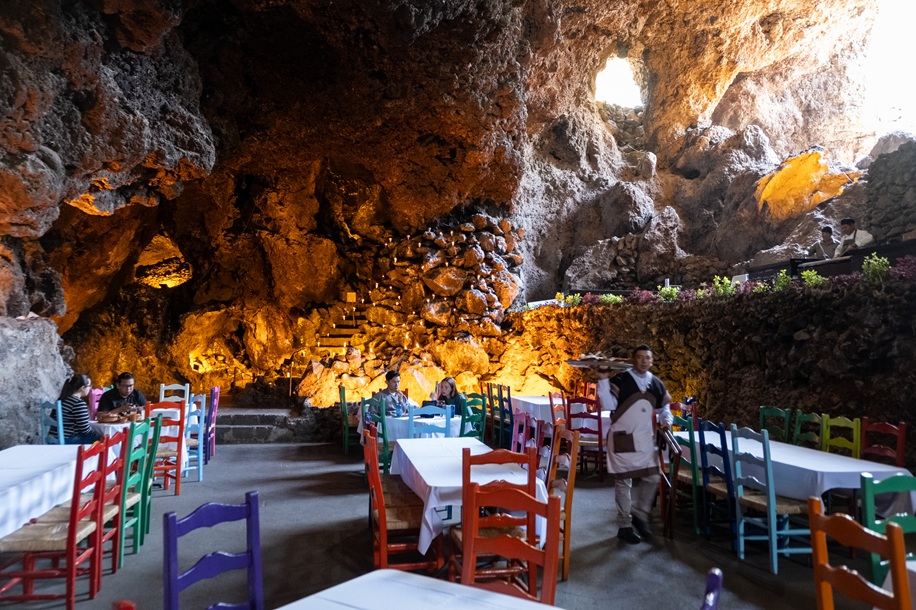
Diners at La Gruta are invited to light a candle at the end of their meal




 Plus Ultra
Omg all this food looks amazing!!! Apart from the cicada photo. That’s a big no from me! Haha. But I love Mexican cuisine and most of these dishes look and sound amazing! Just nothing insecty!!! 🤣
Anna, the funny thing about those cicada larvae is if you ate them with your eyes closed, you might not even have guessed they were insects at all! In an oddly familiar way, they tasted and felt more like a snack made of processed animal protein and starch (like tapioca flour). 😆
Say what you like you will never get me trying!!! I don’t believe you!!! 🤣🤣🤣
Some of the food looks a bit strange but then I’m sure they are delicious.
Now that I think of it, I don’t recall tasting anything in Mexico that I didn’t like. The prickly pear and escamoles were really interesting as they were completely new for us.
This post goes to show that there’s so much to Mexican cuisine than just tacos, burritos, and quesadillas! Mexico has such a diverse culinary scene from region to region, and I’m glad you got to have a sample of some of them. The river snail soup and mole especially caught my eye, and I hope to explore more of Mexico for the food! Thanks for sharing, James 🙂
You’re welcome, Rebecca! How lucky you are to live in L.A., just a short flight away from Mexico and all its unique regional dishes. One place Bama and I put on our wish list but didn’t have time for was Oaxaca. Everyone we know who has been there raves about the food. I have a feeling you’ll get there before we do!
I enjoyed your post thoroughly, with the terrific documentation of the food that you can get. But the most important piece of information for me as a traveller was your remark about the portion sizes.
Thank you for the kind words, I. J. — I was a bit worried this post was overlong both in terms of the text and the sheer number of photos. My impression is that Mexican food is really made for sharing in larger groups. Sometimes it was a struggle for us to finish our food, even though I’m known (among my extended family at least!) for having a pretty big appetite.
Reading this, I imagine you both must have put on weight by the end of the trip. I’ve often seen prickly pear in the supermarket here and thought of trying it, but I have no idea how to cook it.
That’s so interesting that prickly pear is sold in Canada. It has yet to make its way to Indonesia, but I was recently told by a Mexican chef that certain ingredients (including escamoles!) actually exist in this part of the world.
Surprisingly, we didn’t gain weight even after all that food we ate. I think a big part of it was how much we walked every day, whether it was in the cities or at the Maya archaeological sites out in the countryside. What a difference that was from our usual work lives being deskbound in a high-rise office building!
This post makes me really miss Mexican food. Although we’ve tried ants before (which tasted rather tangy) in Cambodia, escamoles were such a revelation. I remember how smooth and creamy they were, and had they not been too pricey we would’ve probably ordered a second portion. At the other end of the spectrum, Doña Mirna’s sopa de lima was proof that when simple ingredients are done right they can make a rich and very satisfying dish. Next time we really should go to Oaxaca to sample its famous traditional cuisine!
After reading about how escamoles are still foraged from the wild by hand, I began to understand why they are so pricey. The sauteed escamoles we had at La Gruta was honestly worth every cent. Fingers crossed it’ll only be a few more years before we make the trip to Oaxaca!
Wow, this made me so hungry 🤤 From tacos al pastor in Mexico City to sopa de lima in Mérida, every stop sounded incredible. Dining in a cave at La Gruta and trying escamoles? That’s next-level foodie adventure. Loved how vividly you described each dish!
Ah, maybe I should have added a disclaimer at the top: “Do not read on an empty stomach”! We found regional Mexican cuisine to be utterly fascinating, especially when it came to the ingredients — it is just so different from what we normally eat on a day-to-day basis.
Haha, that disclaimer would’ve been very helpful 😄
That’s exactly what makes regional Mexican food so exciting, the ingredients, techniques, and traditions feel like a journey on their own. Dining at La Gruta and trying escamoles is such a bold, memorable way to experience it. Loved reading about how different it all felt from everyday food!
James, what a splendid glimpse into Mexico’s ethnic cuisine. I am ever inspired by how you – and Bama – make food the focus of your travels. This couldn’t have come at a better time for us…we are in the early stages of planning a trip around my niece’s wedding in Cancun, in early November. Looking forward to trying out every one of your featured dishes, might even attempt the insects 🙂
Madhu, it’s so nice to hear that you and Ravi are heading to Mexico later this year — I am quite sure you’ll enjoy the food of the Yucatán as much as we did! Speaking of Cancún, we only managed to catch a glimpse of the city and its famous beaches from the plane as our Turkish Airlines flight made a quick stopover there on the way back to Istanbul.
Every single meal you described sounded out of this world, from the soup to the cave. (What a lucky recommendation from a fellow traveler!) I would even be willing to try the cicadas – eek. I love Mexican food, and the Yucatan food especially, so I’m not a hard sell. Your photos are outstanding and I hope at least some of these business owners realize what a service you would do by photographing and lauding their foods to the blogosphere!
Thank you for the lovely comment, Crystal! Yucatecan food is so unique — the depth of flavors and colors and cultural mixing make it really special. We were very lucky to have stopped by Restaurante La Central on the trip. Our driver Abdiel was doubtful at first (as he’d never been there) but the quality of Doña Mirna’s cooking quickly won him over!
Wow – this is so detailed. Either you have a great memory or you keep wonderful notes.
I try to take notes whenever I can, especially after a particularly memorable experience like dining at La Gruta and Restaurante La Central. Where there were gaps, I was lucky that I could cross-reference my notes with my own pictures of the menus or those already shared online.
All I can say is that you two are very brave eaters!!!
Well Lex, I think living in Indonesia has made me a whole lot more adventurous and willing to try new foods!