
Lombok through Another Lens
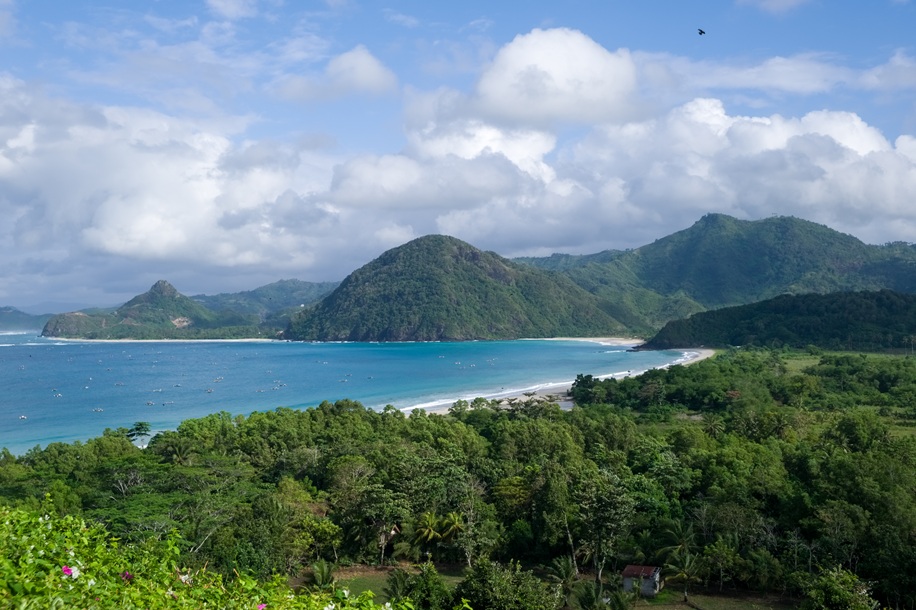
It’s half an hour before dawn when my photographer friend Martin Westlake and I pull into the unpaved parking lot at Mawun Beach, a near-perfect crescent of sand on the Indonesian island of Lombok. In the darkness, we can hear the waves of the Indian Ocean lapping against the shore. But the very moment we unlock the car doors and step outside, it begins to rain. Heavily. We hurriedly duck under a corrugated iron roof to wait out the torrential downpour with a wandering rooster and a security guard, fast asleep in the harsh white glare of a naked lightbulb. The unseasonal rain may have quashed our hopes of shooting a glorious tropical sunrise, but no matter. We stay until the skies gradually lighten to a gloomy grey before driving back to the hotel for breakfast.
A dozen years after I last set foot on Lombok for a week-long vacation with Bama, I’ve returned to Bali’s less-crowded easterly neighbor on a work assignment. Martin and I spend our first few days based in the south coast town of Kuta, the jumping-off point for a succession of beaches and two traditional villages inhabited by generations of indigenous Sasak people. The Kuta I remember from 2013 was a sleepy, ramshackle surf town where rustic thatched-roof warung containing casual eateries, stalls selling everyday items, and makeshift travel agencies lined the coastal strip. Now, 12 years later, the place is utterly unrecognizable. It has transformed into a tourism boomtown catering to digital nomads and their vegan bowls and yoga sessions, drawing comparisons with the expat haven of Canggu in Bali. Lombok’s Kuta may not (yet) have the beach clubs lining Canggu’s black-sand shoreline, but the town is far busier than I remember. There are a diverse crop of cafés and restaurants, small boutiques, an upscale foreigner-centric supermarket, and more than a few posters advertising private villas. Martin, who has been living in Indonesia since the late ’80s, is no stranger to these parts. “The good thing about Kuta becoming like Canggu is the food scene — it’s so much better than before.”
As if to drive that point home, our first appointment of the trip takes place at Simonetta, a newish Provençal restaurant on Kuta’s main north-south road. Sasak entrepreneur Indra Budiman and his wife Melissa Mattei, who grew up in the town of Fréjus on the French Riviera, became minor celebrities during the pandemic thanks to their YouTube channel chronicling life in rural Lombok as a young Indonesian-Western married couple. We’re served a carpaccio of local octopus; a salad full of leafy greens, julienned apple, tomatoes, with breaded goat cheese atop toasted sourdough drizzled in honey; and oeuf mimosa — half-boiled eggs stuffed with garlicky homemade aioli.
One afternoon, we take the winding road west from Kuta up into the coastal hills and back down again to the beautiful surf beach at Selong Belanak. I have fond memories of making the same journey with Bama on a rented scooter in 2013, and am relieved to discover that Selong Belanak’s stretch of powdery white sand hasn’t lost its relaxed charm. Fishermen’s outrigger boats are still lined up above the waterline. But I do notice significantly more plastic waste heaped around the dirt parking lot — pointing to the lack of a proper garbage disposal system. Some forward-thinking figures in the community have taken it upon themselves to solve this problem in creative ways. We’ve come here to meet Minnesotan marketer turned contemporary artist Elissa Gjertson and her Swiss husband Daniel Schwizer, a corporate consultant and self-taught mixologist. The pair fell in love with Selong Belanak while on holiday in 2017, and eventually relocated full-time from the U.S. one year later. “We both wanted to live a life of creativity,” Elissa tells me. They soon got involved in different projects, like building compact villas out of upcycled shipping containers, and banding together with like-minded folks to launch a market for independent, eco-friendly local brands.
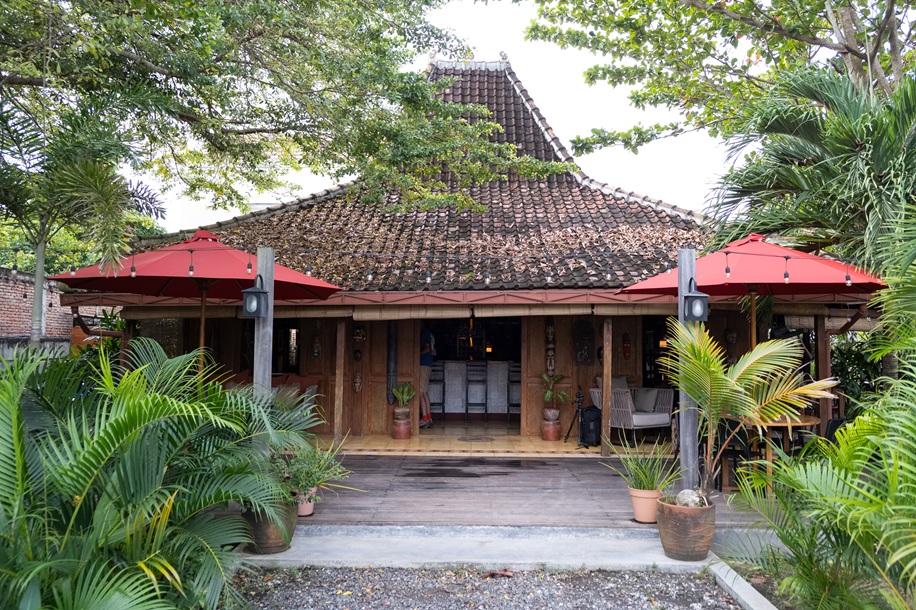
Craft cocktail bar Klub Kembali takes up a repurposed Javanese joglo house
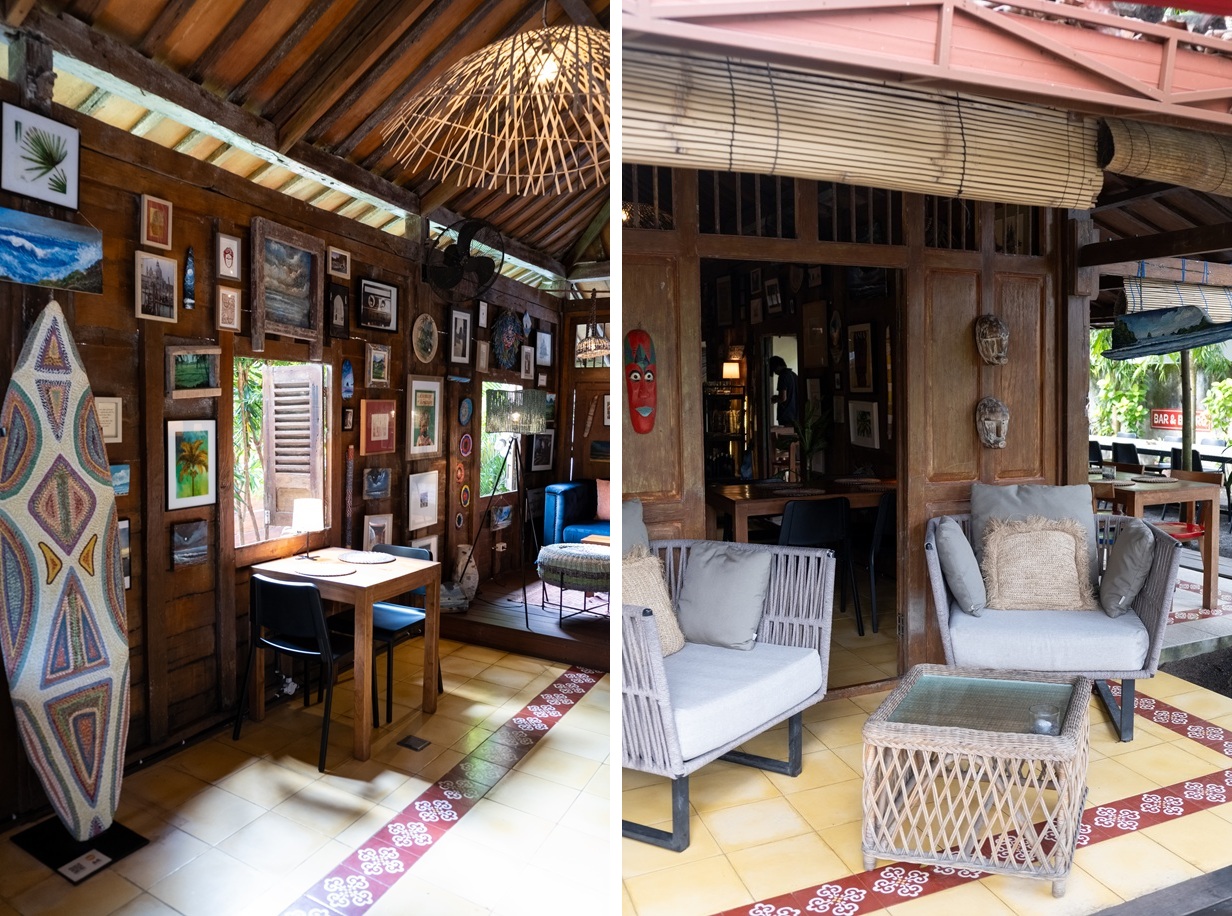
Eclectic decor inside Klub Kembali; on the bar’s front porch
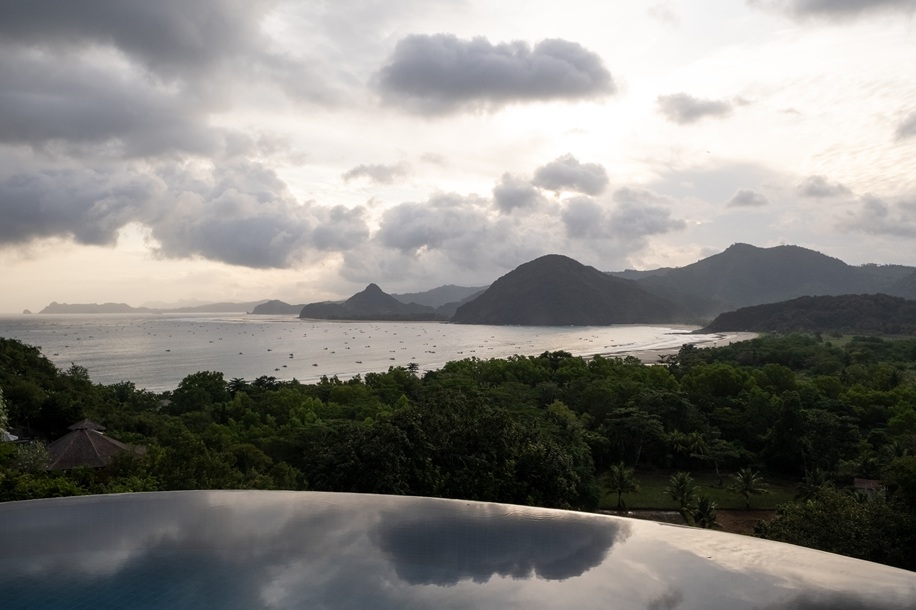
Overlooking Selong Belanak bay from a hilltop villa at Sempiak Seaside Resort
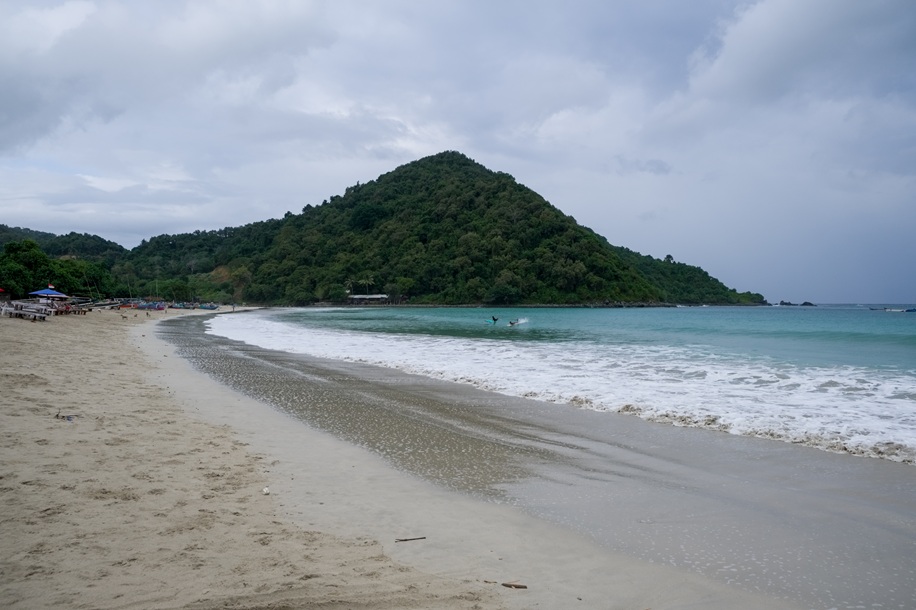
Selong Belanak beach on a cloudy morning
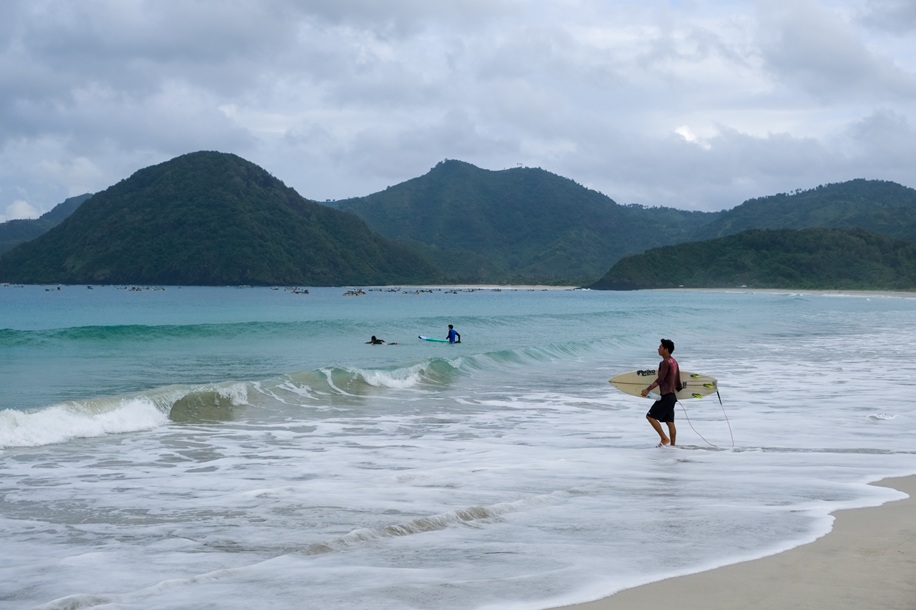
A local surfer heads out into the waves
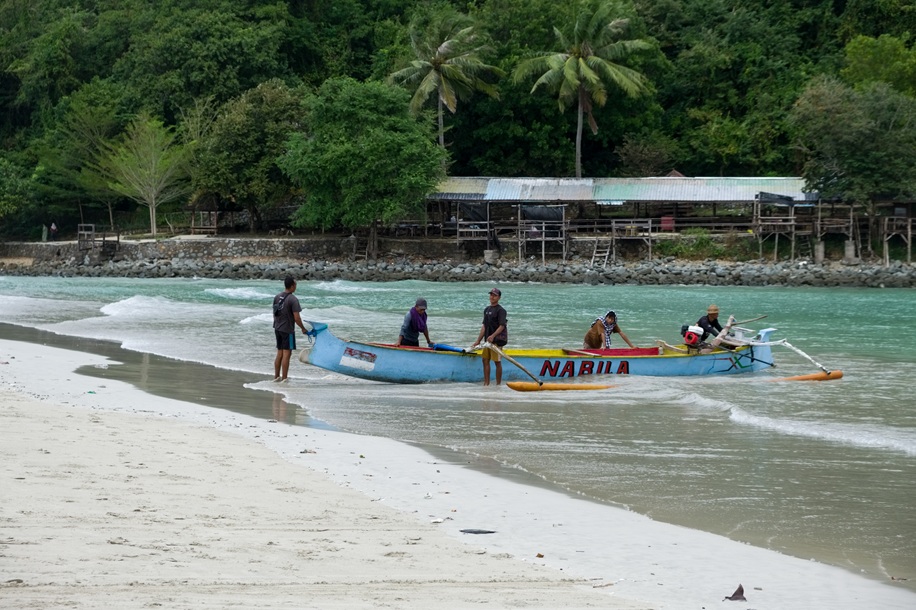
Fishermen pulling up in their outrigger boat
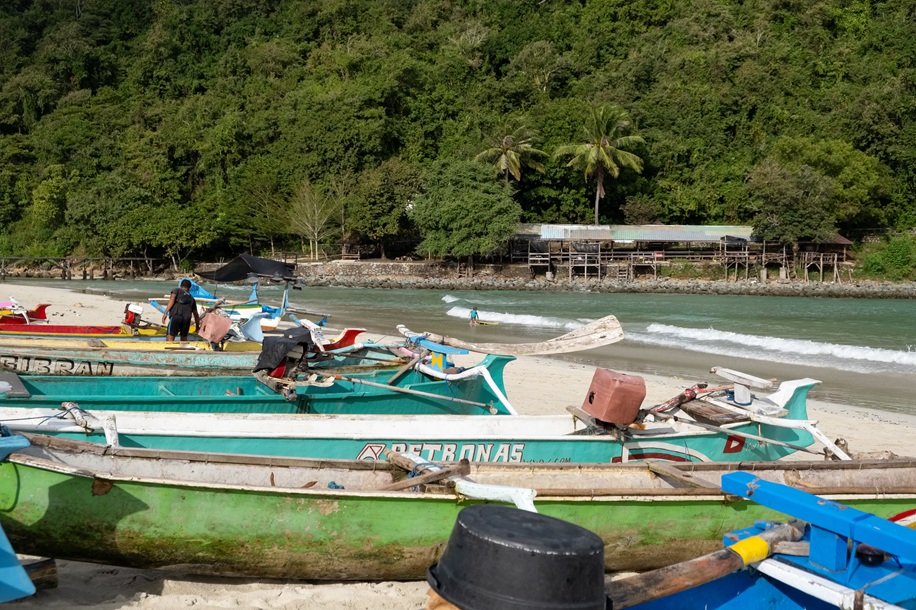
Here comes the sun
One of their newer ventures is Klub Kembali, self-billed “the best craft cocktail bar in the middle of nowhere.” As the world emerged from Covid, Schwizer and Gjertson took over a traditional joglo house from the island of Java that had been dismantled, shipped to Lombok, and put back together again. Daniel developed a drinks menu based on locally made spirits: he shows me a well-stocked rack of aged Indonesian whiskies, rums, and gins used for inventive cocktails. Some use his homemade chili liqueur, a delicious tribute to spicy Sasak cuisine. The duo installed bar counters clad in tiles of ground-up plastic and added the eclectic decor: miniature paintings of Selong Belanak beach scenes by Elissa’s father, plus Daniel’s own photography from their world travels. I spot the Matterhorn, the monumental Baroque church of Santa Maria della Salute in Venice, and Cairo’s 9th-century Mosque of Ibn Tulun — the last one shot in moody monochrome.
Furnishings from Elissa’s Plastik Kembali studio also dot the cozy space: there are lampshades and seats decorated in hand-twisted rope of recycled plastic and waste textiles, while a disused surfboard now bears colorful patterns that vaguely resemble the folk art of North America’s First Nations. After we meet a few of the local weavers employed at Plastik Kembali, Elissa shows us her self-funded project called Cove, an immersive installation in the art gallery at the nearby Sempiak Seaside Resort. Plastics otherwise destined for the landfill have taken new forms: melted down and molded into organic sculptures inspired by artificial reefs, interwoven with raffia for make-believe corals, and draped over bamboo frames to create stylized jellyfish. The sound of underwater bubbles emanates from a small speaker in one corner of the room.
Elissa and Daniel are part of an inspiring community of makers we meet over the next few days: fellow eco-preneur Aisyah Odist of Pinalo extracts fibers from pineapple leaves, which would otherwise have gone straight to the landfill, and supplies Sasak weavers with the material for fabric. Their creations are then turned into colorful products, from shawls and table runners to handbags and yoga mats. Similarly, Iwin Insani supports impoverished residents in South Lombok while helping to reforest the denuded slopes surrounding their village through her ethical skincare brand Iwani, which harnesses the natural properties of Indonesian botanicals for reef-safe sunscreens and insect repellents.
Eventually Martin and I head up north, past the international airport and through the island’s main city of Mataram, into the countryside on the slopes of Mount Rinjani, Indonesia’s second-highest volcano. Longtime readers may recall the name from a trek Bama and I did back in the summer of 2013. That was Bama’s first foray into serious hiking and his poor mother panicked when she realized just how difficult it would be halfway into our trip. What added to her anxiety was the fact that there was no cellular signal on the mountain. An experienced volcano trekker himself, Martin has climbed Rinjani a number of times. We catch a glimpse of its 3,726-meter (12,224-foot) summit from the grounds of Saifana Organic Farm, where we’ll be staying the next two nights. This rural refuge was established in 2013 by the Gindroz family, whose Swiss matriarch Anne-Sophie and her Indonesian husband Sutikno decided to put down roots in Lombok after pursuing humanitarian careers that took them all around the world.
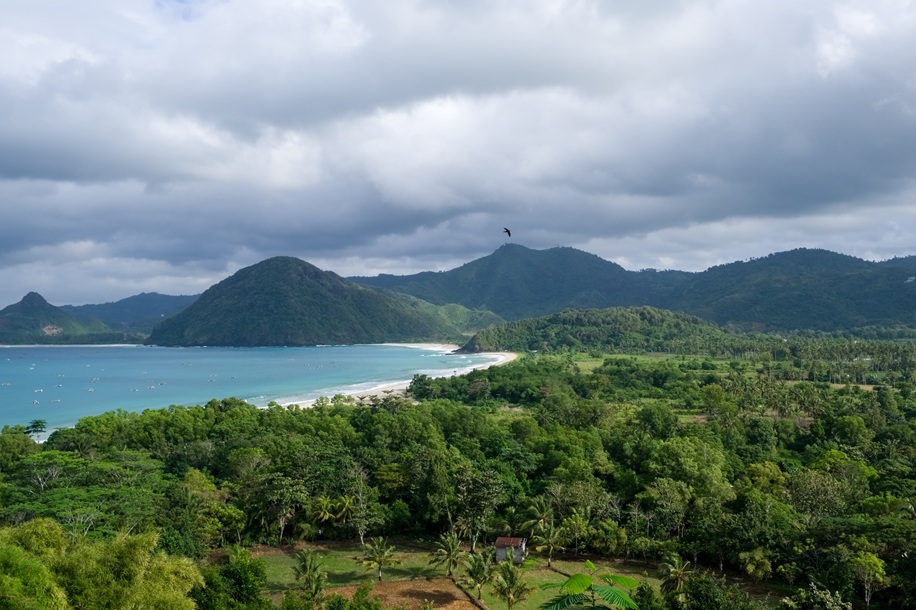
Most of the land along Selong Belanak beach has not been developed… for now
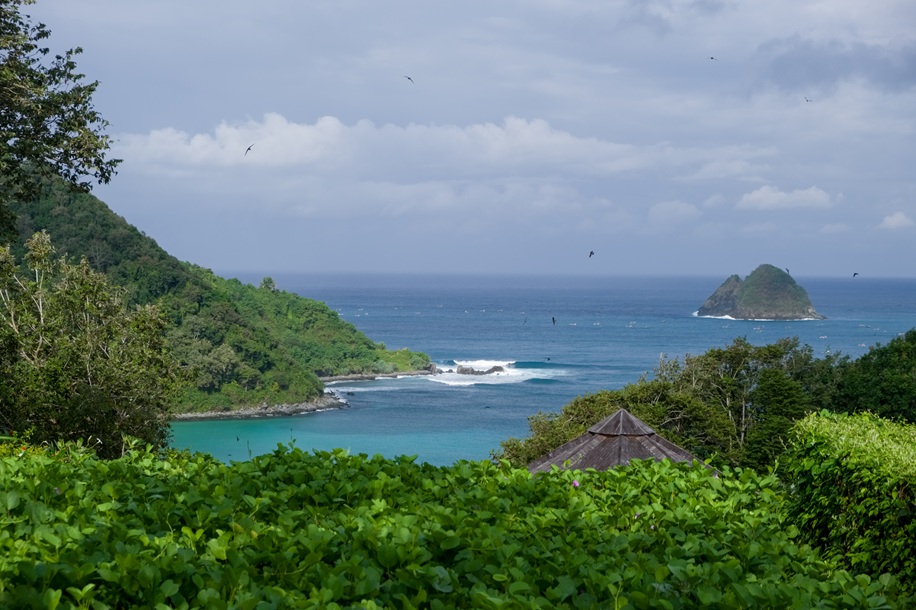
Looking out toward the Indian Ocean
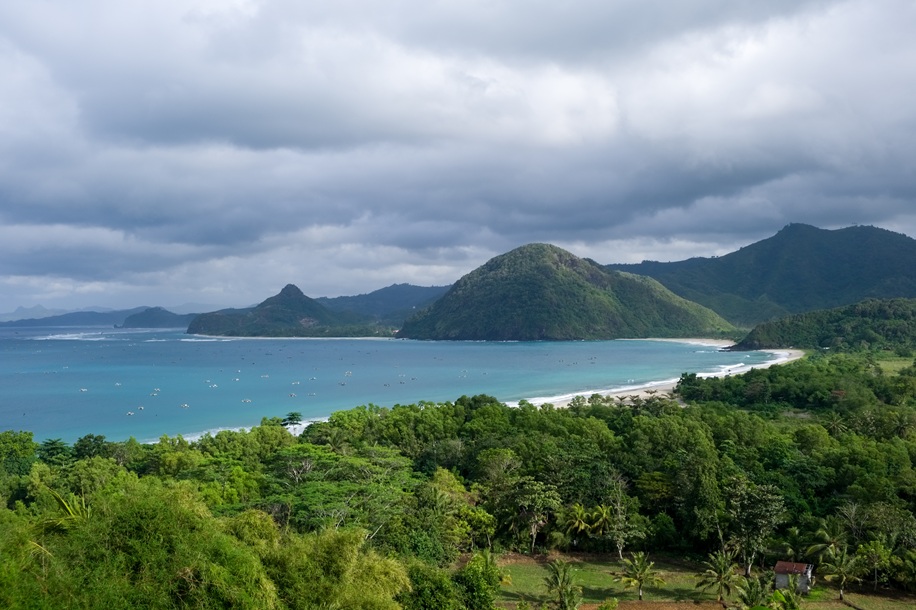
I was relieved Selong Belanak hadn’t changed much from my last visit in 2013
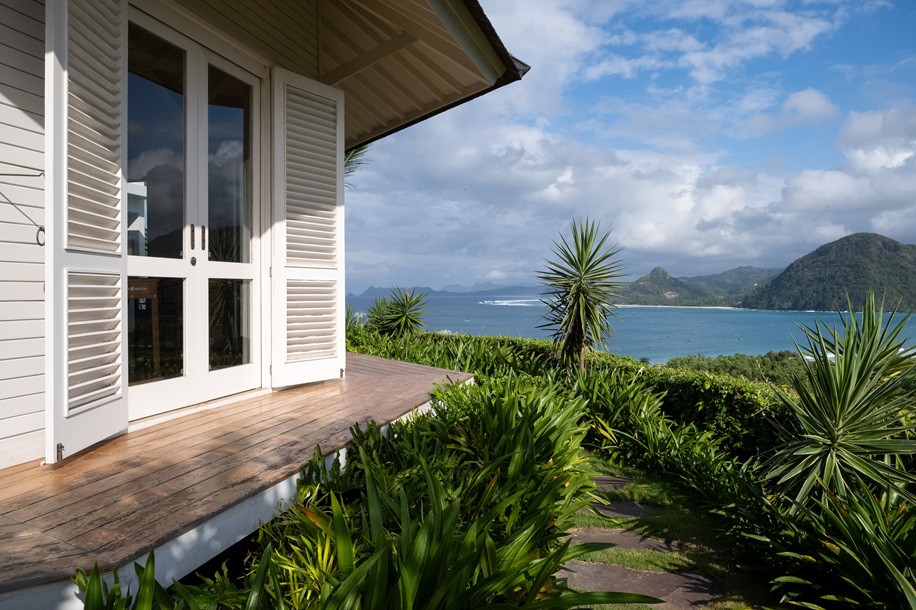
A corner of Sempiak Seaside Resort’s three-bedroom Villa Belantara
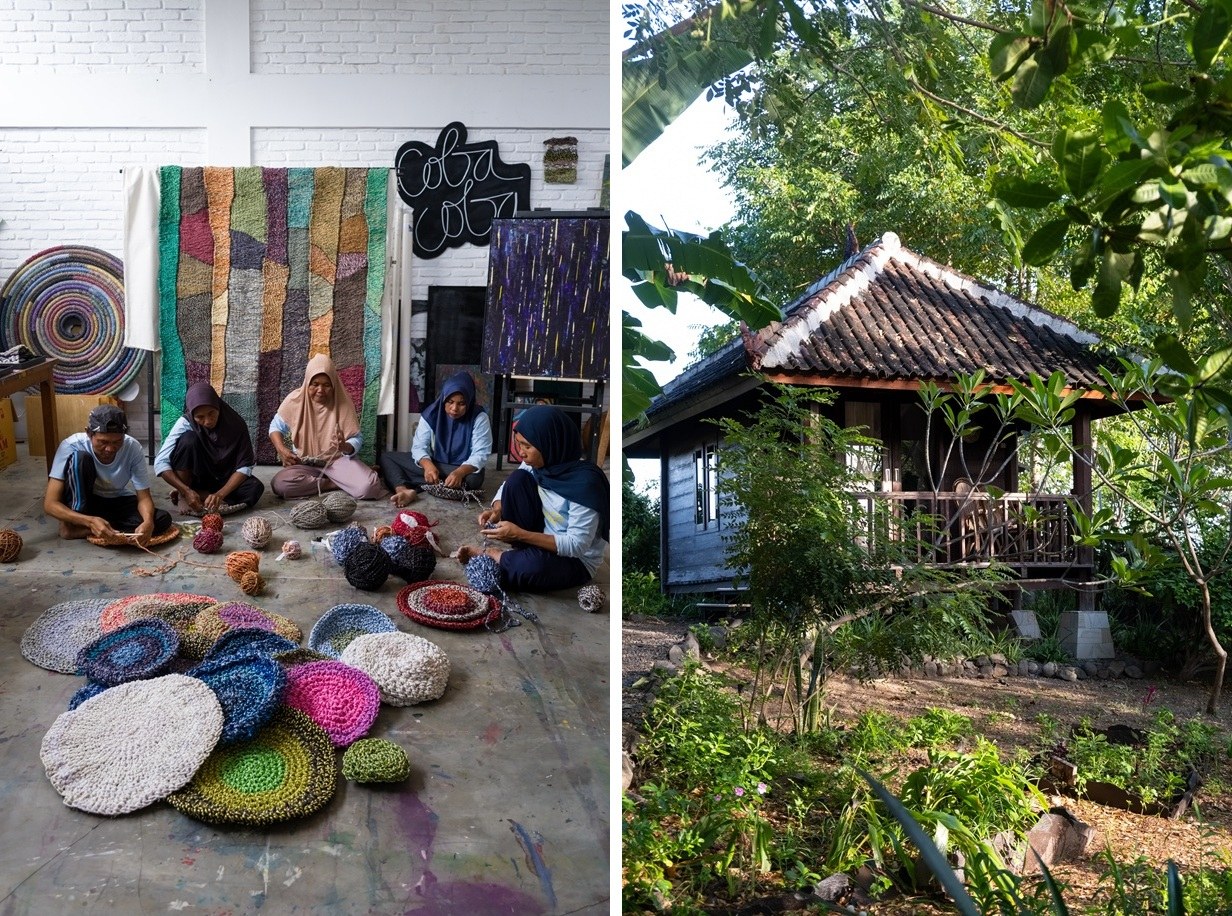
Artisans at work in the Plastik Kembali studio; a bungalow at Saifana Organic Farm
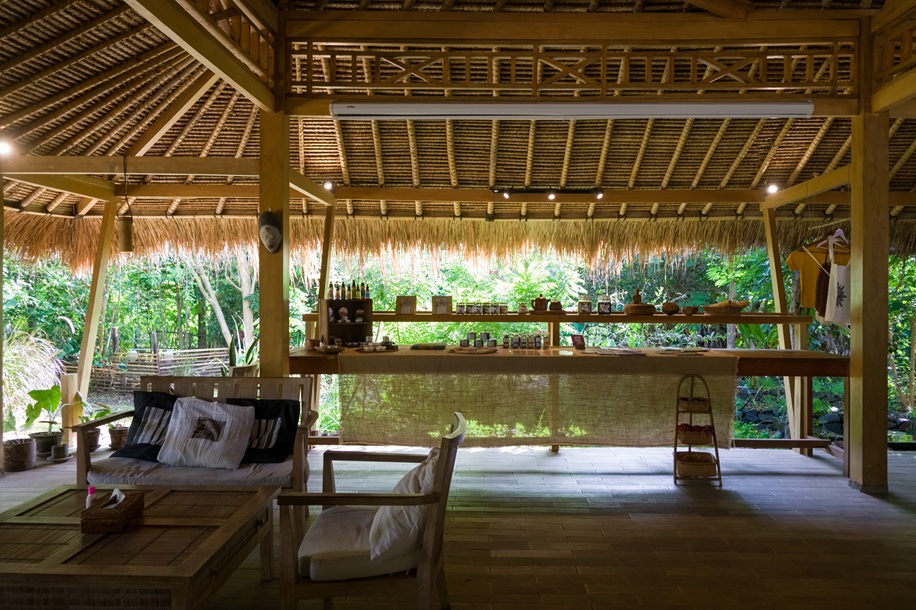
Saifana’s communal lounge stocks a variety of local eco-friendly products
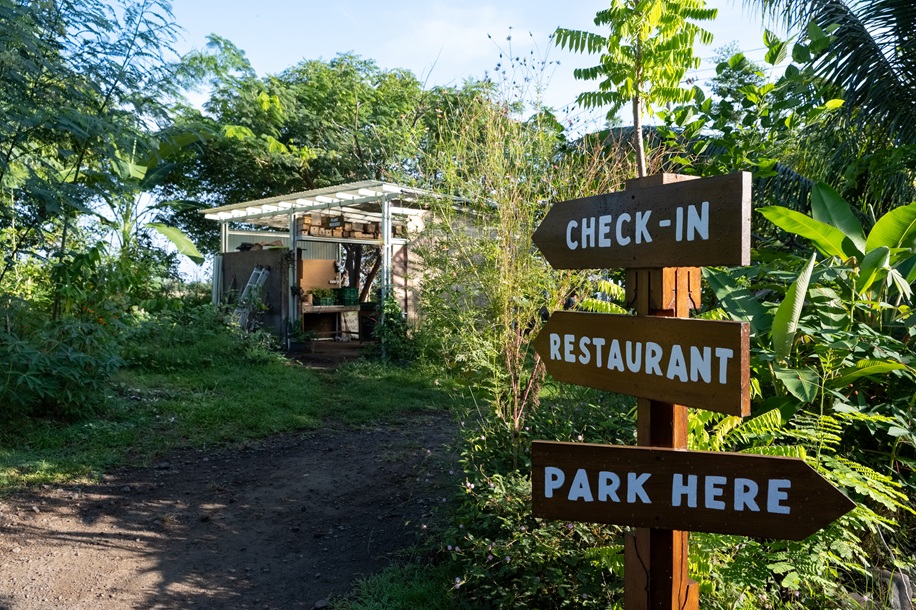
Pointing the way
I’m amazed at just how much the Gindrozes and their gardeners can cultivate on just one hectare (just under 2.5 acres). Years of hard work went into turning an abandoned cashew orchard on barren, rocky soil into a wonderland whose fields bristle with eggplants, limes, winged beans, and bird’s-eye chilies; we stroll between banana and papaya trees and vines laden with passion fruit. Aside from regenerative farming, Saifana gives back in plenty of ways: providing young people with skills in hospitality and organic farming, planting community gardens at local schools, and running a foundation to lift up women and children affected by underage marriage — a pervasive issue in North Lombok.
Martin and I get our own low-impact bungalows, but I spend most of my time in the thatched-roof communal lounge and vegetarian café tapping away at my laptop (this is a work trip after all). I find a welcome distraction in Frankie, Saifana’s sweet golden retriever who is advanced in age but always available for belly rubs. The Gindrozes tell me they adopted him in 2020 from a family who left the country when Covid hit and couldn’t bring him with them. (I learned while writing this post that Frankie passed away on New Year’s Eve last year. He had such a sunny disposition and I am glad I got the chance to meet him.)
On Martin’s initiative, we embark on an afternoon outing to Sendang Gile and Tiu Kelep, a pair of jungle waterfalls about a 30-minute drive from Saifana. Getting to the former from the carpark proves straightforward, via a downhill path with steps leading to its base. Tiu Kelep is more fun: the onward journey involves getting wet, as the trail abruptly ends at the river’s edge. I take off my shoes and immerse my bare feet in the cool water. Together with a trickle of locals and backpackers, we clamber over rocks, between boulders, and over fallen tree trunks in single file until the waterfall finally emerges into view. The air here is thick with spray coming down the valley. I don’t want to get my camera soaked, and neither does Martin, so we keep our distance from the tumbling cascade, taking only the pictures we need before hiking back out.
An air-conditioned resort with a fine-dining restaurant and infinity pool is all well and good, but I’m still an adventure-seeker at heart: I do not mind sacrificing a bit of comfort for a more rustic, soulful place like Saifana. Every morning when I step out of the bungalow, I’m greeted with the sound of chirping birds and the farm’s resident ducks quacking off in the distance. Martin’s jokes entertain the young and sometimes shy staff members hired from the village next door.
Juniardi, the kind-faced Javanese driver who takes me to the airport, says he moved to the island in 1996 and settled down after marrying a local woman. He is now a fluent speaker of the Sasak language. “In Sasak, Lombok is really pronounced loom-boo-k,” Juniardi explains. “It means “straight” as in “straight-hearted [hati lurus].” Bama later tells me hati lurus goes beyond being honest; the term is used for someone of an uncorrupted nature who has good intentions. I think it perfectly describes the inspiring people I’ve met here who are actively making a difference: turning waste products into art while supporting traditional crafts, fighting poverty and protecting coral reefs through an ethical skincare business, empowering young women while improving access to fresh produce. Imagine if all 4 million of Lombok’s residents were on board. How wonderful would that be? ◊
* * *
Postscript: The full online version of the story I wrote for DestinAsian magazine can be found here — Meet the Inspiring People Behind Lombok’s Vibrant Creative Scene.
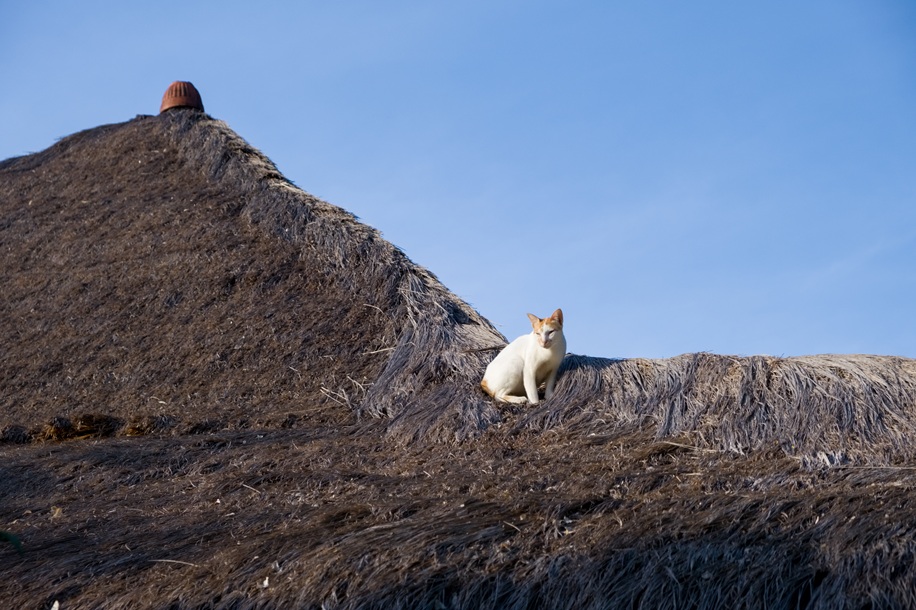
One of Saifana’s cats on the palm-fiber roof of the lounge and vegetarian café.
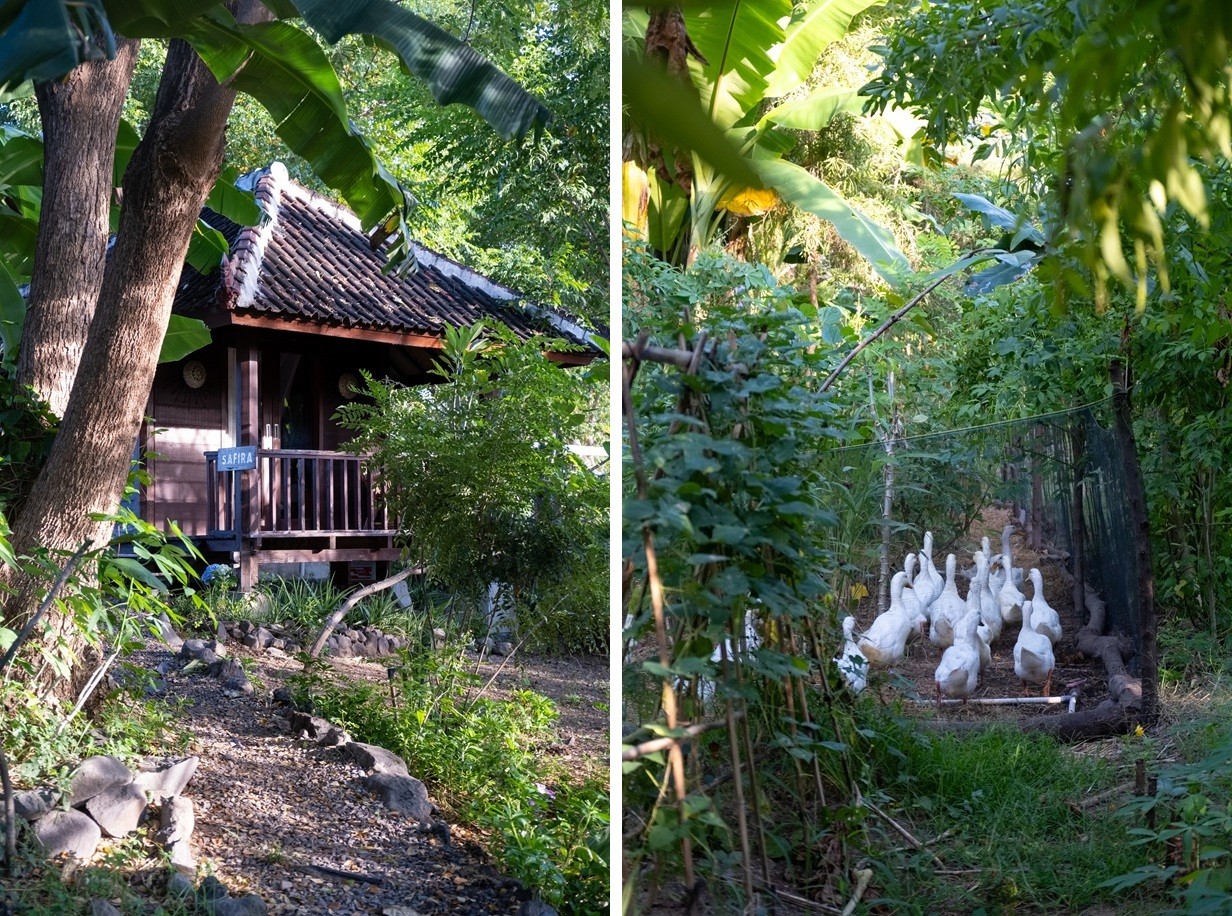
Another of the farm’s bungalows; ducks wandering in the fields.
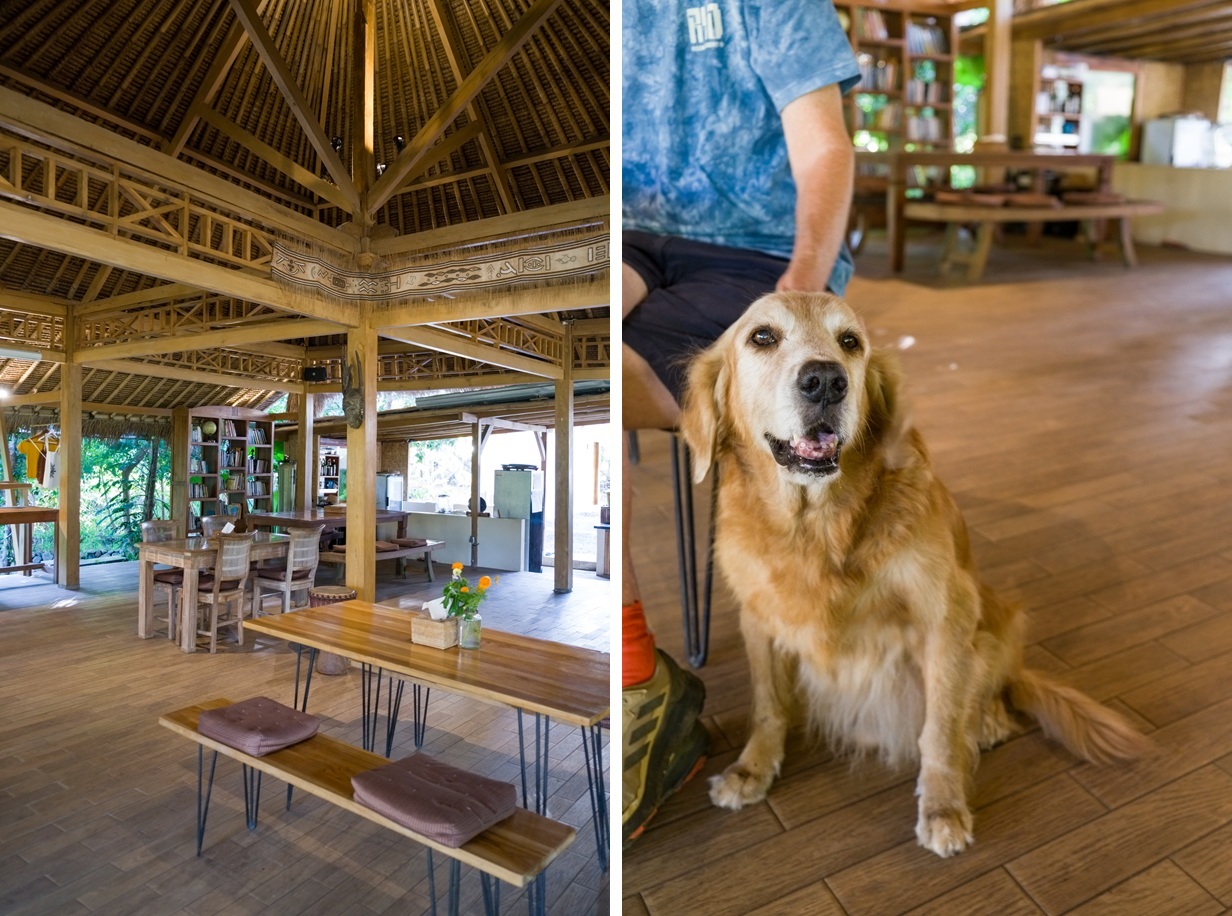
Inside the breezy lounge and café; Frankie the golden retriever.
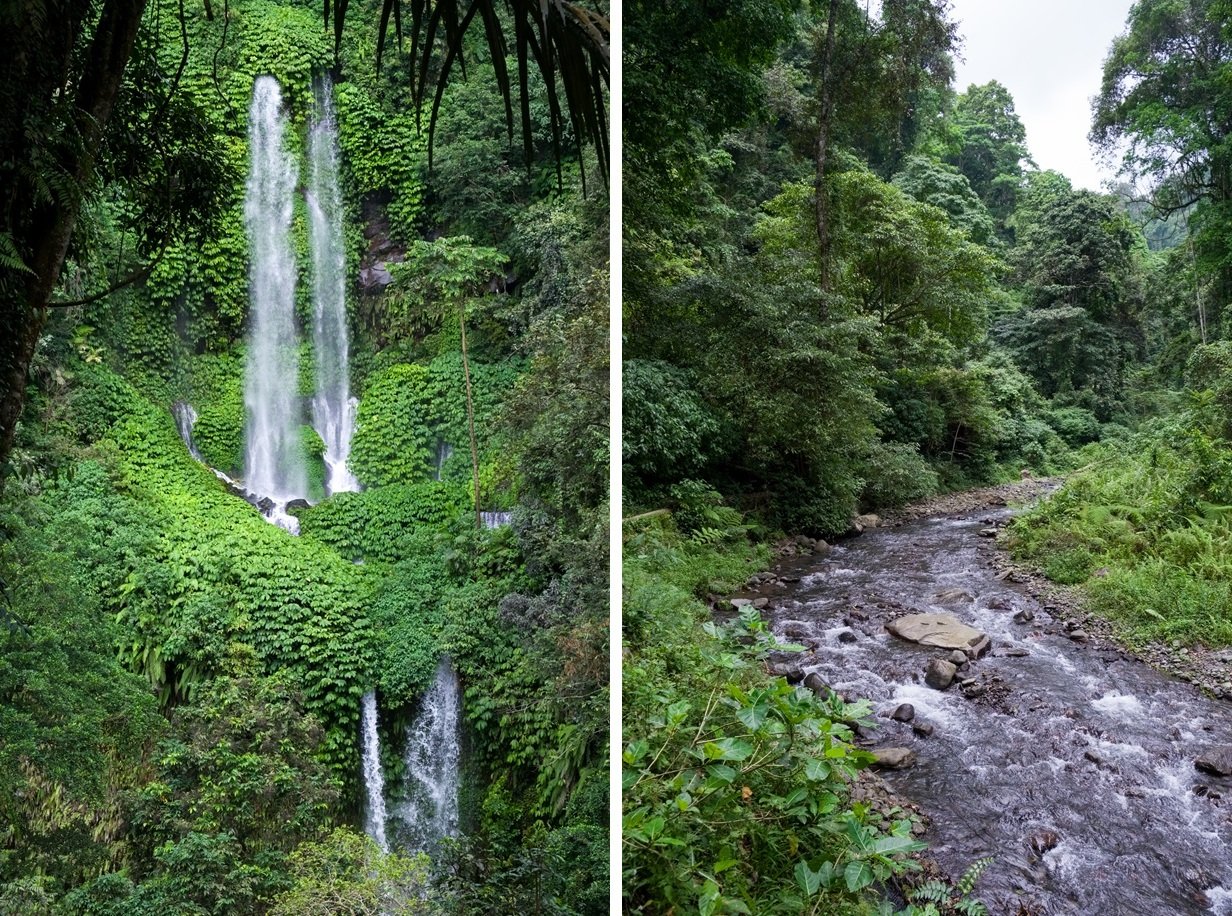
Sendang Gile waterfall’s upper tier; the river flowing from the falls at Tiu Kelep
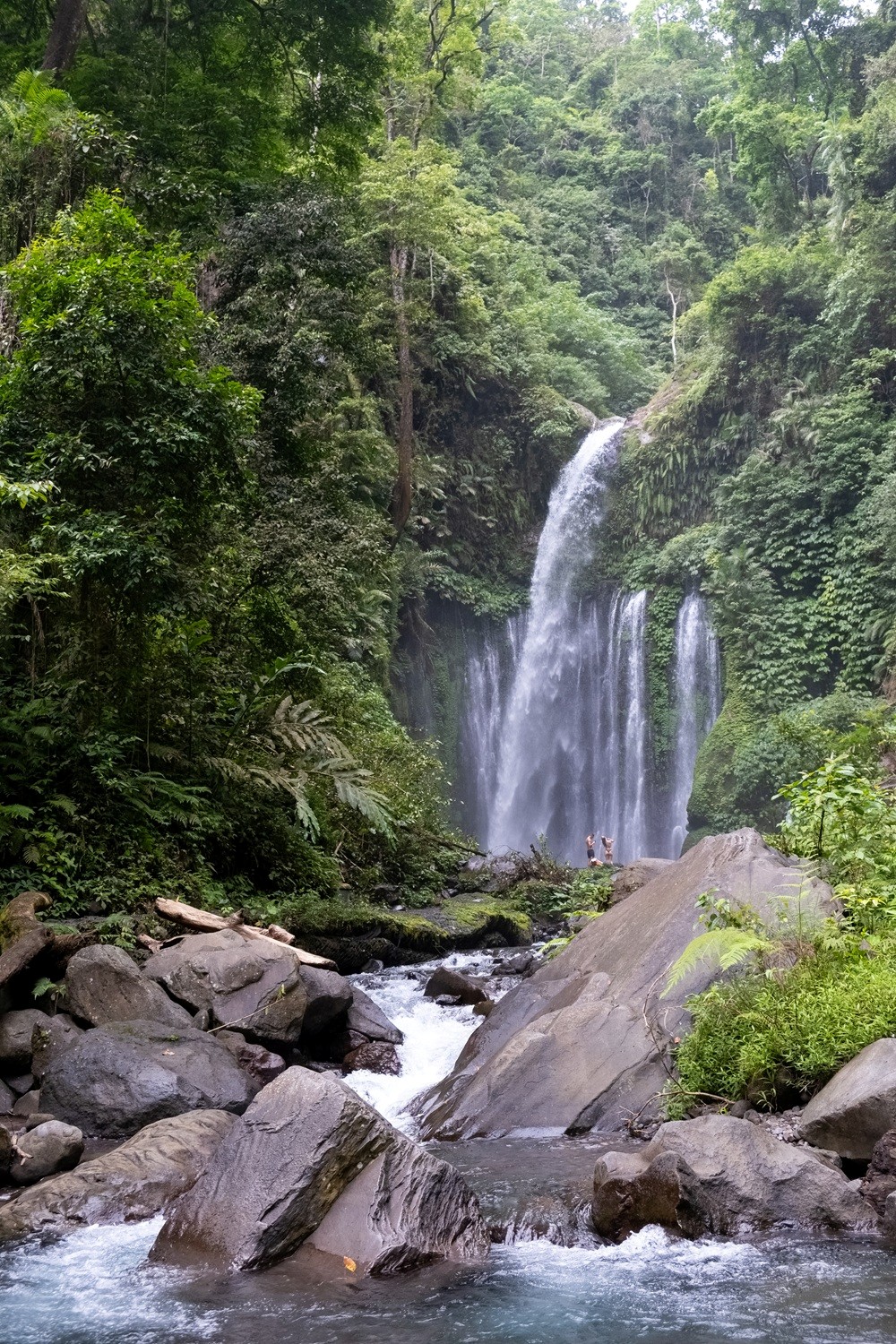
Backpackers cooling off below idyllic Tiu Kelep
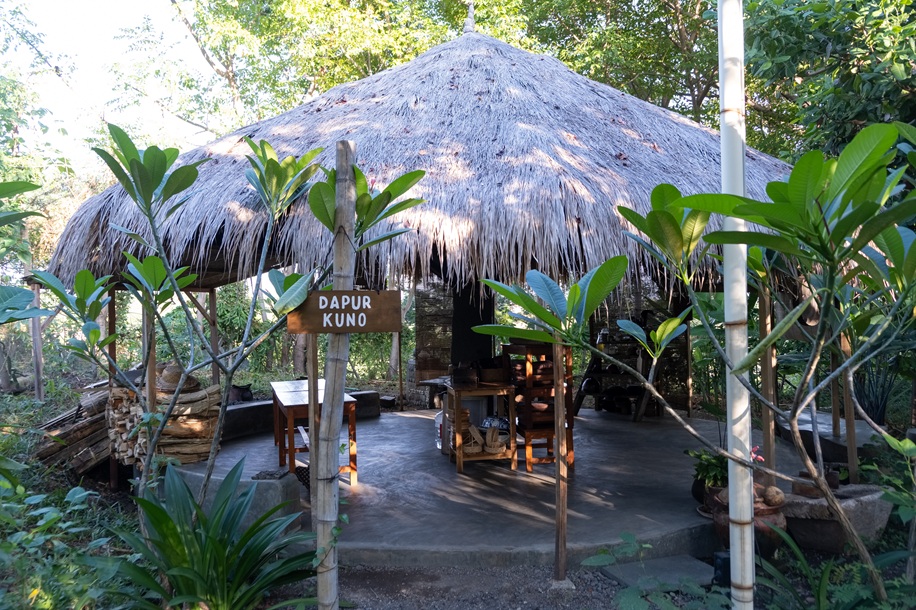
Saifana Organic Farm runs cooking classes in this thatched pavilion
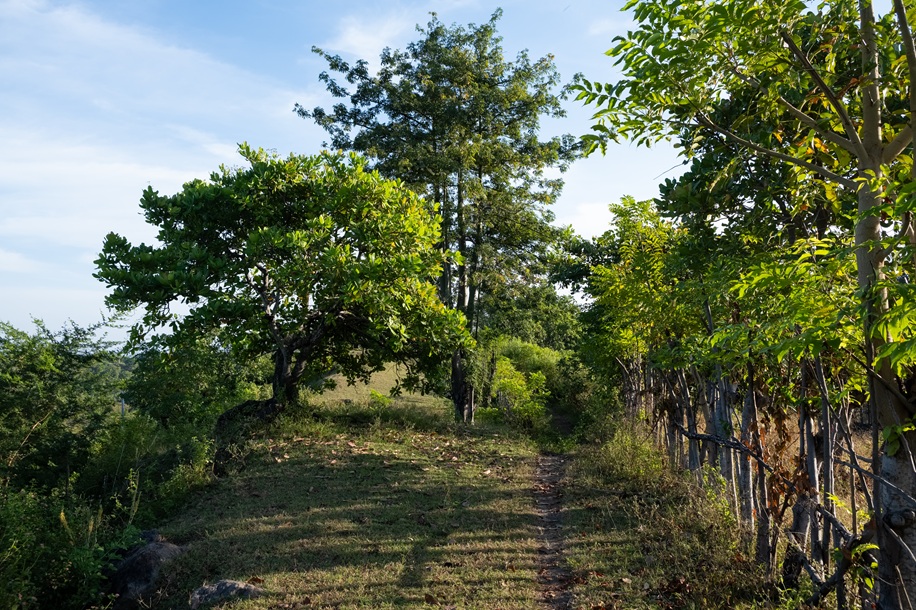
On an early morning walk in the nearby countryside
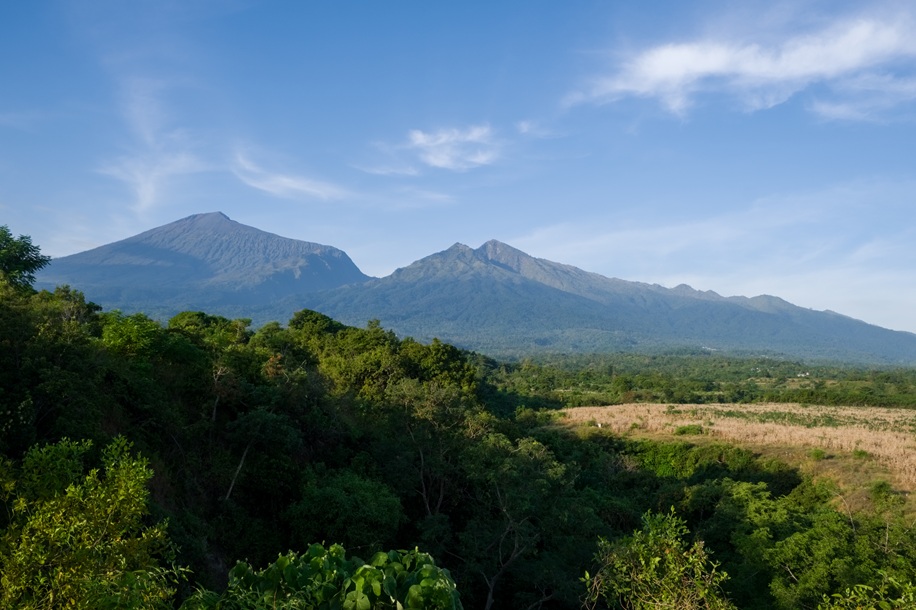
The impressive hulk of Mount Rinjani, Indonesia’s second-tallest volcano
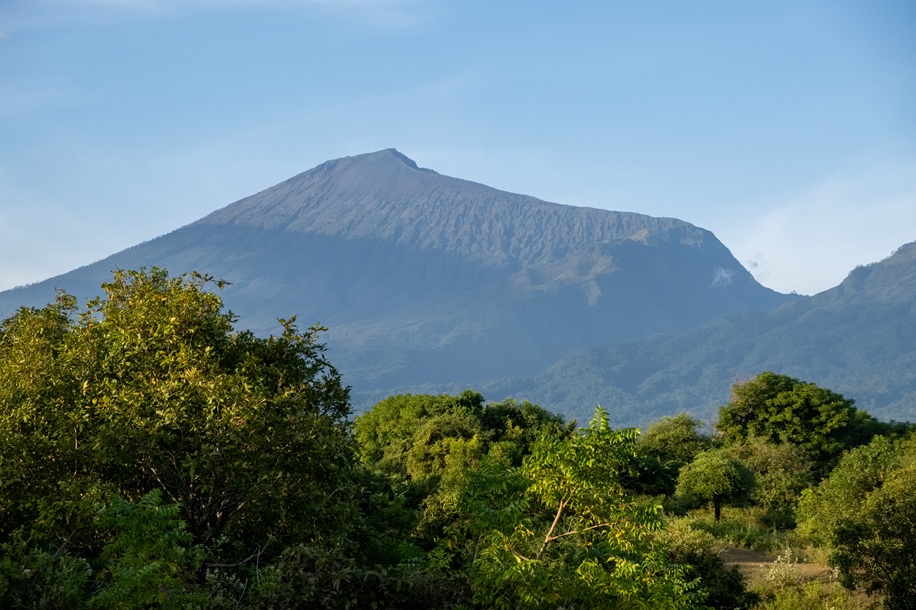
One last nostalgic look at Rinjani’s summit




 Plus Ultra
Gosh, look at all of that greenery! So lush and abundant. Looks like this is a quieter side of Bali, away from the usual touristy routes, and I appreciate you sharing this side of the island with us, James!
Hi Rebecca, thanks too for the comment! Lombok is actually the next island over from Bali. Quite a few people go to both nowadays (for different reasons). They’re culturally distinct from each other as well for the most part.
Lombok looks like a much better alternative to the busy Bali. We hope to go to Raja Ampat sometime soon, so I’ll keep Lombok in mind. Maggir
Lombok is generally quieter, but there are areas that can almost match Bali when it comes to the level of tourism (the Gili Islands are one, and Kuta is the other). And one observation that has been made quite often is that Balinese people by and large are gentler and more hospitable than their Sasak counterparts in Lombok.
Indonesia is such a beautiful country and Lombok seems like a small paradise. Thanks for taking along on your journey through Lombok. (Suzanne)
My pleasure, Suzanne! Lombok truly is a gem of an island.
This was how Bali used to be.
I’ve heard that sentiment from quite a few people who traveled to Bali back in the ’90s and early 2000s. It is a shame overdevelopment is so rampant especially down in southern Bali. There is talk of a second airport being built, but I hope it never happens!
Oh! I went in the 90s too and I already was disappointed in the changes. I was thinking of the 70s LOL! Here’s my post if you’re interested:
I hope they find a way to limit development in this beautiful place. There aren’t a lot of them left in the world anymore.
Agreed! What I didn’t mention in this blog post (I cut it out of an earlier draft) was a mega-development being built right next to Kuta, with a motorsports racetrack for events like the MotoGP, plans for bigger beachfront resorts, and a marina. It was sad to see that and to see how much trash was piling up in that area beside a beautiful white-sand beach I visited with Bama in 2013!
This looks alot more up my alley then crazy busy Bali! Beautiful photos of a beautiful place!
Hi Anna! Lombok is gorgeous but Bali really stands out for its local culture and sense of spirituality. I can see why people go to both islands on the same trip as they do complement each other!
From your story, it seems Kuta has changed a lot. I remember from my trip back in 2007 to climb Mount Rinjani, I spent a night in Kuta. It was such a sleepy, laid-back village with thatched-roof houses by the sea. The villagers spent the morning on the beach looking for trapped fish in the puddles at low tide. And in the evening, I have such fond memories of rolling around the beach, catching waves at sunset. It was a beautiful moment, and the place was empty of tourists. No bars or any nice-looking cafes. Just pure. Thanks for sharing the photos of what Lombok is like now.
Wow, the Kuta of 2007 sounds dreamy. I was honestly a little shocked when I saw what Kuta has become these days. It is only going to change even more in the next few years as more investors move in to develop southern Lombok.
Dreamy! Exactly that! With time, all these dreamy laid-back places eventually fall into modernity and I suppose that’s just how it goes. Am glad both of us had seen Kuta’s raw beauty before it happens.
So serene! That photo from the hilltop villa could be a prime site for meditation or deep relaxation. I can’t believe you and Bama traveled there a dozen years ago; I guess I’ve been following you both a lot longer than I would have guessed!
Revisiting Lombok last year made me realize just how lucky we were to have gone in 2013. Martin told me Mount Rinjani has become something of a garbage dump because of the number of trekkers and the lack of waste disposal on/along the trails! Surely it can’t be that hard to leave no trace and carry out whatever you carry in…
I keep hearing about Lombok but never been there. One day…
Hopefully soon. And with the direct flights from Singapore on Scoot, getting there should be easy!
Of all the beaches in Lombok that we went to in 2013, Selong Belanak left the deepest impression on me. I remember the white sand, the turquoise water, and the beautiful vistas of the mountains and hills to the east of the beach. I’m glad and relieved to hear that it still pretty much retains its charm. While Bali is a complete package (it has everything for everyone), Lombok is indeed the place to go to see some seriously impressive beaches. I’d love to go back one day (and probably stay at Saifana Organic Farm), but there are just too many interesting islands in eastern Indonesia to choose from!
Bama, I think you will be very disappointed with Tanjung Aan now. Not with the beach itself but the amount of garbage strewn around the dirt parking lot, and the number of Insta-tourists milling about even on a weekday. Saifana Organic Farm was just fabulous and I would have loved to join the cooking class if I’d had a bit more time there.
Your photos are absolutely gorgeous and captivating! And I love the dog as well! 🙂 Thank you so much for sharing your journey. Warm greetings from a retired lady living in Montreal, Canada.
Warm greetings, Linda! Thank you for reading and commenting on my blog earlier this week. 🙂 Ah, Montreal is my favorite city in Canada. It’s been ages since I was there (must have been 15 years ago) and I’d love to go back sometime.